Welcome to Notions of Progress!

Videos

June 1, 2026

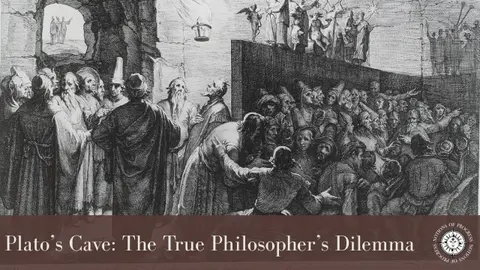
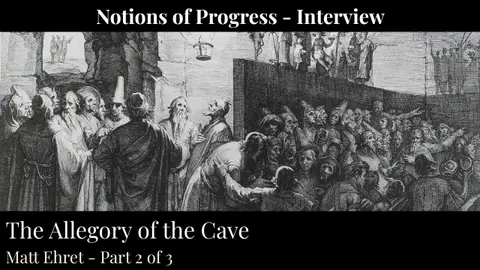
Interview with Matt Ehret pt. 2 | The Allegory of the Cave

Interview with Matt Ehret pt. 2 | The Allegory of the Cave

What if the most cited passage in Western philosophy has been deliberately misread — by both its critics and its supposed followers? In Part 2 of his conversation with Matt Ehret, Marshall examines the Allegory of the Cave, the Sophist movement, and a lineage of misuse running from ancient Athens…

View more
May 22, 2026

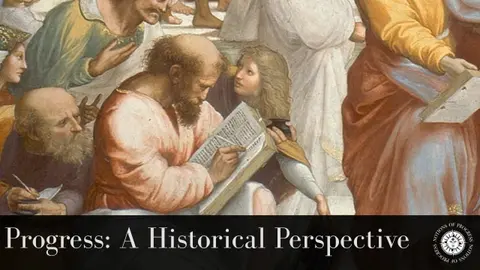
Progress: A Historical Perspective — Notions of Progress

Progress: A Historical Perspective — Notions of Progress

Did the idea of progress originate with the ancient Greeks — centuries before the Enlightenment claimed it? In this clip from Part 1 of a three-part conversation, host Marshall establishes the premise that animates the Ehret Interview Arc: tracing the idea of progress back to ancient Greece is itself a…

View more
May 18, 2026

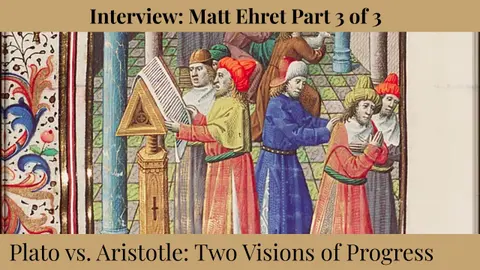
Interview with Matt Ehret: Plato vs. Aristotle - The Flame, the Vessel, & the Fate of Human Progress

Interview with Matt Ehret: Plato vs. Aristotle - The Flame, the Vessel, & the Fate of Human Progress

This is the first of three episodes with Matt Ehret tracing the Plato–Aristotle divide and its consequences for Western intellectual history. In this episode, Matt Ehret argues that the fault line between Plato and Aristotle is not a historical curiosity — it is a living divide that continues to shape…

View more
May 15, 2026

Aristotle's Departure and the Founding of the Lyceum

Aristotle's Departure and the Founding of the Lyceum

What principle did Aristotle carry out of Plato's Academy — and what did the institution he built in its place say about the one he left? Prof. Christopher Moore, in Calling Philosophers Names, identifies what makes Aristotle's departure philosophically decisive. For Aristotle, philosophical progress was cumulative: earlier thinkers were genuinely…

View more
May 4, 2026

Aristotle vs. Plato: Two Theories of Progress — and the Institution That Produced Both

Aristotle vs. Plato: Two Theories of Progress — and the Institution That Produced Both

In episode 8, Plato coined the word philosopher and made a wager: that genuine philosophical knowledge could be institutionalized and accumulated across generations. Last episode 9, we examined the Academy he built to make that wager pay off — its curriculum, its method, its claim that episteme, anchored knowledge, could…

View more
April 26, 2026

Plato’s Academy Wasn’t a School — It Was a Community of Inquiry

Plato’s Academy Wasn’t a School — It Was a Community of Inquiry

What did Plato actually found in 387 BCE — and why does the answer matter for how we think about progress? Prof. Guthrie’s account of the Academy reveals a community unlike anything that had existed before it: philosophers who lived, studied, argued, and ate together over decades in the grove…

View more
April 20, 2026

How Did Plato’s Academy Teach What Could Not Be Taught?

How Did Plato’s Academy Teach What Could Not Be Taught?

Plato had named philosophy and founded the Academy to transmit it. But how do you teach what you believe cannot simply be handed over? That is the question at the center of Episode 9 — the second of three episodes tracing the founding and first great test of the Academy.…

View more
April 16, 2026

Why Technical Skill Alone Cannot Build a Civilization

Why Technical Skill Alone Cannot Build a Civilization

Can ingenuity alone advance civilization — or does it require something technical skill cannot replace? In this clip from Episode 5, Prof. W.K.C. Guthrie, Prof. Rachel Barney, and Prof. Mauro Bonazzi guide us through Protagoras’ Myth of Prometheus — and what it actually argues. The standard reading treats the myth…

View more
April 12, 2026

How Plato Remade the Word "Philosophy" — and Why It Still Matters

How Plato Remade the Word "Philosophy" — and Why It Still Matters

What does it mean to build an institution around an idea? In this clip from Episode 8 of Notions of Progress, Marshall traces how Plato transformed the word philosophos — originally closer to a taunt than an honorific — into the founding claim of a school that would outlast him…

View more
April 6, 2026

The Word and the Wager: How Plato Named and Claimed Philosophy | Ep. 8 pt 1

The Word and the Wager: How Plato Named and Claimed Philosophy  | Ep. 8 pt 1

Where did the word "philosopher" come from — and who got to decide what it meant? In Episode 8, Part 1 of Notions of Progress, we trace the moment Plato took a word that had begun as a mocking label and transformed it into an institutional claim. Prof. Christopher Moore's…

View more
March 23, 2026

Plato vs. the Sophists: Rhetoric, Power, and the Making of Callicles | Ep. 7 pt 2

Plato vs. the Sophists: Rhetoric, Power, and the Making of Callicles | Ep. 7 pt 2

Can rhetoric make better citizens — or does it simply make better manipulators through the art of persuasion? In Part 2 of our Plato vs. the Sophists arc, we follow Plato's argument from the Meno to the Gorgias to answer that question. Scholars including W.K.C. Guthrie, E.R. Dodds, and George…

View more
March 9, 2026

Plato vs. the Sophists: The Allegory of the Cave As His Answer On Progress | Ep. 6 pt 1

Plato vs. the Sophists: The Allegory of the Cave As His Answer On Progress | Ep. 6 pt 1

The Sophists said that excellence was teachable—that skill could be accumulated, transmitted, and built upon across generations. Plato disagreed. He built a counter-proposal that called into question whether collective progress of the kind the Sophists imagined was even possible. In Part 1, we examine the first two of Plato’s four…

View more
Feb. 23, 2026

The Sophists: Fifth Century Enlightenment? | pt 1

The Sophists: Fifth Century Enlightenment? | pt 1

The word “sophist” is still in common use—and almost exclusively as an insult. Sophistry means clever but dishonest reasoning. Yet the people this label was first attached to were the most sought-after teachers in the most dynamic democratic society the ancient world produced. They advised statesmen, authored constitutions, and theorized…

View more
Feb. 9, 2026

Five Faces of Progress: The Road to Anti-Progress |Prof. Tyson Retz Pt.2 | Ep. 4

Five Faces of Progress: The Road to  Anti-Progress |Prof. Tyson Retz Pt.2 | Ep. 4

In this episode of Notions of Progress - Part Two, we continue exploring the fascinating evolution of progress thinking with Professor Tyson Retz, author of "Progress in the Scale of History" (Cambridge University Press, 2022). In this episode, Professor Retz discusses categories 3-5 of his framework: Relative Progress, Everybody’s Progress…

View more
Jan. 26, 2026

Five Faces of Progress: A Conceptual Framework for Historical Change |Prof. Tyson Retz | Ep. 3 Pt.1

Five Faces of Progress: A Conceptual Framework for Historical Change |Prof. Tyson Retz | Ep. 3 Pt.1

In this episode of Notions of Progress, we explore the fascinating evolution of progress thinking with Professor Tyson Retz, author of "Progress in the Scale of History" (Cambridge University Press, 2022). Professor Retz introduces his innovative five-category framework that traces various conceptions of progress as part of a layered and…

View more
Jan. 12, 2026

The Promethean Question: : Greek Views on Technological Progress | Notions of Progress Ep. 2

The Promethean Question: : Greek Views on Technological Progress | Notions of Progress Ep. 2

In Episode 2 of Notions of Progress, we explore the "Promethean Question" - examining Greek antiquity's perspectives on technological progress from 700-300 BCE. Did the ancient Greeks view technology as a divine gift or a dangerous curse? 🎧 SUBSCRIBE & LISTEN: → YouTube: https://www.youtube.com/@notionsofprogress?sub_confirmation=1 → Apple Podcasts: https://podcasts.apple.com/us/podcast/notions-of-progress/id1837506445 → Spotify:…

View more
Dec. 22, 2025

Notions of Progress Trailer

Notions of Progress   Trailer

In "Notions of Progress," host Marshall Madow explores the concept of progress through history, examining technological advancements and philosophical ideas. This trailer delves into themes like AI, transhumanism, and technological determinism, tracing progress from ancient Greece to modern times. It questions the assumptions behind progress and its impact on human…

View more