Aristotle vs. Plato: Two Theories of Progress — and the Institution That Produced Both
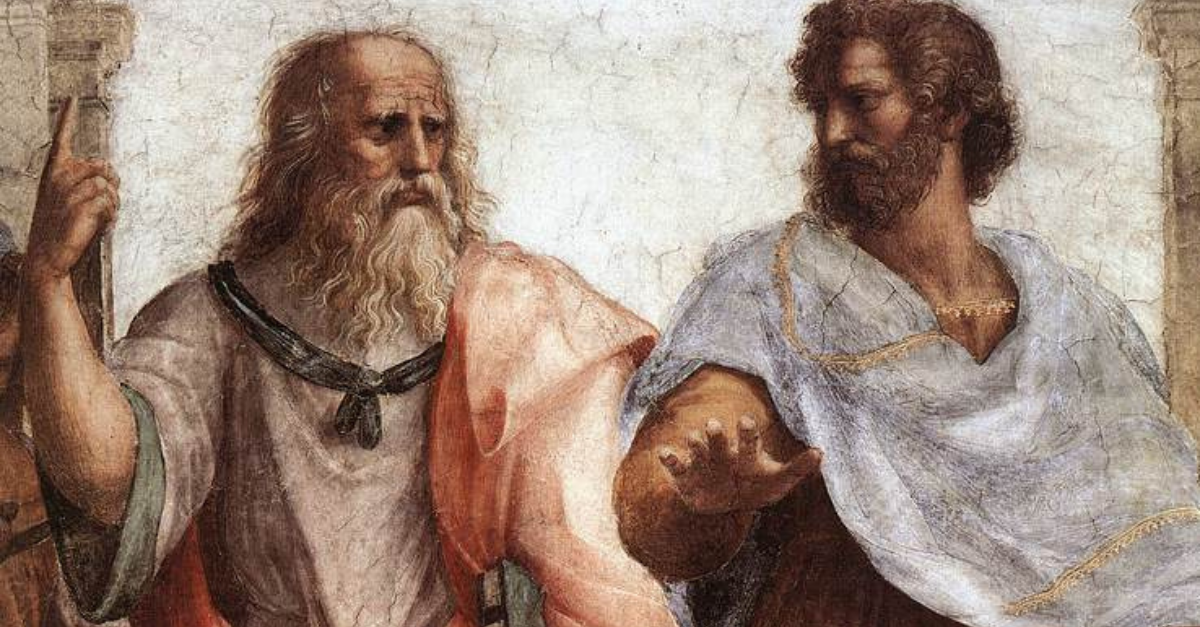
When the best student an institution ever produced decides to leave — does that prove the institution worked, or that it failed?
We live in a moment where institutional trust is called into question. The organizations built to accumulate and transmit expertise — universities, research centers, governing bodies — are increasingly questioned about whether they serve the people they were built to benefit. The question is not new. It is the question Aristotle posed from inside Plato's Academy, more than two thousand years ago. And how he resolved it — by building something different — is the subject of this episode.
Episode 10 traces Aristotle's intellectual break with Plato: the philosophical distance between their two theories of human advancement, the circumstances of Aristotle's departure from the Academy, and the founding of the Lyceum as a counter-proposal. Drawing on Prof. G.E.R. Lloyd's account of Aristotle's development, Prof. W.K.C. Guthrie's biographical anchor in A History of Greek Philosophy (Vol. VI), Prof. Werner Jaeger's reading of the Cave in Paideia, and Prof. Christopher Moore's argument in Calling Philosophers Names that Aristotle carried the Academy's founding principle out the door when he left, the episode reconstructs what the break actually was — and, equally, what it was not.
This is the third and concluding episode of the Academy Arc, which began in Episode 8 with Plato's naming of the philosopher and the founding wager he placed, and continued in Episode 9 with the Academy's mechanics and method. The arc closes here, on the question the preceding two episodes set up: did the bet pay off? The answer, as Moore frames it, is that both verdicts — success and failure — stand simultaneously. That deliberate refusal to resolve is itself the argument.
Key Moment 1: The Break That Began Inside
The familiar image of Aristotle — the hardheaded empiricist who arrived at Plato's school and promptly dismantled it — is, according to Prof. Lloyd, historically wrong. Aristotle's earliest works, the Eudemus and the Protrepticus, hold that the soul in its true and natural state is separate from the body, and that the highest form of human activity is philosophical contemplation, withdrawn from the world. These are not the positions of a critic. They are the positions of an adherent.
Prof. Lloyd demonstrates that the break was gradual, beginning from inside the Academy itself. Aristotle was already criticizing the theory of Forms while still identifying as a Platonist. The institution's own method — dialectical argument without demanded conformity — made that possible. Prof. Guthrie confirms this: the Academy trained its members to argue, not to agree. It created the conditions for its own most consequential internal challenge.
When Plato died in 347 BCE and Speusippus was chosen to lead the Academy, Aristotle left Athens. Guthrie's account is careful: Aristotle departed with Xenocrates, a conservative Platonist, heading toward another Platonic circle in Asia Minor. He was also a metic — a resident alien without citizen rights — with Macedonian ties in a city inflamed against Macedon. The departure was politically overdetermined as well as philosophically motivated. It was not a rejection. It was an exit the Academy had, in a real sense, made inevitable.
Key Moment 2: Two Theories of Who Progress Is For
The disagreement between Plato and Aristotle, when it comes into full view, is a disagreement about who progress is for. For Plato, as Prof. Annas reads the Republic, progress is ascent toward the Forms — available only to those who complete the full philosophical formation. The curriculum Plato designed was grueling and selective in practice. Prof. Jaeger, in his reading of the Cave in Paideia, treats the allegory as a story about the human capacity for transformation — available in principle to anyone, but institutionally restricted to a trained philosophical elite. Whether Plato intended restriction, or whether restriction was an unintended institutional consequence, is a question Jaeger leaves open. It is precisely the gap Aristotle steps into.
Aristotle relocates the telos — the end or purpose of a developing thing — from above the world to inside it. As Prof. Lloyd reads him, form is something gradually acquired during the process of change, not contemplated from a transcendent position above change. The builder who knows the purpose of the house does not need a philosopher to supply that knowledge from outside. Genuine knowledge does not require the vertical ascent Plato's curriculum prescribed.
Whether Aristotle's immanent telos liberates human potential or quietly constrains it — by fixing in advance what each kind of thing can become — is a question the scholarship has not resolved. Both Platonic and Aristotelian conceptions continue to animate competing visions of human governance, education, and political life. In the mid-20th century, Karl Popper found in Plato the philosophical root of closed, authoritarian societies. Leo Strauss found there a recovery of natural right that modern liberal thought had abandoned. Hannah Arendt, Alasdair MacIntyre, and Martha Nussbaum drew on Aristotle's practical reason to argue that genuine advancement emerges from citizens acting together in public life — not from the governance of an enlightened few.
Key Moment 3: The Founding Bet — Both Verdicts Stand
Prof. Moore, in Calling Philosophers Names, identifies what makes Aristotle's departure philosophically decisive. The Academy, as Moore argues, was the first institution designed to produce cross-generational philosophical progress — formalizing Socratic discussion into full-time, systematic inquiry. Aristotle was its greatest product. And his departure puts the founding bet to the test in the most direct way possible.
Moore identifies the principle Aristotle carried out the door: since progress in philosophy is possible, bring everything of relevance to bear on every question. Aristotle had absorbed this from the Academy itself. He then applied it fully — and it eventually led him away from Plato's Forms, away from the curriculum, and into a school of his own. The Lyceum, which Aristotle established at a public gymnasium on his return to Athens in 335 BCE, was modelled on the Academy's customs, as Guthrie notes — a counter-proposal, not a repudiation. Where the Academy trained a philosophical elite toward ascent, the Lyceum institutionalized research: systematic inquiry across every field, carried on and extended by Aristotle's successors after his death.
Moore's formulation holds the outcome without forcing resolution: the bet succeeded in producing a thinker capable of exactly what it promised. It failed in that the institution could not contain him. Both verdicts stand simultaneously. As Prof. Lloyd notes, the two philosophers actually shared a common conviction that the world exhibits order and that knowledge of that order is possible. What they could not agree on was who gets to build it.
Connecting the Dots
The word technē has run through this series since Episode 2, where it named the earliest Greek anxiety about technology as gift and curse. The Sophists, in Episodes 5 through 7, argued that technē was teachable, neutral, and progressive on its own terms — and that Plato's objection was not philosophical but political. Plato argued in return that craft without philosophical governance was dangerous: it made better manipulators, not better people. Aristotle's position in this episode closes the triangle. As Lloyd reads him, technē is a legitimate form of knowledge — one that completes nature rather than contradicting it. The three positions are not stages in a sequence. They are the first appearance of a fault line that runs through the history of ideas about human advancement: whether progress requires transcendent governance, democratic accumulation, or something in between.
This episode also closes the Sophists plateau — the extended argument running from Episode 5 through Episode 10, across the Sophists' challenge, Plato's response, and Aristotle's counter. The Hellenistic schools — Stoics and Epicureans — will take up the same fault line, each constructing a theory of the good life in the shadow of the Academy and the Lyceum. Whether they constitute a new theory of progress, or its most searching critique, is the question the next arc will pursue.
Connection to Notions of Progress
The series is built on the premise that understanding how ideas of progress have been contested, institutionalized, and transmitted across generations is essential to understanding the present moment. Episode 10 is the first episode in which that premise becomes explicitly reflexive: the Academy was a bet on exactly this — that philosophical progress was possible, that it could be organized, and that it could outlast the people who made it. Aristotle's departure, and his own institutional counter-wager, is the ancient world's first test of that claim.
The question Plato and Aristotle could not resolve — whether knowledge accumulates through transcendent formation or through open, distributed inquiry — has surfaced in every era of this series so far. It will surface again. Listeners who want to follow the argument as it develops will find the primary sources, annotated further reading, and the scholarship that frames this episode in the resources below.
For Further Reading
Primary Sources
Plato, Republic, Books VI–VII (514a–541b). The Allegory of the Cave and the philosopher's curriculum. Stephanus numbers are edition-independent. The vertical model of progress Aristotle inherits and disputes. Standard translation: G.M.A. Grube, revised C.D.C. Reeve (Hackett, 1992).
Aristotle, Nicomachean Ethics, Books I and X. Aristotle's account of eudaimonia, telos, and the relationship between practical and theoretical knowledge. The philosophical distance from Plato is clearest here. Standard translation: Terence Irwin (Hackett, 2nd ed., 1999).
Works Discussed
Prof. W.K.C. Guthrie, A History of Greek Philosophy, Vol. VI (Cambridge University Press, 1981), pp. 18–48. Aristotle's years in the Academy, his departure, the founding of the Lyceum, and the succession from Plato through Speusippus to Xenocrates. Biographical anchor for this episode. ✓ CONFIRMED
Prof. G.E.R. Lloyd, Aristotle: The Growth and Structure of His Thought (Cambridge University Press, 1968). Lloyd's account of the gradual break: Aristotle as Platonist, as internal critic, as founder of an independent school. Essential for understanding why the departure was not a repudiation. ✓ CONFIRMED
Prof. Werner Jaeger, Paideia: The Ideals of Greek Culture, Vol. II, trans. Gilbert Highet (Oxford University Press, 1944). Jaeger's reading of the Cave as periagoge and his analysis of the tension between Plato's transformative intention and the Academy's selective institutional practice. ✓ CONFIRMED
Prof. Christopher Moore, Calling Philosophers Names: On the Origin of a Discipline (Princeton University Press, 2020), p. 30. Moore's identification of the principle Aristotle carried out of the Academy: since progress in philosophy is possible, bring everything of relevance to bear on every question. The load-bearing claim for this episode's argument. ✓ CONFIRMED
Further Context
Prof. Julia Annas, An Introduction to Plato's Republic (Oxford University Press, 1981). The standard scholarly guide to the Republic's epistemology. Essential for the Platonic model of progress against which Aristotle defines his own.
Prof. Tyson Retz, Progress and the Scale of History (Cambridge University Press, 2022). Series anchor. The conceptual categories that frame the Plato–Aristotle contrast across the full arc of the podcast — including the No Progress category that the Academy's founding bet was designed to challenge.
Questions to Consider
1. Was Aristotle's departure a vindication or a refutation of the founding bet? Prof. Moore holds both verdicts simultaneously: the Academy succeeded in producing a thinker capable of exactly what it promised, and failed in that the institution could not contain him. But is the ambiguity a feature of the evidence, or of Moore's framing? If the measure of the bet's success was the production of genuine philosophical progress — and Aristotle produced it — does the departure constitute failure at all? Or does institutional departure only become a problem if you believe, as Plato did, that philosophy requires a single governing institution to be transmitted faithfully?
2. Did Plato intend restriction — or did the Academy produce it by accident? Prof. Jaeger treats the Cave as a story of transformation available in principle to anyone, while acknowledging the curriculum was grueling and selective in practice. But there is a harder version of the question: does the vertical model of progress — ascending toward Forms visible only to the philosophically trained — necessarily produce a restricted theory of who can advance, whatever Plato's intentions were? Or is the restriction a historical and institutional accident, separable from the philosophical core?
3. Does Aristotle's immanent telos liberate or constrain? By locating the end of a developing thing inside the thing itself, Aristotle appears to democratize progress: no transcendent summit is required, no philosophical elite is appointed to govern the ascent. But scholars have noted that fixing telos in advance — determining what each kind of thing is suited to become — can function just as restrictively as Plato's vertical hierarchy. Aristotle's political philosophy, in particular, has been read as naturalizing hierarchy rather than challenging it. The question of which tradition is the more genuinely open one is not settled by the ancient texts alone.
Related Episodes
Episode 5 — The Sophists: Fifth Century Enlightenment? — The horizontal model of progress the Academy was built to refute; the background against which both Plato and Aristotle define themselves.
Episode 6 — Plato vs. the Sophists: The Allegory of the Cave — First introduction of the Cave; the vertical model of progress enters the series.
Episode 7 — Plato vs. the Sophists: Rhetoric, Power, and Callicles — The political consequences of Sophistic education; Plato's alternative at its sharpest.
Episode 8 — The Word and the Wager — The naming of philosophos and the founding of the Academy; the first episode of the Academy Arc.
Episode 9 — The Institution — The Academy's curriculum, method, and pedagogy; the direct predecessor to this episode.
—
1. All Plato references use Stephanus numbers, which are edition-independent.
2. Guthrie, Vol. VI, pp. 18–48. ✓ CONFIRMED against upload.
3. Lloyd, Aristotle: The Growth and Structure of His Thought (1968). ✓ CONFIRMED against upload.
4. Jaeger, Paideia Vol. II, trans. Highet (1944). ✓ CONFIRMED against upload.
5. Moore, Calling Philosophers Names (Princeton UP, 2020), p. 30. ✓ CONFIRMED against upload.
6. Annas, An Introduction to Plato's Republic (OUP, 1981).
7. Retz, Progress and the Scale of History (CUP, 2022).
Nothing About This Is Inevitable: Gavin Mueller on Automation, AI, and a Different Future