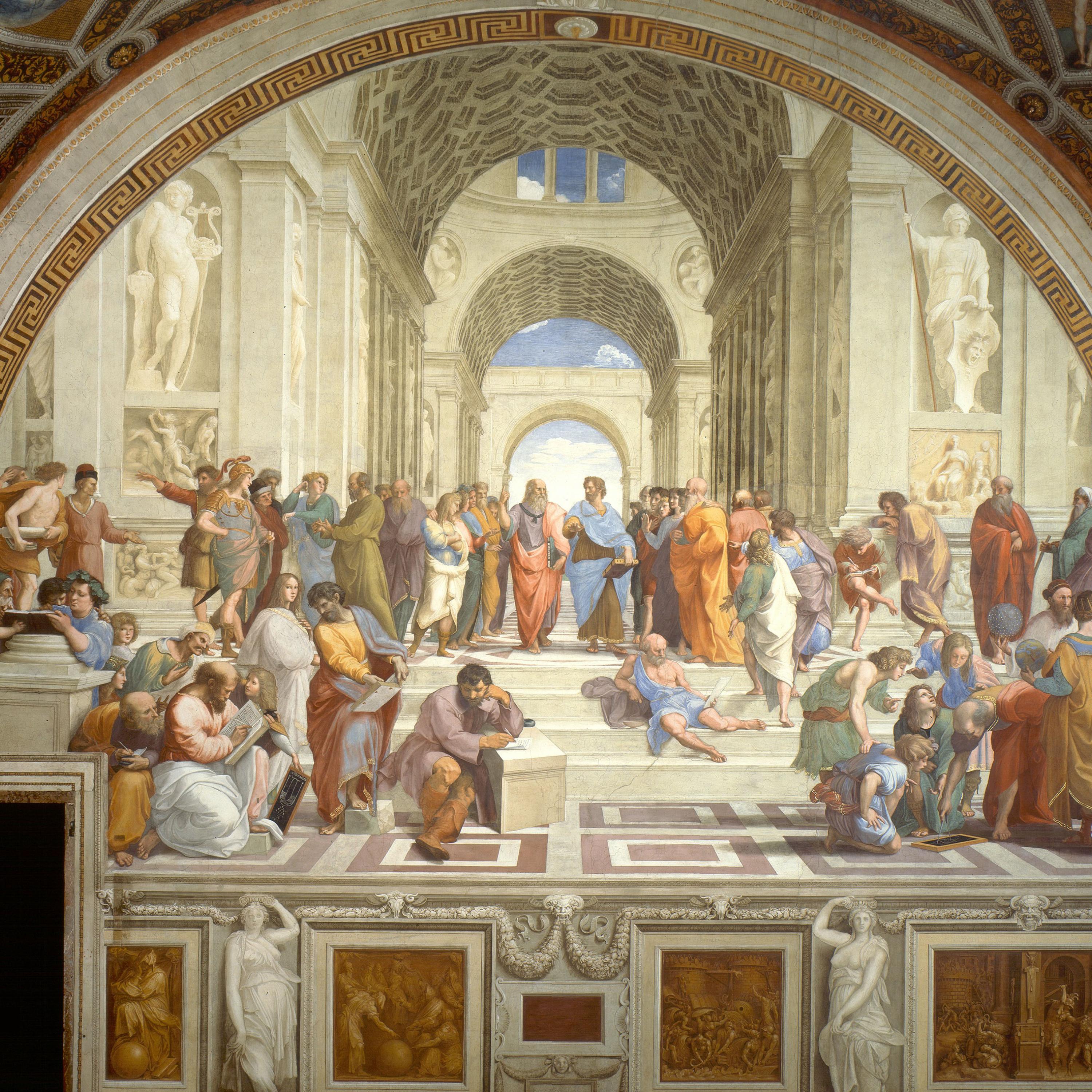
The Institution: How Plato Bet That Knowledge Could Outlast Its Founder
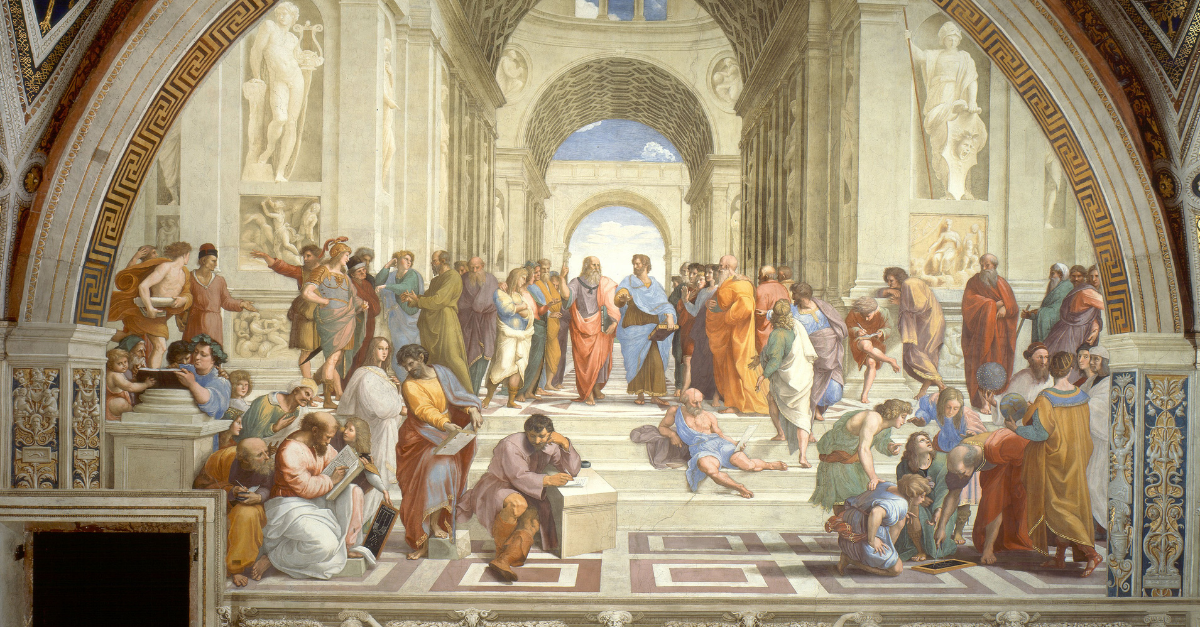
Can an institution be designed to transmit genuine knowledge across generations — or does every school eventually drift from the thing it was founded to preserve?
Institutions built around a founding idea face a structural problem that no charter or curriculum can fully solve. The founder embodies the practice; the institution can only approximate it. Over time, the approximation tends to replace the original. What arrives at the other end of a long institutional lineage may carry the name of the founding vision while having quietly abandoned its substance. This is not a modern anxiety. It is, as Prof. W.K.C. Guthrie's account of the Academy makes clear, the problem Plato himself created — and may not have solved — when he founded the first institution in Western history explicitly organized around the claim that philosophical knowledge could accumulate across generations.
Episode 9 examines the Academy not as an idea but as a place, a community, and a method. Drawing on Guthrie's historical account in A History of Greek Philosophy (Vols. IV and VI), Prof. Werner Jaeger's Paideia: The Ideals of Greek Culture (Vol. II), and Prof. Christopher Moore's Calling Philosophers Names, the episode traces three questions: what the Academy actually was as a physical and intellectual community; how it taught, and why Jaeger's reading of Plato's conception of paideia as conversion rather than transmission makes the method philosophically distinctive; and what the curriculum reveals about the kind of knowledge Plato believed could anchor cumulative philosophical progress. It then turns to the succession problem — who leads when the founder dies — and closes on Aristotle's twenty years inside the Academy as the founding bet working exactly as designed: producing a thinker capable of departing.
Episode 9 is the second of three episodes in the Academy Arc. Episode 8 established how Plato rescued the word philosophos from mockery and named the practice the Academy would institutionalize. Episode 9 asks how that institution worked. Episode 10 will ask whether it proved what it was built to prove, when Aristotle's departure becomes the founding bet's first serious test. Guthrie's Vol. IV anchors the Academy's physical community and its rivalry with Isocrates; his Vol. VI anchors the biographical account of Aristotle's twenty years and the succession to Speusippus. Jaeger provides the epistemological reading of the curriculum. Moore supplies the argument about what the Academy made possible for the first time in the history of philosophical practice.
Key Moment 1 — A Community, Not a School
The Academy was not a school in any modern sense. As Guthrie describes it in his account of the institution, what Plato founded was a community of inquiry — a circle of philosophers who lived, studied, argued, and ate together over decades in the grove sacred to the hero Academus, about a mile northwest of the walls of Athens.[1] The physical structure of the place mattered: there were shared meals (syssitia), shared walks, shared rituals, and a common subscription to expenses. Members were not fee-paying students but participants in a shared intellectual life. Guthrie notes that the structure was closer in spirit to a Pythagorean brotherhood than to anything recognizable as a university — a place where philosophy was not merely studied but lived.[2]
That communal structure was philosophically deliberate. Two features illustrate what was at stake. The first is the Academy's rivalry with Isocrates — the other great school of advanced education in fourth-century Athens, which trained orators and statesmen rather than philosophers. As Guthrie makes clear, this was not merely competing pedagogy but competing theories of what genuine improvement for a city consists of: Isocrates for civic breadth, Plato for philosophical depth.[3] The second is what Guthrie records as the 'On the Good' lecture — Plato's attempt to present the philosophical core of his thought in a single public address. The audience arrived expecting wisdom and encountered mathematics. Most left baffled. Aristotle, Guthrie notes, was one of the few who stayed and followed.[4] The episode is not merely anecdotal. It is evidence that the Academy's inner circle was operating at a level of abstraction deliberately inaccessible to the wider public — not out of elitism for its own sake, but because, on Plato's model, genuine philosophical understanding cannot be popularized without being falsified.
Key Moment 2 — Paideia as Conversion
To understand how the Academy taught, Jaeger centers Plato's use of the Cave. The prisoners chained underground, mistaking shadows on a wall for reality; one freed and dragged toward the light. As Jaeger reads it in Paideia: The Ideals of Greek Culture, the Cave is not merely a metaphor for ignorance and enlightenment — it is Plato's founding statement about what genuine education does to a human being.[5]
Jaeger's reading is precise and important. Plato defines true paideia not as filling an empty vessel or giving sight to blind eyes. His own formulation, as Jaeger renders it, is more radical: the capacity for understanding is already present in every soul. What education does is to turn it. The Greek word Jaeger centers here is periagoge — a turning around, a reorientation of the whole person from shadow toward light.[6] That single distinction — paideia as turning rather than filling — carries enormous weight for Plato's conception of progress. If education is conversion, no teacher can perform the turning on a student's behalf. They can only create the conditions for it.
Jaeger reconstructs the philosopher's curriculum from the Republic in careful stages: music and gymnastics first, then the mathematical propaideia — arithmetic, geometry, stereometry, astronomy, and harmonic theory.[7] Mathematics is not the goal; it is preparation. It trains the mind to think about things that do not change. That discipline is what makes true dialectic possible. And then — only then — fifteen years of sustained, rigorous philosophical examination, followed by fifteen years of practical governance, before the philosopher returns at fifty to contemplate the Good. Jaeger's point is that this curriculum is not designed to produce a skill-set.[8] It is designed to produce a certain kind of person — one capable of understanding not just what is true but why, and sustaining that account under the most rigorous questioning.
Key Moment 3 — What the Curriculum Claims About Progress
The curriculum Jaeger reconstructs is also an implicit argument about what genuine knowledge is and why it anchors the kind of progress the Academy was wagering on. As Jaeger reads the Republic's account of the philosophical ascent, the philosopher who completes the full curriculum attains episteme in a very specific and demanding sense[9]: not correct beliefs or well-reasoned positions, but understanding that can give a full account of itself and withstand the most sustained questioning without collapsing. It is anchored knowledge. Knowledge that holds.
This is where Moore's argument becomes the essential framing for Episode 9's progress claim. As Moore argues in Calling Philosophers Names, what the Academy made possible — for what appears to be the first time in the history of philosophical practice — was full-time, sustained, systematic philosophical engagement between people committed to the same inquiry across decades.[10] The Socratic discussion circles that preceded it had been the prototype: intense, rigorous, genuinely searching. But they were intermittent and dependent on a single remarkable individual. When Socrates died, the conversations scattered. The lack of institutionalization led to impermanence.
The Academy formalized those circles into something designed to persist — giving philosophy, for the first time, an institutional memory. That is the connection to the progress argument stated plainly. The Sophists' horizontal model could not accumulate: skills spread wide, but no cohort built on the last. The Academy's vertical model was a bet that genuine understanding, once achieved, could be preserved and extended — that philosophy could be cumulative in a way that rhetoric, by its nature, never was.
Connecting the Dots
The Academy Arc opens with a word and closes on a departure. Episode 8 established that Plato's first move was linguistic: rescuing philosophos from mockery, attaching it to a demanding practice, and building an institution around the claim that genuine knowledge — episteme — is categorically different from opinion and transmissible, across generations, only by those who have undergone the full formation. Episode 9 asks what that institution looked like from the inside, and what its pedagogy reveals about the theory of knowledge it was built on.
Jaeger's account of paideia as conversion makes the Academy's founding bet both more ambitious and more fragile than a simple curriculum story suggests. If education is the turning of the soul — if no teacher can perform the turning on behalf of a student — then the institution has no guarantee of its own continuity. It can create the conditions. It cannot mandate the result. The succession to Speusippus after Plato's death in 347 BCE illustrates the structural consequence: the institution designed to transmit philosophy across generations had no reliable mechanism to ensure that succession followed its best thinking. As Guthrie's account makes clear, Aristotle — the other obvious candidate — was legally disqualified as a metic and could not inherit property in Athens without special dispensation.[11] The choice of Speusippus revealed something the theory of paideia could not resolve.
Guthrie's portrait of Aristotle's twenty years at the Academy resists the popular image of a rebel dismantling what he found. The picture is of a genuine member of the community — teaching, contributing, developing his own philosophical positions in sustained engagement with Plato's thought.[12] The Academy, as Guthrie puts it, produced men trained in dialectical argument — not moulded into tame conformity.[13] That is the founding bet working exactly as designed. And it is also the founding bet creating the conditions for its own disruption. Episode 10 inherits that question directly.
Connection to Notions of Progress
The founding of the Academy is a progress claim — but a particular and restricted one. Applying Prof. Tyson Retz's framework curatorially: where the Sophists built a horizontal model of cumulative progress — skill spreading outward across citizens simultaneously — Plato's Academy built something vertical: knowledge accumulating upward through a trained lineage, generation by generation. Episode 9 is the moment in the series where that vertical model is examined not as a philosophical argument but as an institutional practice. What does it actually look like to build an organization around the conviction that genuine knowledge can be preserved and extended across generations?
The answer Plato built — a close community, a long curriculum, a method of conversion rather than transmission — is one of the most consequential early answers in Western intellectual history. Notions of Progress traces how human beings have understood their own capacity for advancement, and the Academy's founding bet sits at the origin of one major strand of that history: the idea that a trained few, working together over time, can accumulate something real. Episode 9 surfaces the mechanics of that bet, and holds open — without resolving — the question of whether the bet held.
For Further Reading
Primary Sources
Plato, Republic, Books VI–VII (514a–541b). The Allegory of the Cave and the philosopher's curriculum, including the propaideia and the ascent to dialectic. The essential primary text for Episode 9. Stephanus numbers are edition-independent; Cooper–Hackett translation recommended.
Plato, Seventh Letter. Plato's own account of his Sicilian visits and the founding conditions of the Academy. Authenticity debated among scholars; philosophically central regardless of that debate. Cooper–Hackett translation.
Further Context
Prof. W.K.C. Guthrie, A History of Greek Philosophy, Vol. IV (Cambridge University Press, 1975), pp. 17–32. ✓ CONFIRMED. Guthrie's account of the Academy as a physical and intellectual community — its founding, its communal structure, the rivalry with Isocrates, and the 'On the Good' lecture. The essential anchor for Key Moment 1.
Prof. W.K.C. Guthrie, A History of Greek Philosophy, Vol. VI (Cambridge University Press, 1981), pp. 18–45. ✓ CONFIRMED. Guthrie's biographical account of Aristotle's twenty years at the Academy, the succession to Speusippus, and the philosophical distance between the two candidates. The biographical anchor for the E9–E10 arc.
Prof. Werner Jaeger, Paideia: The Ideals of Greek Culture, Vol. II, trans. Gilbert Highet (Oxford University Press, 1944), pp. 291–320. ✓ CONFIRMED. Jaeger's reading of the Cave as periagoge; the philosopher's curriculum reconstructed from the Republic in careful stages. The essential scholarly anchor for Key Moments 2 and 3.
Prof. Christopher Moore, Calling Philosophers Names: On the Origin of a Discipline (Princeton University Press, 2020), Ch. 9, pp. 166–167. ⚑ VERIFY — page numbers pending rasterization. Moore's argument that the Academy made possible, for the first time, full-time sustained systematic philosophical engagement across decades. The essential anchor for the progress claim in Key Moment 3.
Prof. Julia Annas, An Introduction to Plato's Republic (Oxford University Press, 1981). Standard scholarly guide to the Republic's epistemology. Useful for the episteme/doxa distinction and the philosopher's curriculum; complements Jaeger's reading.
Questions to Consider
Question 1
Jaeger argues that Plato defined true paideia not as the transfer of knowledge but as the conversion of the whole soul — a periagoge, a turning around from shadow toward light.[14] If that is what genuine education does, then no teacher can perform the turning on a student's behalf. The teacher can only create the conditions. Does a theory of progress that depends on a conversion that cannot be mandated have a reliable foundation — or does its very depth make it institutionally fragile?
Question 2
As Moore argues, the Academy made possible for the first time full-time, sustained, systematic philosophical engagement between people committed to the same inquiry across decades.[15] The Sophists had spread education wide; Plato concentrated it deep. The contrast is not simply pedagogical — it is a disagreement about what progress in knowledge actually looks like. Does genuine understanding accumulate better through breadth or depth? Through the many or the few? The Academy's nine-century lifespan is one kind of answer. Aristotle's departure after twenty years is another.
Question 3
When Plato died in 347 BCE, the Academy chose Speusippus as successor. Aristotle — by most accounts the stronger philosophical candidate — was legally ineligible as a metic.[16] The institution designed to transmit philosophy across generations had no reliable mechanism to ensure that succession followed its best thinking. Is that a failure of planning, an unavoidable structural consequence of the theory of knowledge the Academy was built on, or something else? What does it tell us about the relationship between a founding vision and the institution built to sustain it?
Related Episodes
Episode 8 — The Word and the Wager. The direct predecessor. How Plato rescued philosophos from mockery, executed his double linguistic and substantive move, and named the practice the Academy would institutionalize.
Episode 5 — The Sophists: Fifth Century Enlightenment? The horizontal model of cumulative progress the Academy was built to refute. The contrast between Sophist breadth and Platonic depth runs through every section of Episode 9.
Episode 6 — Plato vs. the Sophists: The Allegory of the Cave. First introduction of the Cave in the series; episteme and doxa enter the argument. Episode 9 builds directly on this groundwork.
Episode 7 — Plato vs. the Sophists: Rhetoric, Power, and Callicles. The political endpoint of the Sophist programme and the immediate context for Plato's institutional response. The bridge from Episodes 5–7 to the Academy Arc.
Episodes 3–4 — Five Faces of Progress — Prof. Tyson Retz. The taxonomic framework applied across the series. The horizontal/vertical distinction used curatorially in Episode 9 draws on Retz's framework.
Footnotes
1 W.K.C. Guthrie, A History of Greek Philosophy, Vol. IV (Cambridge University Press, 1975), pp. 17–19.
2 Guthrie, Vol. IV, pp. 19–20.
3 Guthrie, Vol. IV, pp. 27–29.
4 Guthrie, Vol. IV, pp. 25–27.
5 Werner Jaeger, Paideia: The Ideals of Greek Culture, Vol. II, trans. Gilbert Highet (Oxford University Press, 1944), pp. 291–295.
6 Jaeger, Paideia, Vol. II, p. 295.
7 Jaeger, Paideia, Vol. II, pp. 301–312.
8 Jaeger, Paideia, Vol. II, pp. 295–298.
9 Jaeger, Paideia, Vol. II, pp. 312–316.
10 Christopher Moore, Calling Philosophers Names: On the Origin of a Discipline (Princeton University Press, 2020), Ch. 9, pp. 166–167. ⚑ VERIFY — page numbers pending rasterization.
11 Guthrie, Vol. VI, pp. 24–25.
12 Guthrie, Vol. VI, pp. 22–23.
13 Guthrie, Vol. VI, p. 22.
14 Jaeger, Paideia, Vol. II, p. 295.
15 Moore, Calling Philosophers Names, Ch. 9, pp. 166–167. ⚑ VERIFY.
16 Guthrie, Vol. VI, pp. 24–25.
Two Depressions, One Cause? Michael Roberts on 1873, 1929, and the Rate of Profit