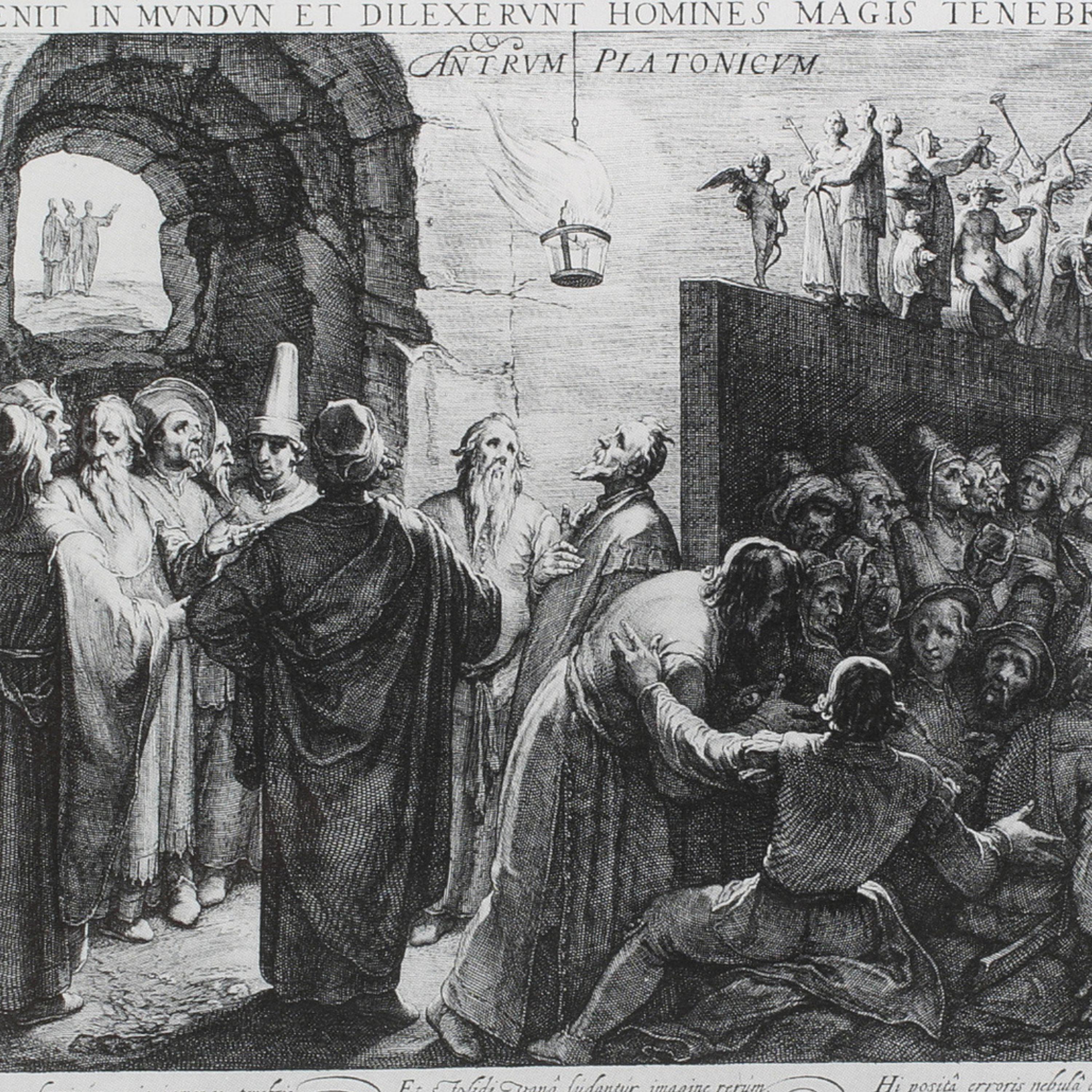
The Allegory of the Cave — A Misreading 2,500 Years in the Making — Ehret Interview - Part 2 of 3
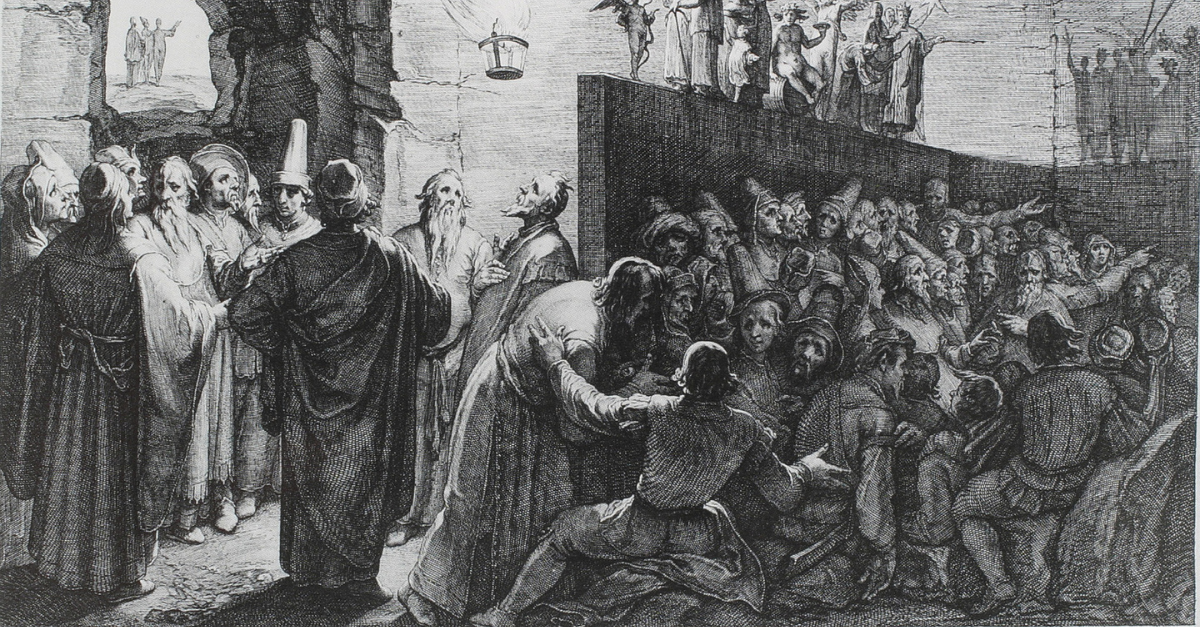
The Allegory of the Cave is one of most highly cited texts in Western philosophy. Most readers encounter it in Book VII of Plato’s Republic as an illustration of enlightenment: prisoners who mistake shadows for reality, a philosopher who escapes into the light, a sun that stands for truth itself. The image is vivid, but it is often taken out of context toward one ideological objective or another. Some critics have read it as a blueprint for totalitarianism; others have read it as justification for a governing elite that manages the beliefs of those still in the cave. Both readings, Ehret argues in this episode, stop before the sentence in the original text that changes everything.
Overview
Episode 11 established the Platonic tradition as Ehret reads it: learning as recollection, knowledge awakened from within, and the Academy’s geometry requirement as training in genuine discovery. Ehret traces three linked claims: Plato’s direct counter to the Sophists, the full argument of the Allegory of the Cave — including the conclusion two opposed traditions have both omitted — and a lineage running from ancient Neoplatonism through Leo Strauss to Peter Thiel’s 2007 essay “The Straussian Moment.”
Key Moments from the Conversation
1. The Part of the Cave That Everyone Leaves Out
Both groups who have claimed the allegory — critics who read it as authoritarian and self-described Platonists who read it as justification for elite governance — extract the imagery of the puppet masters and the prisoners without following the allegory to its conclusion. In Plato’s text, the philosopher who escapes the cave and reaches the light of truth does not remain there. The obligation is to return — at personal risk, out of love for those still inside. For Ehret, this is the point the allegory was constructed to make.
2. Leo Strauss, the Noble Lie, and the Neoconservative Lineage
Ehret traces a specific modern misreading of Plato’s Republic through Leo Strauss, whose students, in Ehret’s account, include Donald Rumsfeld, Richard Perle, and Paul Wolfowitz. Strauss extracted the noble lie and built from it a doctrine of esoteric political philosophy: an exoteric teaching for the public, a secret teaching for the initiated. Whret references Peter Thiel’s 2007 essay “The Straussian Moment” situates this lineage from Strauss back through Locke, Hobbes, and Bacon. Whether Plato intended the noble lie as prescription or diagnostic trap is a debate the episode lightly surfaces without resolving.
3. Authentic Platonism vs. Gnostic Neoplatonism
The closing movement draws a structural distinction between authentic Platonism and its Gnostic Neoplatonist inversion. In the authentic tradition, as Ehret reads it, contradictions — the one and the many, the finite and the infinite — resolve into positive principles: justice, beauty, truth, goodness. In the Neoplatonist tradition, they resolve into what Ehret calls “a great nothingness.” Ehret identifies Augustine’s battles against the Gnostics as recognition of this same split, and reads Plato’s dialogue the Sophist as Plato’s own polemical exposure of this dark mirror of his method.
Guest Spotlight
Matt Ehret is a Canadian journalist, historian, and lecturer, and a co-founder of the Montreal-based Rising Tide Foundation. He is editor-in-chief of the Canadian Patriot Review and a senior fellow at the American University in Moscow. His work spans intellectual history, geopolitics, and the philosophy of history. He is the author of The Untold History of Canada (four volumes), The Clash of the Two Americas, and Science Unshackled, among other works.
For Further Reading
Primary Sources
Plato. Republic, Book VII. In Cooper, John M. (ed.), Plato: Complete Works. Hackett, 1997.
Book VII of the Republic contains the Allegory of the Cave, the central text of this episode. Reading Book VII alongside Books I and IV, which establish the dialogue’s diagnostic method, is essential for following Ehret’s argument about what has been systematically omitted from the tradition of reception.
Plato. Gorgias. In Cooper, John M. (ed.), Plato: Complete Works. Hackett, 1997.
The Gorgias is the site of Plato’s sharpest engagement with Sophist rhetoric. Ehret’s claim that nobody can will evil freely — that genuine free will and destructive action are incompatible on the Platonic view — draws on his reading of the Gorgias alongside the Republic.
Plato. Sophist. In Cooper, John M. (ed.), Plato: Complete Works. Hackett, 1997.
Cited by Ehret as Plato’s own polemical exposure of the dark mirror of his method. Alongside the Parmenides, Ehret reads it as showing how the Neoplatonist dialectic mimics the genuine Socratic method while resolving all contradictions into nothingness rather than positive principles.
Further Context
For the Academy Arc episodes establishing the scholarly backdrop to this conversation — Plato’s pedagogical theory, the Academy’s institutional structure, and Aristotle’s departure — see Episodes 8, 9, and 10 of Notions of Progress.
For Episode 11, which establishes Ehret’s core argument about the Platonic method — learning as recollection, constructive geometry as epistemological foundation, and the Meno’s slave boy demonstration — the Curator’s Frame and transcript are available at notionsofprogress.com.
For the Sophist Arc establishing the horizontal vs. vertical cumulativity distinction — see Episodes 5, 6, and 7.
Questions to Consider Based on This Episode
1. If the Allegory of the Cave has been systematically misread for two and a half thousand years, what does that tell us about how ideas travel through history?
2. Is the noble lie a prescription or a trap?
3. What is the relationship between the Sophist tradition in antiquity and what Ehret calls its modern recurrence?
Connection to Notions of Progress
Ehret traces a line from the Allegory of the Cave to neoconservative foreign policy — a claim that covers more than two thousand years and several distinct intellectual traditions. Whether Ehret’s lineage holds across the full sweep of Western history — whether Augustine is best read as a Platonist, whether Strauss is best read as a Neoplatonist, whether the misreading is organized or accidental — are questions the series will surface for listeners as the arc advances.
Two Depressions, One Cause? Michael Roberts on 1873, 1929, and the Rate of Profit