Aristotle on Human Nature — Blueprint vs. Destiny
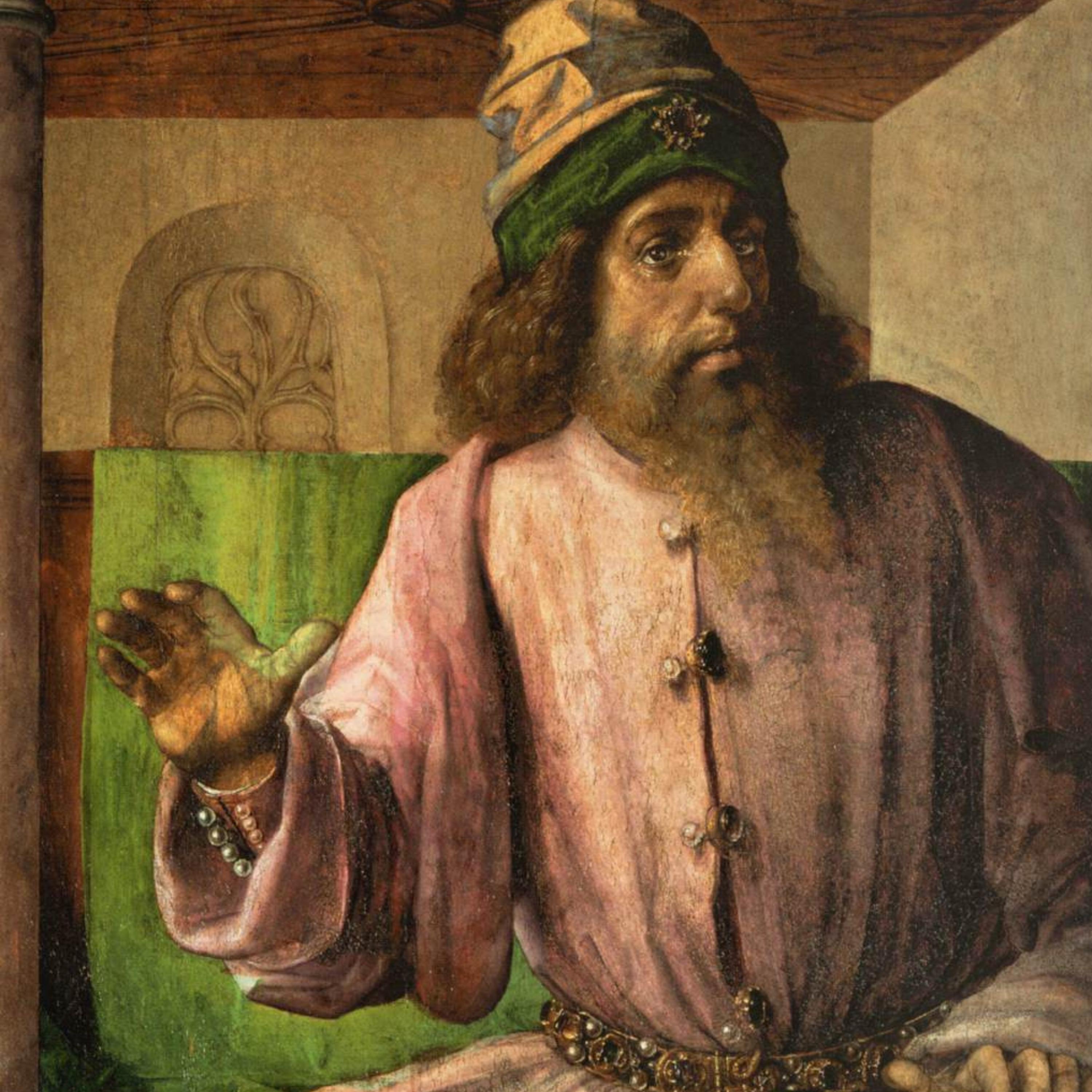


Aristotle claimed that human beings have a built-in purpose — but is that idea a foundation for a good life, or a blueprint for control? This episode, the second half of a two-part look at Aristotle, brings five thinkers into the conversation across twenty-five centuries of philosophy. Karl Popper, writing in the shadow of the Second World War, warns that a fixed idea of human purpose can curdle into political destiny when scaled up from a person to a nation. Alasdair MacIntyre, Hans-Georg Gadamer, and Philippa Foot each answer that worry on different grounds — through practices and internal goods, through practical judgment exercised case by case, and through a naturalist argument about what genuinely counts as good for a living creature. Finally, philosopher of technology Shannon Vallor carries the same question directly into the debate over artificial intelligence, arguing that practical wisdom — phronesis — is exactly what current AI narratives are trying to convince us we no longer need. Five serious perspectives, one shared question, five different answers — and a closing turn toward the instability that follows Aristotle's world, setting up the series' next arc: the Hellenistic philosophers.
2. Show Notes & Timestamps
— Aristotle's Big Question — 00:00
— Five Thinkers Setup — 01:16
— Key Terms: Telos & Phronesis — 02:35
— Popper Against Historicism — 03:24
— MacIntyre: Practices & Virtue — 06:35
— Foot: Natural Goodness — 15:17
— Vallor: Aristotle Meets AI — 18:53
— Recap: Five Perspectives — 26:07
— What Comes Next — 28:54
— Sources and Farewell — 29:59
3. Key Concepts & Terms
Telos (TEH-los)
A thing's built-in purpose — for a living creature, the end its nature is directed toward.
Phronesis (froh-NEE-sis)
Practical wisdom — not a rule that can be memorized and applied the same way every time, but the skill of judging what a particular situation actually calls for, right now.
Eudaimonia (yoo-dye-MOH-nee-uh)
Human flourishing — a life lived well by doing what a human being is actually for, rather than simply feeling good in the moment.
Epieikeia (eh-pee-ay-KAY-ah)
Equity — a judge's correction of the strict letter of the law when applying it in full would be wrong in a specific case. Aristotle treats this as a correction of the law, not a departure from it.
4. Fascinating Historical Insights
Popper's Postwar Target
Karl Popper published The Open Society and Its Enemies in 1945, in the immediate aftermath of the Second World War. His historicism critique takes direct aim at Hegel's later use of Aristotle's ideas — Popper is explicit that Aristotle's own biology, considered on its own terms, is not his target.
A Child, a Chessboard, and Candy
Alasdair MacIntyre's account of virtue turns on a simple example: a child taught to play chess for candy has every reason to cheat, right up until the point they come to value the internal rewards of the game itself — at which point cheating stops making sense at all.
The Most Alarming Person in the Room
Aristotle has a specific word, deinos, for someone with real natural gift for practical judgment and no virtue guiding it. Following Aristotle, Gadamer argues this person is more alarming than someone simply incompetent — brilliant talent turned toward evil, rather than a lack of skill.
A Senate Room and a Distorting Mirror
In November 2023, Shannon Vallor testified before the U.S. Senate that current AI narratives risk convincing people that phronesis — the virtue Aristotle called practical wisdom — is an outdated relic. A year later, in The AI Mirror, she opened her book with the story of a Google engineer who claimed the company's AI had become conscious, treating the episode as a symptom of the very confusion her testimony warned against.
5. Resources & Further Reading
Primary Sources
— Aristotle, Nicomachean Ethics
Works Discussed
— Karl Popper, The Open Society and Its Enemies, Vol. 2 (Princeton University Press, 1945), Ch. 11, pp. 220–226
— Alasdair MacIntyre, After Virtue: A Study in Moral Theory, 3rd ed. (Notre Dame, 2007), Ch. 9, pp. 109–120, and Ch. 14, pp. 187–190 and 196–197
— Hans-Georg Gadamer, Truth and Method, pp. 313–320
— Philippa Foot, Natural Goodness (Oxford: Clarendon Press, 2001), Introduction and Ch. 1
— Shannon Vallor, Technology and the Virtues: A Philosophical Guide to a Future Worth Wanting (Oxford, 2016), Sections 2.1 and 5.2
— Shannon Vallor, The AI Mirror: Reclaiming Our Humanity in an Age of Machine Thinking (Oxford, 2024), Introduction and Ch. 1
Further Context
— Shannon Vallor, Testimony before the U.S. Senate Committee on Homeland Security and Governmental Affairs, November 8, 2023
6. Related Episodes
— Episode 14: Aristotle, Telos, and the Good Life — What Human Flourishing Actually Means (Part 1) — the foundation this episode builds on
— Episodes 11–13: Interview with Matt Ehret — Aristotle at the Academy, and the open/closed systems framing this arc extends
7. Coming Up Next
The Aristotle arc closes on a fault line: his picture of a good life assumes a stable community to grow up inside of — what he called a polis — and that stability did not survive him for long. Episode 16 turns to the Hellenistic Rupture, tracing how the Stoics and Epicureans emerged directly from the polis's collapse after Alexander's conquests.
8. Listen & Subscribe
???? Apple Podcasts — https://podcasts.apple.com/us/podcast/notions-of-progress/id1837506445
???? Spotify — https://open.spotify.com/show/5WgTlVMBfFzrIQwqkqhiD9
???? YouTube — https://www.youtube.com/@notionsofprogress
???? Amazon Music — https://music.amazon.com/podcasts/8991b97b-91cb-4cb5-918a-5db9d11a6140/notions-of-progress
???? Website — https://www.notionsofprogress.com
✉️ Email: marshall@notionsofprogress.com
9. About the Show
Notions of Progress is a podcast tracing ideas of progress from antiquity to the age of AI. The series moves from the ancient Greeks' ambivalence about technological change, through the Enlightenment's confidence in cumulative human reason, to the contemporary moment in which artificial intelligence has made the question newly urgent. Rather than prescribing a position, the show surfaces the debates — examining how thinkers from Hesiod to Hayek, from Plato to Peter Haff, have understood what it means for humanity to move forward, at what cost, for whom, and by whose definition.
Marshall Madow is an independent researcher and the host and scholar-curator of Notions of Progress. His MA in History from Cambridge examined Georges Sorel's epistemology of myth and the role of ideas in animating collective action. His MSc from Oxford's Saïd Business School, in Complexity Science and Leadership, introduced him to the same question from the other direction — how systems evolve and why linear models of advancement are often insufficient to explain complex phenomena. Marshall approaches the podcast as a scholar, researcher, and curator — surfacing a pluralistic and wide-ranging spectrum of ideas rather than prescribing or advocating one position over another.
00:00 - Aristotle's Big Question
01:16 - Five Thinkers Setup
02:35 - Key Terms: Telos & Phronesis
03:24 - Popper Against Historicism
06:35 - MacIntyre: Practices & Virtue
15:17 - Foot: Natural Goodness
18:53 - Vallor: Aristotle Meets AI
26:07 - Recap: Five Perspectives
28:54 - What Comes Next
29:59 - Sources and Farewell
0:00 Aristotle's' question about human purpose is old enough and central enough that five serious thinkers can each take a real run at it without any of them being simply dismissed out of hand as being wrong or incorrect by their supporters or their detractors alike Hi, welcome to Notions of Progress, the show that traces ideas of progress from antiquity to the age of AI. In our last episode, we set out Aristotle's basic claim that every living thing has a telos, a built-in purpose, and for a human being, that purpose is eudaimonia, which translates to flourishing, a life well-lived by doing what a human being actually is for.
0:56 We also drew out a distinction that turns out to matter a great deal. How we come to know things and what we actually are, are two separate questions. A mind that starts out blank, a tabula rasa, if you will, fitting in through experience is entirely compatible with a human nature that isn't blank at all. This episode brings five thinkers into discourse, each looking at the claim from a different angle. Across two and a half thousand years, Karl Popper, writing after the Second World War, worried that fixed ideas of human purpose is dangerous in the wrong hands. Alasdair MacIntyre thinks Aristotle survives that worry for reasons that don't even depend on the assumption that Popper was most worried about.
1:41 Hans-Georg Gadamer asks what it actually looks like moment to moment to act on a purpose like the one that Aristotle describes. Dr. Philippa Foot asks whether we can call something genuinely good for a human being at all without just dressing up a personal opinion as philosophy. And lastly, Professor Shannon Vallor brings a contemporary view, and she takes the same question and points it at the most consequential technology we're building right now: artificial intelligence. We're not here to decide on which perspective is correct or not. These are just presenting five serious perspectives, one shared question, each landing somewhere a little bit different.
2:22 So hopefully, that will be the shape of this episode. Now, some of these five are answering each other directly. Some are standing in different places, while others are looking at the same mountain from a different side. And two words are worth holding onto before we begin. Telos is a thing's built-in purpose. We've seen this word before in previous episodes, as well as the next word, which is probably one of the most important terms that we will go through during this episode, phronesis, which translates to practical wisdom. It's not cleverness in the abstract, not a rule you can memorize and apply the same way every time, but it's actually the skill of judging correctly what a particular claim, situation actually calls for right in front of you in real time.
3:09 You could say it's the difference between knowing a general principle and knowing what to actually do with it. We'll come back to phronesis in real depth later on in the episode. It's the thread running under almost everything that we're going to discuss So now let's take a little bit of a look at Popper. Karl Popper -- a philosopher of science best known for arguing that a genuine scientific theory must be falsifiable. It must be possible, at least in principle, to prove it wrong. This was one of his very well-known theories. In one of his well-known books, The Open Society and Its Enemies, which he published in nineteen forty-five, Popper turns out that same standard on political philosophy and identifies Aristotle as a key source of what he calls historicism.
3:56 This is an important term,, and it's been defined differently during different periods of time by different scholars. Now, historicism in Popper's own definition is the view that history unfolds according to a hidden law or a destiny, and that this law could be known in advance. That political and social change follows a fixed direction, the way a species follows its inner nature towards maturity. Now, Popper argues that this view treats the course of history the same way Aristotle treats the growth of living things. So this is the analogy that H-Popper brings on to and engages Aristotle's idea in. And as the gradual realization of an essence of what that present was from the very beginning.
4:41 So Popper traces this to three specific claims he identifies in Aristotle's account. First, that a thing's hidden nature can only be known through observing its historical development. Second, that what happens to a thing flows from that thing's essential built-in destiny. And again, Popper is looking at Aristotle's, as he perceives Aristotle's conception here. And third, that an essence must assert itself in order to become fully real. Now, if you apply this to biology, Popper notes, these claims are unremarkable. So as Aristotle had referenced, an acorn's nature is revealed as it becomes an oak.
5:23 Now, Popper's argument is that Hegel later took these same three claims and applied them to nations and to individuals within a society, and turning a biological framework into a theory of political destiny. And this is the doctrine that Popper calls historicism. It's that destiny. So Popper's stated concern with historicism as he saw it, is that it removes political arrangements from ordinary scrutiny. And if a society's course is dictated by a destiny that is already fixed, then the existing authorities during that time can present themselves as the fulfillment of that destiny rather than a set of choices open to challenge or revision, which would occur in a democracy as he saw it.
6:07 So Popper's explicit that his critique targ- targets Hegel's use of these ideas and the political theory Hegel built from them, not Aristotle's biology considered on its own terms. Now, whether Aristotle's own claims about telos already contain what Hegel later develops, or whether that connection belongs to Hegel alone, is the question that the rest of this episode works through from several different directions and other perspectives. Now, another commentator on Aristotle, very well known, is Alasdair MacIntyre. He spent decades trying to recover Aristotle from, for readers who had been taught to be suspicious of him, essentially like Popper.
6:49 His answer to Popper's worry is very direct. MacIntyre argues that Aristotle's actual account never leaves the level of a single person's life, and that the community immediately around them is not a part of this equation. It is not a claim about a nation's destiny. That larger, more dangerous version of the idea belongs to Hegel. This is what MacIntyre argued, and working centuries after Aristotle, but not, sh-should not be attributed to Aristotle himself. So that's his main defense of Aristotle, was that Hegel was putting this idea and others were using this to put it onto Aristotle when it was not his to begin with.
7:29 Well, then MacIntyre goes a step further, and this is the part worth really, taking notice of. He says his own defense of Aristotle does not even need the idea that Popper was concerned with, the idea of a hidden nature waiting to unfold over time. So instead, M-MacIntyre grounds a good life in what he calls the day-to-day practices, things like a craft, a sport, or a shared body of work, each with its own internal standards that a person learns by doing them in practice, often alongside other people. So you do not discover some hidden essence sitting inside you, he claims. You develop into the kind of person that going through the practices makes you to be, through actually doing it.
8:15 So MacIntyre's account of practices turns on a distinction he treats as essential, internal goods versus external goods. External goods, money, status, prestige, can be gotten more than one way, and when one person has more of them, there's less available for everybody else. But internal goods work differently. They can be achieved only by engaging in the practice itself, and achieving them benefits the entire community of people who practice it, not just the individual. So MacIntyre's own example is a child taught to play chess for candy, for example. As long as candy is the only reason to play, he argues, the child has every reason to cheat whenever they feel they can get away with it.
9:00 But once the child comes to value what is specific to chess, real strategic skill, honest, honestly earned through competition, he no longer cheats. He or she no longer cheats. Making sense because the child would not be, would only be defeating themselves, and they would understand this based on common sense, not only outside reward giving. So this is the distinction that grounds MacIntyre's account of virtue directly. Qualities like honesty, justice, and courage, they're not external rules imposed on a practice from outside. They are what makes achieving a practice internal goods possible to begin with. So that is a much more social, historical story about virtue than the one that Popper seems to be picturing.
9:46 There is a real tragedy and real disagreement built into it too 'Cause Ma-MacIntyre also points out that a person's different practices, family life and craft, civic duty, can genuinely pull against one another. There's a tension. Someone devoted to their art might have to choose, for example, at some real cost between the demands of that work and the demands of the people who depend on them. So a single imposed blueprint would not allow for that kind of conflict. If this blueprint was what Popper is asse- was asserting, and so MacIntyre is saying, "No, that, that just wouldn't work for the individual." A blueprint just tells you the answer.
10:27 MacIntyre's Aristotle, therefore, does allow for it, because real practices genuinely can pull in different directions all at the same time, 'cause they're based on judgment. That's the part that's from within. Now, another well-known theorist, Hans-Georg Gadamer, a twentieth-century philosopher, so he turns to Aristotle's text and he, he's asking what kind of knowledge phronesis actually is. He wants to get to the essence of that term that we discussed above. And so he starts from a single observation, and he states the following: "A craft can be learned, and it can also be forgotten, but moral knowledge cannot. We do not stand outside our own lives deciding whether to acquire it."
11:10 So it's not something that we acquire from the outside, which is something that we discussed with the Sophists many episodes ago, the way we might decide to pick up a skill or a craft. And we are always already in the middle of situations that require us to act, which means we must already possess that judgment, that skill from within. So Gadamer works this out through Aristotle's own example Administering justice looks at first like a craft, for example, applying laws and rules to a case in front of you. This would be in the case of a judge, the way a craftsperson applies a design to material. But Aristotle calls what a judge exercises phronesis, not techne.
11:54 So he doesn't consider the judgment that a judge exercises to be a skill. He sees this from within. A law is always written in general terms, and general terms can't anticipate every particular case. But when a judge tempers the strict letter of a law because applying it in full would be wrong in this case instance, Aristotle calls that epikeia or equity, and treats it as a correction of the law. So the judge is applying judgment to the law, and it's not a departure from the law. A craftsperson who deviates from his own desti simply has failed to execute it. So that's the case for the craftsperson.
12:36 A judge, however, who tempers the law in the name of what it actually is doing based on right and wrong, is basically doing exactly what phronesis is for. So Gadamer draws out a further distinction between means and ends In a craft, the end is fixed before you start, and all that is left is choosing the best means to reach it. What you're going to build, what you're going to create. But in moral knowledge, the end itself is not settled in advance because there is no telos to it. There is no anterior certainty about what good life is ai-- So for example, in the case of judgment and living a good life, there's no anterior certainty about what a good life is aiming at as a whole.
13:18 That means that even the choice of means becomes a moral choice along the way, and it's not merely a technical one. And finally, Gadamer follows Aristotle in naming the danger built into this same capacity. Aristotle has a word, tyrannos, for someone with every natural gift for practical judgment and no virtue in guiding it. So this is a person who has these natural-born gifts but doesn't know how to exercise it. So in this case, what makes this person genuinely alarming is not a lack of skill. The person possesses the skills, it's the exact opposite. So as Gadamer puts it, following Aristotle, "There is nothing so terrible or such a waste, so uncanny, so appalling as the exercise of brilliant talents for evil."
14:05 So this is a question of possessing these great skills but not putting them to a good end. And this is what he sees as being a complete contradiction to Aristotle's position. So put this together. This is Gadamer's answer to Popper. He says a technique could be taught, handed down, it's a skill, and applied the same way in every case. And that uniformity is exactly what makes it usable as a blueprint. So that's the blueprint that Gadamer is referring to, and that's what he thinks that Aristotle is referring to, but not in the way that Popper is applying it to an entire society. So phronesis, however, cannot work that way, and this is the distinction he makes.
14:48 It only exists within a live situation because it's exercised by a particular person facing something that will never repeat exactly the same again. And so his basic conclusion was that if Aristotle's telos operated through fixed rules, this blueprint, then Popper's fear would be justified But Gadamer believed, and he wrote, that this is not what Aristotle's text actually said. Another important perspective is by Dr. Philippa Foot, and she spent a very long career defending some very strange but some very interesting ideas.
15:28 Philippa Foot spent much of her career defending a very old-fashioned sounding idea that some things are simply factually good or bad for a living creature, simple as that, whether we personally approve of them or not. And philosophers have long worried that you cannot get a should out of an is. And so this is basically looking at the situation of an objective good. They're pushing back on this, and they're saying that simply describing facts about the world can never by itself tell you what is good or bad, that it's a subjective thing. Foot, however, spent much of her career arguing that this worry does not actually apply to living things, and she raises the example of a wolf.
16:09 And she says, so she says, "If a wolf has damaged legs and it can't keep up with the pack, then we would call that wolf defective, not because we dislike the wolf, but because we are tracking a plain fact about the wolf and what that wolf needs to survive." So Dr. Foot's argument is that this kind of judgment is not us protecting an opinion onto the wolf from the outside. It's just a factual claim about a living thing, an objective claim, and it's grounded in what that particular kind of creature actually is, the blueprint of the wolf, if you will. So then Dr.
16:50 Foot extends this same logic to human beings. Claims about, you know, what makes a human life go well, so she argues, are the same kind of claim. They're just facts. They're grounded in what a human being actually is and not just one person's preference dressed up as a philosophy. So she's basically making the argument that there's an objective goodness in human beings. This blueprint that she is as-ascribing to Aristotle's ideas here are about a blueprint towards some kind of a good So that gives Aristotle's whole argument something solid to stand on without needing to appeal to religion or any grand theory about the universe.
17:31 And on, on her account, there is simply a fact, a fact of the matter about what it means for a human life to flourish. The same way there is a fact of the matter about what it means for a wolf to go on and survive or not. So just consider what this means for something like the idea of honesty or courage. So on Foot's account, calling honesty a virtue is not just a matter of taste. It's not a subjective thing, the way preferring one style of music to another is a matter of taste. That would be something subjective. Now she's saying that it's closer to saying a heart that pumps blood well is a good heart. She just thinks it's an objective fact.
18:14 Human beings are the kind of creature for whom things like trust, cooperation, and long-term planning are simply part of what it takes to live well, the way running is simply part of what it takes for a wolf to live well. So she's making a very interesting argument here. She's essentially saying, being good, this is part of what it takes for humans to survive, that it's⦠in that sense, the concept of goodness is built-in, built into that blueprint that we're talking about. So Foot's whole argument turns on treating good for a human being as that same kind of factual claim. It's not a matter of personal taste trapped up in fancy language. It's merely a fact. And we're going to conclude on a contemporary example, and we're going to turn to a theorist Dr. Shannon Vallor, who examines the role of ethics and social relations in the evolution of technology, and most specifically, its relationship to AI.
19:08 You might be saying, "Why are we talking about AI at the same time we're talking about Aristotle?" Because she draws on Aristotle to make the argument about the present and deploys Aristotle's own vocabulary to talk about artificial intelligence. And I'll tell you the context that she puts it in. Dr. Vallor is a contemporary philosopher of technology, currently the Gifford Chair in the Ethics of Data and Artificial Intelligence at the University of Edinburgh. Her argument with Aristotle is not, it's not a passing reference. In her two thousand sixteen book, Technology and the Virtues, she gives her own detailed account of Aristotelian ethics, eudaimonia, which we've talked about in previous episodes as the highest human good achieved through the exercise of our distinctive capacities, unified by what she calls using Aristotle's own term, phronesis.
19:59 So she references this term in a contemporary context, drawing directly on Aristotle. This is not a comparison that I'm making. Her fullest treatment of this topic comes in a section of the book called Prudential Judgment, and there Professor Vallas states plainly that prudential judgment is the very core of phronesis, which she categorizes as practical wisdom. So phronesis, practical wisdom. She works through Aristotle's own distinction between cleverness and genuine wisdom. A person who skillfully achieves a bad end is, in Aristotelian terms, just merely clever, but they're not wise. So in essence, a person who achieves a bad end is not acting on their normal blueprinted impulses.
20:47 But real practical wisdom requires judgment about worthwhile ends, not just a skill at reaching whatever end is in front of you. And that judgment can't be reduced to a formula because it has to fit a particular situation that will never repeat in exactly the same way. So this is going back. This is not a skill. She's also making this argument, but she's gonna tie this to the contemporary situation as follows And by the way, she's in correct-- she's in direct agreement with Gadamer on this particular point. But she carries the argument further into her public testimony in, before the US Congress, which was in twenty twenty-three, where she argues directly that the concept of phronesis, this practical wisdom within the context of AI has become antiquated.
21:35 It's not a skill. It's ignored, and her claim is precise. This is not a side effect of AI systems lacking judgment, so she's not blaming it on the system, but she's saying that it's an argument about a current political narrative performing a troubling function. And that narrative is convincing people that judgment itself no longer matters because a machine supposedly will do it better. Let me just take a break here for one second here. So this is the absolute essence. She's not blaming it on the technology. She claims by her own words she's not anti-technology. But what she's saying is that the people who are promoting the technology are saying that your judgment is not necessary.
22:16 That judgment that she's drawing upon from Aristotle, this phronesis, this practical wisdom, she is making the claim that the people pushing AI are not valuing that. As a matter of fact, they're going a step further and saying that the computers and AI will do it better. So there are two further threads that support this claim. First, Dr. Valla consistently scopes her concern to AI technologies that affects what she calls basic liberties and opportunities to flourish. So she echoes the same question that Dr. Foot spent in her career insisting that has a factual answer, though Valla does not build an explicit argument on Foot's terms herself.
22:56 So Dr. Valla is not referencing Foot In a later book, Dr. Vallor called The AI Mirror, which she wrote in twenty twenty-four, Dr. Vallor opens with the story of Blake Lemoine, the Google engineer who claimed in twenty twenty-two that the company's AI system had become conscious. So expert dismissed this claim, but Vallor treats the episode of a symptom rather than the aberration. So this is, this is particularly interesting as well. So her analogy is that AI systems trained on recorded human behavior, they function as a mirror. There's no judgment involved, and in her account, it's a distorted mirror at that.
23:38 In her own words, such systems, quote, "Extract, amplify, and push forward whatever patterns already dominate their training data, manufacturing something that looks like an insight, it appears to the user as an insight, but it's actually just a repetition at scale." So in e-essence, she's comparing this to a skill. She's not comparing this to judgment at all, yet it is being presented as wisdom. So this is part of her, her big concern here. And going back to her previous work from two thousand and sixteen, Technology and Virtues, Vallor named the stakes quite plainly. She said the danger was never super intelligence itself, but a widening cultural gap between the scope of our global techno, what she calls techno-social power and the depth of our techno-moral wisdom.
24:31 And then eight years and two further books later and Senate, and, as she spoke to her Senate testimony, that gap is the argument this whole episode has been circling from a different direction, but arrived at independently by someone who read the same philosopher that Gadamer read and Foot read, and McIntyre, and drawing on the same concept of phronesis, but used in a completely different context. Now, one further connection is worth pointing to, and this is not hers, but this is my own. Popper's fear, as discussed early in this episode, was of purpose or telos scaled up to a societal level beyond the individual to an entire nation.
25:14 Vallor doesn't make that comparison herself, but consider the following, meaning that she doesn't draw on Popper specifically A techno-- in this case, we're gonna discuss AI. A technology capable of shaping how billions of people think, decide, and act, as characterized by Vallor, is arguably more total in its reach than even the nation-state destiny that Popper was concerned about. So in other words, , this telos scaling to a, a national level, while Vallor is saying, "No, this is gonna be even bigger than that." And this she would have, even though she did not reference it by name she basically is making the connection.
25:57 She sees the troubles in that, and this is worthy, I believe, of, of consideration So where does this leave the five of these theorists and the question they've all been circling from a different perspective? I just wanna briefly recap what was discussed today. So we had Popper, and he worried that a fixed idea of human purpose becomes dangerous once it is scaled up to the societal level and once it is imposed on people from above, not from within. MacIntyre he thinks Aristotle's actual claim never gets that big, that Popper is overblowing this claim to begin with.
26:39 And therefore, it doesn't need the assumption that Popper was most concerned about in the first place because it's based on the individual, not society. Now, Gadamer thinks that the real safeguard, that's not even an argument at all. It's that purpose, properly understood, works through judgment, phronesis, exercised in the moment. So it's not a rule that can be written down and handed to everyone in the same way, which is what he implies would be a function of a, a government or a societal force coming from the top. Dr. Foot thinks the whole question has a factual answer, the same way in her reference to a wolf that she did in her example.
27:20 So she s- doesn't see this even as a question because she sees this good as something that is just based on what people are, what's in that blueprint. And lastly, as we talked about before, Professor Valla thinks the stakes of getting this wrong have gone up considerably with AI because now we are building systems powerful enough to shape how billions of people think and without ever pausing to ask what those systems are being actually for. Now, this episode doesn't advocate for one position over another. I can only offer the perspectives of five serious thinkers looking at the same question at the same source, but from five different perspectives and all landing in different spots.
28:05 That's not a failure of the argument. That is generally what I believe, takes an open question, looks at it, and takes it seriously. It is also worth mentioning why this particular shape fits in this particular episode about Aristotle Aristotle's question about human purpose is old enough and central enough that five serious thinkers can each take a real run at it without any of them being simply dismissed out of hand as being wrong or incorrect by their supporters or their detractors alike. If nothing else, this speaks to the enduring and conflicting understanding of the Aristotelian concept two-- over 2,000 years later and applies to the people that followed him following his work.
28:54 Now, one thread stays open as we close out and we come to the end of this episode, and this is something we're gonna address in subsequent episodes. Much of what, and this is an important coda to the end of our discussion about Aristotle, I believe, because much of what Aristotle argues about a good human life assumes, in his time, a stable community by which to grow up inside of. This is something that he called the polis But that assumption by many historical accounts held for Aristotle's own world, it didn't necessarily hold very long after, after he was gone. So when Alexander's conquest, for example, broke apart the Greek city-states, the polis, Aristotle's picture of the good life lost the stable ground that it had been standing on.
29:43 So thinkers who came directly after him, and we're gonna discuss them in later episodes, the Stoics and the Epicureans, for example, they were responding to the collapse. So they weren't responding necessarily to Aristotle, they were corresponding to the lack of this city-state polis existence . And that's where I'm gonna take this series next The sources for this two-part are the Nicomachean Ethics MacIntyre's Own Virtue, Philippa Foot's Natural Goodness, and Popper's Own Society, and Shannon Vallow's The AI Mirror. They're all in the show notes. Thanks for listening and looking forward to chatting with you soon If you enjoyed this episode, you can find "Notions of Progress" on YouTube, Apple Podcasts, and Spotify.
30:31 And all the sources, reading recommendations, and further context for every episode are in the show notes. If you are enjoying this series, liking the episode on YouTube and signing up for the newsletter at notionsofprogress.com really helps more people find these ideas. For those who wanna go even deeper, the Curator's Frame blog and Substack newsletter accompany each episode with the questions the scholarship leaves open. I'm Marshall, tracing ideas of progress from antiquity to the age of AI and leaving the debates open for you to consider. Until next time


