Interview with Matt Ehret Pt. 2: The Allegory of the Cave
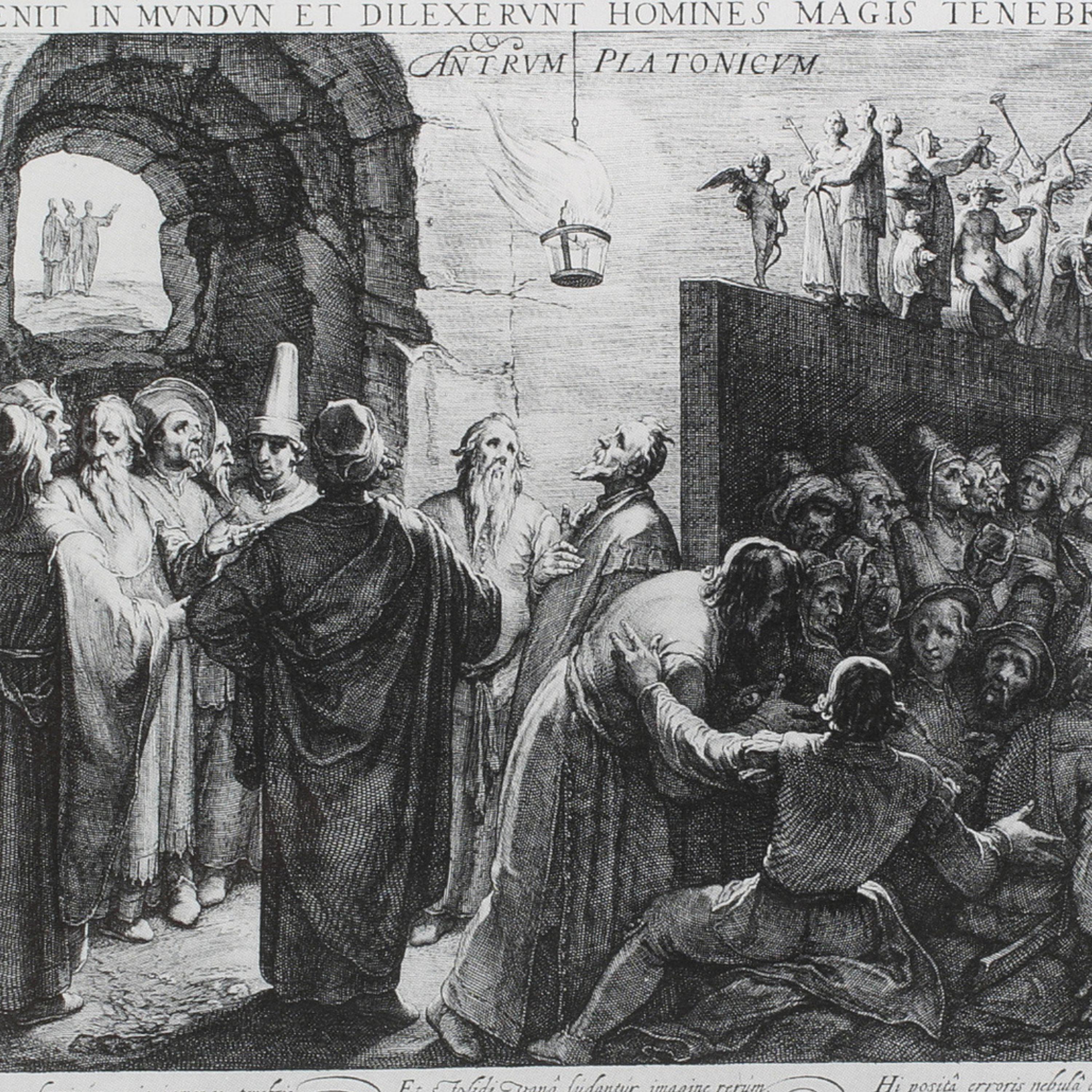


What if the most cited passage in Western philosophy has been deliberately misread — by both its critics and its supposed followers? In Part 2 of his conversation with Matt Ehret, Marshall examines the Allegory of the Cave, the Sophist movement, and a lineage of misuse running from ancient Athens to Leo Strauss and the neoconservative movement.
Ehret argues that the Republic is not the blueprint for authoritarian rule that critics have called it. Plato’s method — as Ehret reads it across episodes 11 and 12 — is always diagnostic: the dialogue poses negative examples to expose unexamined assumptions, not to prescribe conclusions. The Allegory of the Cave, Book VII of the Republic, demonstrates this method at its most concentrated. Two groups, Ehret contends, have each extracted the imagery they found useful and stopped reading before the passage that changes everything: the philosopher’s obligation to return to the cave, out of love for those still inside, even at personal risk.
The episode traces this misreading from its ancient roots — through Neoplatonist appropriations of the cave imagery — to its modern recurrence in Leo Strauss, the University of Chicago, and the neoconservative foreign policy establishment. Peter Thiel’s 2007 essay “The Straussian Moment” and Augustine’s battle against Gnostic Neoplatonism round out the arc. This is Part 2 of a three-episode conversation with Ehret tracing the Plato–Aristotle divide and its consequences for Western intellectual history.
Show Notes & Timestamps0:00 — Opening Hook — Plato, Unexamined Assumptions, and the Cave
0:50 — Introduction — Recap of Episode 11 and Episode Overview
2:00 — The Meno Revisited — Can Virtue Be Taught?
3:02 — Who Were the Sophists? — Teachers, Fees, and Athenian Democracy
7:20 — Transition to the Allegory of the Cave
10:47 — The Cave Explained — Shadows, Puppet Masters, and Degrees of Reality
13:35 — Two Groups Who Misread the Cave
14:20 — The Oligarchic Misreading — Puppet Masters as a Blueprint for Rule
15:00 — What Plato Actually Argued — The Philosopher’s Obligation to Return
16:00 — Free Will, the Soul, and the Gorgias Dialogue
18:27 — Marshall and Ehret — Confirming the Two Misreadings
19:10 — How Great Minds Get Abused — Plato’s Legacy After His Death
20:30 — Leo Strauss, the Noble Lie, and Neoconservatism
21:21 — The Straussian Lineage — From Strauss to Rumsfeld, Perle, and Wolfowitz
23:55 — Peter Thiel’s ‘The Straussian Moment’ Essay
24:06 — The Secret Doctrine Tradition — Locke, Hobbes, and Bacon
24:20 — Gnostic Neoplatonism vs. Authentic Platonism
25:33 — Christianity, Augustine, and the Battle Against Gnostic Distortion
28:07 — Closing Narration — What Episode 12 Established and Preview of Episode 13
29:09 — Series CTA
Key Concepts & TermsThe Allegory of the Cave — Plato’s image of imprisoned knowledge
Plato’s allegory, found in Book VII of the Republic, describes prisoners chained in a cave who take the shadows on the wall in front of them to be reality. Behind them, puppet masters control what is projected; above, a fire burns; beyond the cave, the sun represents truth itself. Ehret argues — drawing on the Republic throughout this episode — that the allegory is a graduated account of how knowledge deepens: from shadow, to object, to the light of the sun. The passage is diagnostic rather than prescriptive. Plato is not recommending that puppet masters govern society; he is showing how unexamined assumptions trap minds at the level of shadow.
The Noble Lie — a founding myth designed to bind a society
The term appears in the Republic when Socrates proposes that a well-ordered city might require a founding myth — a story told to citizens about their origins that is not literally true but that binds them to the political community. Leo Strauss, in Ehret’s account, extracted this concept and used it as the philosophical authorization for a governing class that manages the beliefs of the population through deliberate narrative control. The question Ehret presses — and that the episode explores — is whether Plato intended the noble lie as a genuine recommendation or as another diagnostic trap for the naive reader, one more unexamined assumption that the careful student should question rather than adopt.
Gnostic Neoplatonism — a mystical distortion of the Platonic tradition
Neoplatonism, in its ancient form, drew selectively on Plato’s dialogues to construct a hierarchical cosmology in which the soul ascends through successive levels of being toward union with a transcendent One. Ehret argues that this tradition — associated with thinkers such as Plotinus and, later, with Gnostic sects — is a deliberate inversion of authentic Platonism. Where Plato’s philosopher is obligated to return to the cave, the Neoplatonist’s initiate seeks escape from the material world into pure transcendence. Ehret reads Augustine’s theological battles against the Gnostics as recognition of this same split: the authentic tradition holds that good, truth, and beauty are positive principles; the Gnostic tradition resolves all contradictions into a “great nothingness.”
Straussianism — Leo Strauss’s doctrine of esoteric political philosophy
Leo Strauss (1899–1973), philosopher at the University of Chicago, argued that the great political philosophers wrote on two levels: an exoteric teaching for the general public and an esoteric teaching reserved for the initiated few capable of reading between the lines. Ehret places Strauss in the Neoplatonist lineage: a thinker who extracted from Plato’s Republic the concept of the noble lie and built from it a theory of governance in which a trained elite manages political reality for a population that cannot handle the truth. Strauss’s students, in Ehret’s account, include Donald Rumsfeld, Richard Perle, and Paul Wolfowitz — architects of a foreign policy tradition that Ehret argues follows directly from this premise.
Fascinating Historical InsightsThe Part of the Cave That Everyone Leaves OutThe Allegory of the Cave is among the most frequently cited passages in Western philosophy. Most readers know the imagery: prisoners, shadows, a fire, an ascent toward the sun. Fewer reach the moment that Ehret argues changes everything. In Book VII of the Republic, Plato has Socrates describe what happens after the philosopher escapes the cave and reaches the light. Most readers stop there — the story seems complete. But Plato continues: the true philosopher is not the one who escapes into the light and stays. The obligation is to return into the cave, even at personal risk, to assist those still chained inside. Socrates, in Ehret’s reading, is the embodiment of that obligation — and his death by popular vote in 399 BCE is the demonstration of the risk. The omission of this return is, for Ehret, the defining act of misreading that allows the cave imagery to be turned into a theory of elite management rather than philosophical obligation.
Leo Strauss, the University of Chicago, and the Neoconservative LineageLeo Strauss taught political philosophy at the University of Chicago from the 1930s through the 1960s. Ehret argues that Strauss operated with two registers — a public teaching and a private one — and that his private teaching drew directly on the Platonic noble lie as a philosophical foundation for elite governance. The students Ehret identifies as carrying that teaching into political practice include Donald Rumsfeld, Richard Perle, and Paul Wolfowitz, each of whom held senior positions in the foreign policy apparatus of the United States in the early twenty-first century. Ehret’s argument is not that Strauss invented this tradition but that he was its modern vehicle — a transmission point in a lineage that, in Ehret’s reading, runs from misappropriated Platonism through early modern political philosophy and into contemporary governance.
Peter Thiel’s ‘The Straussian Moment’In 2007, the technology investor and political thinker Peter Thiel published an essay titled “The Straussian Moment.” Ehret discusses the essay as evidence that the Straussian tradition is not confined to academic philosophy departments or Cold War-era foreign policy circles. Thiel situates himself within what Ehret describes as a secret-doctrine lineage — a tradition he traces not only through Strauss but back through Locke, Hobbes, and Bacon to an older practice of writing with two registers. The essay’s significance for this episode is not its specific political conclusions but its candor: a prominent public intellectual explicitly acknowledging and affiliating with a tradition of esoteric political philosophy that Ehret argues is rooted in the misreading of the Allegory of the Cave.
Augustine’s Battle Against the GnosticsBefore his conversion to Christianity, Augustine of Hippo was himself a member of the Manichaean Gnostic movement — a sect that, in Ehret’s account, embodied the Neoplatonist inversion he traces throughout this episode. Augustine’s eventual rejection of the Manichaeans and his sustained theological engagement with Gnostic doctrines across his mature writings represent, for Ehret, a recognition of the same split he identifies between authentic Platonism and its distortion. Ehret points to the Gnostic Nag Hammadi scriptures as the textual repository of the false Platonic tradition, and to the writings of Paul and the Gospels as carrying, in his reading, the best of authentic Platonic philosophy. The Augustine passage gives the episode’s theological thread a specific historical anchor: the Plato–Aristotle divide, for Ehret, is not only a philosophical fault line — it runs through the history of Christianity as well.
Resources & Further ReadingPrimary...00:00 - Opening
00:50 - Introduction — Recap of Episode 11 and Episode Overview
02:00 - The Meno Revisited — Can Virtue Be Taught?
03:02 - Who Were the Sophists? — Teachers, Fees, and Athenian Democracy
07:20 - Transition to the Allegory of the Cave
10:47 - The Cave Explained — Shadows, Puppet Masters, and Degrees of Reality
13:35 - Two Groups Who Misread the Cave
14:20 - The Oligarchic Misreading — Puppet Masters as a Blueprint for Rule
15:00 - What Plato Actually Argued — The Philosopher's Obligation to Return
16:00 - Free Will, the Soul, and the Gorgias Dialogue
18:27 - Marshall and Ehret — Confirming the Two Misreadings
19:10 - How Great Minds Get Abused — Plato's Legacy After His Death
20:30 - Leo Strauss, the Noble Lie, and Neoconservatism
21:21 - The Straussian Lineage — From Strauss to Rumsfeld, Perle, and Wolfowitz
23:55 - Peter Thiel's 'The Straussian Moment' Essay
24:06 - The Secret Doctrine Tradition — Locke, Hobbes, and Bacon
24:20 - Gnostic Neoplatonism vs. Authentic Platonism
25:33 - Christianity, Augustine, and the Battle Against Gnostic Distortion
28:07 - Closing Narration — What Episode 12 Established and Preview of Episode 13
29:09 - Series CTA
0:00 he never gives you answers so people get confused in our literal sort of culture where we see conclusions and we're like oh see Plato is is coming to a fascist conclusion here a eugenical conclusion here and what he's clearly demonstrating is how we come to bad conclusions by not examining our core assumptions upon which we build arguments or analyses and if you always have to be careful to not allow unexamined core assumptions into your constructions of whatever you're trying to make sense of in this case how to build a just world or a just economy hi welcome back to notions of progress in the previous episode 11 Matt Aaron described what he sees as the foundation of the platonic tradition the idea that real learning is not filling a vessel but awakening a flame the academy was built to produce minds capable of genuine discovery and discovery in Ehret's reading is the engine of genuine human progress today we pick up with the movement Plato was directly arguing against the sophists teachers who claimed for a fee to be able to sell virtue as an actual skill we then turn to the passage that Ehret argues has been deliberately misread for two and a half thousand years
1:30 the allegory of the cave is one of the most cited texts in western philosophy and according to Ehret it is often mischaracterized and it's mischaracterized by two very different groups for two very different purposes both of which omitted the critical part that changes everything sources reading and today's transcript could be found at notions of progress dot com so sit back and please enjoy part 2 of this enlightening conversation with Matt Ehret hey Matt before you move on to the allegory I just want to ask you one question about back to the Meno for a second um some interpretations there have been historically that the Meno in a sense was Plato's response to the sophists movement about whether virtual virtue could be taught or it can't be taught and I was just curious you know in this model that you put together do you think that Plato made a conclusion based on that just that one was that I do first of all do you see that as part of the lesson he was trying to teach and absolutely I do yeah I it was it was definitely an intervention on the softest movement and ironically yes it could be taught but not in the way that the sophists were teaching it it it couldn't be taught in that way you couldn't put it into a a student but you know so do you mind giving the gist again for the audience who's not familiar cause this office actually as a term has has been resurrected in very very recently actually so it's it's now coming back into some which is which is just in and of itself an interesting uh you know occurrence so would would you just give me like a very very brief like one or two sentences on
3:01 on who the sophists were and what they stood for and what in essence Plato was responding to vis a vis the sophists yeah well I mean sophistry itself is the art of making the false appear true or to win an argument it it you know the art of winning arguments or the art of persuasion which I mean rhetoric becomes a branch of sophistry in that sense though you could have good rhetoric too that's not tied to sophistry that's tied to real philosophy of course like rhetoric is just a tool as a way of communicating in a way that is persuasive which could be a good or a bad thing but when sophistry which basically is a you know was was the effect of this movement that appeared on the scene um a little bit before the Peloponnesian War in Greece where all of a sudden an array of personalities of gurus you know you can really think of those gurus they started just showing up in in odd places all over uh Greece and especially in Athens professing for money to teach uh young um career oriented types from the noble families mostly uh how to uh make friends and influence people pretty much and um and to qualify themselves to go into law to go into politics to go into military affairs by you know cause Athens was a democracy so as a democracy is one of the earliest democracies um the the for the first time the power was with the people um not so in the case of tyrannies and other things before that so with the power being of the people all of a sudden the power of influencing the people became very very high value and people started getting brainwashed
4:32 by these gurus these softest teachers um who began helping students advance career wise but without any actual love of wisdom so Sophia means wisdom the softest is those who proclaim to know and teach wisdom but they don't love it so the true philosopher entomologically speaking is the the Philo the lover of the Sophia the the lover of the wisdom so you the love the the process is way more important which is why Plato said you'd want to be a true philosopher instead of a a sophist any day um and uh and so yeah like for a price they would tell you what virtue was and they tell you how to spin it how to use it in a in a in a in a speech and you know how to sing its praises and and win friends again and influence people and hurt your enemies along the way which you everybody should want to do um and some of the personalities who are major influencers in this movement included gorgeous who was a major figure behind you know the decisions that were made unfortunately like Alcibiades was a a a student of Gorgias and also somebody who who Socrates tried to influence but failed who played a big role in in uh in sabotaging peace efforts during the Peloponnesian War that could have resulted in Greece uh coming out on top victorious against uh its enemies and ending or at least the very least ending the war like 20 or 15 years before it actually ended didn't work cause Alcibiades following the advice of Gorgias the teacher of the sophists and the name of one of the personality in the famous Gorgias dialogue by Plato was encouraging Alcibiades onto go and take take Syracuse militarily which was insane
6:03 and uh destroyed like most of the the uh the the Greek the the Athenian army along the way unnecessarily it was a totally destructive act um and so the these sophists were there there was protagoras there was there was so many of these sophists and so all of the personalities in Plato's dialogues are actually real people doing really destructive things in the real world that he was living in and that his his teacher Socrates had been living in and resisting and fighting in the real practical world so they weren't just philosophers in the clouds you know uh fancifully thinking about abstractions as is often uh told negatively about them that these were practical men in the practical world trying to create world situations of of of basically justice but also attacks they were working to to to fight back against the the mystery cultists of the of the temple of Delphi and and of the the the oracles of Apollo Delphi and and as well as the oracles of Marduk that were managing the Persian Empire at those at those times so they were practically setting up strategy building alliances with with generals in in Egypt and generals in in Italy and and other places and at different moments you know so it's for it's so interesting to see how that's done yeah absolutely it's amazing yeah and you had mentioned the cave and and the reason I wanted to stop you and just kind of scaffold the cave is because let let's say if we talked about the lessons of virtue that were that were discussed in the Meno there's some other lessons that were Learned or at least that were being discussed by Plato inside of the allegory of the cave
7:35 so if since you brought that up Matt if you wouldn't mind just kind of queuing up hey just just for those who are not as familiar with the you know you don't have to tell the entire story but just the basics of what they did and what was the primary lesson that that uh Plato was trying to convey in that particular allegory yeah it's a beautiful one and it's it's the the Republic is is so full of these beautiful little universal lessons and that's one of them in book seven um people get a little bit troubled by the Republic because of some of the conclusions that the characters come to about the way to organize the ideal society which is the whole thing is an intellectual exercise in an an exploration in understanding what might justice be um using negative examples and that's all Plato does whenever he posits a a positive principle is he's he's typically showcasing negative examples not positive ones in the sense of show he never gives you answers so people get confused in our literal sort of culture where we see conclusions and we're like oh see Plato is is coming to a fascist conclusion here a eugenical conclusion here thus he must that that must literally be what he he he believes it's like no that that that runs contrary to his entire method and what he's clearly demonstrating is how we come to bad conclusions by not examining our core assumptions upon which we build arguments or analyses and if you always have to be careful to not allow unexamined core assumptions into your constructions of whatever you're trying to make sense of in this case
9:07 how to build a just world or just economy um which he never you know he plants certain traps for the for the the naive student you know um like he doesn't differentiate he allows one of his characters Glaucus who was truly an an actual cousin of Plato to make the error of not differentiating the qualitative difference between guard dogs and animals that we can breed to make better guard dogs from human beings who should be the guardians of our society he just doesn't differentiate them which is super uncharacteristic of any platonic dialogue when something that like that emerge um it's always examined it's never allowed to just give it a pass but Socrates gives it a total pass he's like yes clearly that's the same thing um or Glaucon when when Socrates floats it up floats the the axiom glockon just gives it a total pass it's like yes of course we can agree training our our humans is like training our dogs or guard you know and okay so let's let's see what what let's proceed Onward and see what else will be the consequence of that you know and you're like oh before you know it you're throwing babies off a cliff uh haha who are born you know haha it's insane Matt but but going back to the cave for a second because yeah I just want to just double back on something you said previously he's you know if Plato has been misinterpreted and his and his his work has been taken out of context this is one of the sources that people often point to to take to take it out of context in your point and I just think it would be really helpful if you can explain to people just a little bit about kind of just a few basic facts and what you think Plato was saying and then stealman the argument Matt if you don't mind yeah just in terms of like what what where people
10:38 are actually taking this off the off the rails cause it's so important absolutely yeah can you share that perspective so I I want that that background just as we go into the specifics now of the of book seven and the and the and the cave allegory is that um it's very famous um often people will read it with none of the context of the rest of the the book number two uh it's often misused so and I'll say why it's misused in in a second here um number those who may not know uh the basic scenario is set up where to give an an example of the of the uh different phases the different quality of phases of knowledge that exist he describes now a scenario um a poetic scenario an allegorical scenario of people who have lived out their lives born into a cave trapped with their faces always looking at this miss deformed cave wall and behind them he sets up a a scenario where you know he he pauses a flame of a fire that had been set that causes light to be cast and shadows to be cast on that wall and controlling puppets as well as making sounds associated with those puppets that are imprinted as as shadows on the wall are certain uh puppet masters shadow masters who remain invisible but then control the visible imprints of what people have been taught to give labels to and to and to and to uh shape their identities around of what they thought all of reality was they couldn't conceive of a sun or a tree they could only see the maybe a wooden imprint of of a picture of a tree cast as a shadow so several degrees of separation between the the reality that is a tree
12:09 and the the shadow that they're seeing in the cave wall of the image of the tree you know not even the tree itself cast as a as a shadow um that that people become hyper adapted to because they've been living for so long with knowing nothing but that now he says let's say one of these characters finds themselves a broken out of their their shackles and all of a sudden free to move and sees a certain light at the end of a tunnel and slowly climbs out pursues the light and climbs out of the cave to find themselves outside for the first time in their lives um with their eyes very in pain because of the brightness of the sun that they've never been accustomed to and he's like what would it what would that person he's asks Glaucon or maybe it's Glaucon's friend what would that person be feeling at this moment he's like well of course they probably want us return back into their comfort zone they wouldn't the pain of it all might make and the fear of the unknown that they're first experiencing might make them want to go back into their their comfort blanket in the cave he's like yeah but the true philosopher if he's true will will overcome those fears and and slowly learn how to adjust his eyes to begin to look maybe first at the at the grass and then maybe at the tree and then maybe at the the reflection of the sun inside of the inside of the water or something and then begin to appreciate the light of of of truth itself from the sun which is an allegory for truth in the capital t versus the imprints or shadows of truth which are just opinions you know that are differentiated from real truth um but here's where things go or rhyme this is where the scandal begins to emerge
13:39 because those who will call themselves Neoplatonists today the the ruling class will use and extract some of those that imagery that they like because they're like yeah that's that's the way that's the way I wanna run my that's the way that I need to run the world is by controlling people's shadows and stories and myths that I and my class of masters will always be responsible for managing the governing myths and creating maybe new sacred myths to control the shadows of the masses in their superstitious ways and maybe that I can control the standard theories that are acceptable to be encouraged or allowed into academia and other things and that will be reserved for that higher priest class and they'll enjoy Plato's cave and call themselves Platonists like John Ruskin and others will call themselves Platonists because they like that now what they don't like is where Plato says or has Socrates say well to be a true philosopher is not to be satisfied knowing truth while your fellow man is is still trapped behind as you once were believing in the illusions of of their of their senses no no no it's to go back into the cave even at the expense of your security of your life'cause they'll probably want to hurt you and kill you if you are now all of a sudden coming in explaining to them why their beliefs that they've built reputations around are wrong and are based on a on a ephemeral reality that has no value um they will hate you for it and you have to be now accept the possibility of that type of of slander of hate of the mob will begin to hate you they might turn on you they might kill you
15:10 as Socrates discovered you know in his own life in three ninety nine BC when he was condemned to death by the demos the you know democratically voted to basically drink the poison because his political enemies were found him too troublesome and were able to use rhetoric and sophistry to organize the masses slanderously to believe things that were false about Plato Socrates being a demonic evil doer corrupting the minds of the youth and he actually did die by by virtue of this and so that's the part that the oligarchists always despise they wanna pretend it it wasn't said by Plato to go back into the cave out of love of your fellow man out of the knowledge even of the risk of your own flesh but at the health for the sake of the health of your soul and your conscience you do it so in the Plato Plato's world everything is about learning how to develop a relationship with the part of you that is immortal divine eternal that that that immortal soul that we can increasingly learn to identify with that transcends the ego part of our our being that perceives our sense of self as being the the persona we the the fame we project the money we accrue the admiration we get from others the benefits we we can get from rewarding our friends and influencing our enemies badly um the the the sexual or other types of of hedonistic vice vices that we can feed to give ourselves physical pleasure those types of identities are make our souls sick but we don't know it if we don't discover that we have a soul or know how to begin to develop a relationship or make it better and so without that standard
16:42 uh a woken with us we are a a number one in Plato's cosmology and I think he proves it quite well we we don't actually have free will as he proves that nobody wills to do evil in the Gorgias dialogue and and you know in his discussions with Callicles or in with for Simacus in in the first book Book 1 of the Republic um he's like no nobody would nobody can possibly have free will and at the same time engage in evil you can't will evil um not freely yeah you you can do it you can do it willfully but you can't then also claim to have free will because your soul is the source of your freedom and that if you do things that hurt your soul even though it's making your your body seem maybe more uh in enjoying of pleasure sexual or food or whatever or you know or your ego is being increased at as a sense of self self love but without a sense of having earned it by doing something truly good but actually you're doing something bad then your soul is hurting and your nobody would willfully hurt their soul so you know he plays with that in a number of dialogues and people again find that very difficult because they themselves have never made discoveries and to the degree that we don't make discoveries because we maybe are given an artificial school system that that encourages memorizing it encourages getting the right answers to things but not actually awakening um curiosity or discovering things on our own terms um we don't know how to relate to these words in these ancient archaic texts and and so it we we lose touch of what what made
18:13 Greece possible what made it a a bastion of freedom for a period what made it what what shaped universal history what has the oligarchy been trying to smother for thousands of years what we don't we don't get access to any of that when we when we approach it that way so that was my answer to the allegory of the cave so basically what you're saying Matt is very interesting too is that he was mischaracterized in this case by two people two sets of people his detractors and his supposed acolytes and at the same time you people who are presenting themselves as platonic that you refer to as the Neoplatonic which is a very well known movement they're actually also characterizing what those puppet masters are doing and saying that's a good thing whereas you're saying is that they're both mischaracterizing actually what Plato was trying to say in the entire and they're leaving off the the the second part of what he came down returning into the cave and the importance of is that is that a fair characterization of what you said that that's fair and so you know moving on now so you know with this world view or with this with this understanding this is this is where I think some of the tension comes in in terms of the maybe going back to earlier what you talked about about how Plato has either been characterized or mischaracterized throughout history and this this cause the cave always comes up that seems like to be one of the one of the first things that comes up in this uh in this model yeah well I you know there there are um Plato like like any great mind has had their ideas abused and their names misused
19:46 long after they died by people who either didn't know didn't understand what they were doing but thought they did and thus did damage by acting poorly um in in in in their name giving Plato himself the blame for the the destructive things done by people who thought they were his followers um or dishonestly so by design where people call themselves Platonists and yet were only neoplatonic uh hermeticists uh basically the the enemies of Plato that uh that also gave Plato a bad name and uh you know speaking to the the second one for the moment if you look at uh for example um Leo Strauss or or people I was thinking that yeah right that's a great example of a modern neo Platonist who um you know Plato in in the Republic again most of the Neoplatonists get their material they they extract it from and then and then spin it to their to their inclinations from the Republic as well as to a certain degree from the Timaeus uh those that are a bit more um occult alchemically minded will will will misuse the information presented in the Timaeus dialogue um but those who are more fascistically minded directly um like Leo Strauss will get it will extract and misuse the information from the Republic specifically the sections where where Socrates refers to the noble lie the noble lie that's you know needed to keep the masses in under a state of of subjugation or influence and um
21:21 and Leo Strauss you know he taught the first generation of what became the neo conservative um cabal in America and back in the 19 he was teaching in I think the school of Chicago back in the the 30s and the 40s and the 50s and uh and his uh students became Donald Rumsfeld became Richard Perle became Paul Wolfowitz you know they were all followers of his secret teaching you know and there there's been a number of of exposés showcasing the secret teachings of Leo Strauss um and his two different schools where he would plant seeds in his classroom um during his his lectures where he would say but you know he'll give his lesson about Socrates but then he'll say but you know the real gentleman thinks differently and then he'll just move on knowing that the way he spoke was of such a provocative obscurantist language that it would provoke the thinking students in his classroom to come to him after class and say what did you mean by that professor and he'd say oh come come to my office we'll have a separate conversation and that's how he would recruit talent and I think that's been an old school technique of recruiting special boys special talents for the for that would go on to to be elevated with more privileges in the the machinations of empire going back to the days of Lord Alfred Milner and Cecil Rhodes and the Milner kindergarten of young Oxford men or the earlier uh Cambridge apostles who also called themselves neo Platonists the Cambridge Apostles which people like Bertrand Russell Lord Bertrand Russell and and John Maynard Keynes and and uh
22:52 um Al Al Al Alfred North Whitehead um they were all Cambridge apostles Neoplatonists um who again were probably as young boys all recruited in that fashion from their mentors um that would speak to them in in you know private with some ice cream maybe after class you know um so yeah you've got but they're part of a lineage um for example Peter Peter Thiel wrote a a a document based on his Stanford lectures in 2,007 um called the The Straussian Moment and within that document which I I encourage people to read it's only maybe 20 pages it's it's a useful essay um he situates himself in the Straussian tradition he goes through how Richard Perle also was somebody who shaped his world view as when he was a student in the 80s in Stanford um but he also situates it as as something that goes far earlier back than even Strauss and situates it within the context of John Lock who he posits correctly so had a secret doctrine an open one for the the the uninitiated at court and and for the public you know and and then another doctrine another secret doctrine that he maintained as part of an unbroken continuity of tradition that he also situates earlier uh Hobbes Thomas Hobbes and and bacon um a patron of Hobbes uh to having been purveyors of the Secret Doctrine and so he's he's clearly situating himself
24:23 with an gnostic tradition these are the mystery schools of the Gnostics that were earlier uh opponents of the of the Nicene Christian movement of LED by Paul and and the uh the the the you know what became the Augustinian the platonic the platonic church fathers as Saint Augustine found himself I think as a leading champion of that more healthy Christian movement but always in opposition to this Manichaean gnostic movement of Neoplatonists who had been seated like little gurus again each gnostic sect whether the Valentinian School or the Balshitis School or the the Serinthus School there's a number of these hundreds even of these influential little little cults of Gnostics that called themselves Christian but had a whole different secret scripture with secret messaging and and teachings that themselves were were uh organized by these neoplatonic um uh priests that at that time were I think hubbed or based principally in uh in Athens but also in in in uh Delphi that that remained a hub of control of cult creation religious engineering even back back in those days and this is what the what Christian like Christianity had to fight against and the best of Christianity you'll find within the philosophical treaties or the philosophical writings of within the Gospels within the the way that the teachings and the insights are constructed within the Gospels and within the acts the writings of Paul um the best of platonic philosophy um
25:53 the best of it is located within those writings and and the fake platonic philosophy you'll find is located within the writings of the the Gnostic Nag Hammadi scriptures that feature always you know the the Neoplatonic secret doctrine promises of the initiated perfects those who will be able to attain perfection and again in Plato's there's there's one particular document that's very challenging that Plato wrote exposing this and I think the most subtle polemical hilarious way but if you are a Neoplatonist you will not understand it and it's the it's called the softest he calls it the softest and it takes place it it accompanies the Parmenides dialogue both of them are hilarious they're rigorous they're confusing for people who don't understand what this game is actually about and how it works but they are showcasing how the Neoplatonists construct a false Pythagorean a false dialectic method which um is easy to confuse it's like an evil doppelganger a dark mirror of the real platonic method and showcasing it you situates within it Socrates as a young more naive man as a as a as a teenager who's being influenced by this thing that looks like and smells like the Socratic method but it is not that it has elements right of of of wholeness that it focuses upon it has elements that try to bridge the the one and the many uh the these these contradictions which Socrates and Plato are always trying to work to how do you how do you find a healthy resolution to these contradictions
27:24 of the finite and the infinite of the one and the many the part and the whole of the of the you know how do you do it in a healthy way and the neo Platonists are also doing that but in a very unhealthy way because they resolve it in nothingness whereas um in the platonic world it's resolved in positive principles that are all different aspects of justice of beauty and truth and goodness whereas in the neoplatonic world it's actually resolved all in ultimate the ultimate freedom of of great nothingness the great void that's which resolves the seeming opposites of good and evil of many and one and these different things at the heart and kernel of it which he gets at in in a variety of ways in the softest dialogue this concludes part two of a three part interview with Matt Harrett part 3 follows in Episode thirteen Eric has traced two very different distortions of the cave allegory those who read the puppet masters as proof of platonic fascism of sorts and those who read them approvingly calling themselves Platonists or neo Platonists while doing so both he argues stop before the part that matters the philosopher in Plato's telling is not the one who escapes into the light and stays there the obligation for the philosopher is to return even at personal risk out of love for those still in the cave in Episode 13 Eric arrives at the deepest argument of the conversation the divide between Plato and Aristotle has two fundamentally
28:55 different operating systems for how a civilization thinks and what that means for whether genuine human progress is possible so stay tuned for Episode 13 if you enjoyed this episode you can find notions of progress on YouTube Apple Podcast and Spotify and all the sources reading recommendations and further context for every episode are in the show notes if you are enjoying the series liking the episode on YouTube and signing up for the newsletter at notions of progress.com really helps more people find these ideas for those who want to go even deeper the Curators Flame blog and Substack newsletter accompany each episode with the questions the scholarship leaves open I'm Marshall tracing ideas of progress from antiquity to the age of AI and leaving the debates open for you to consider until next time


