How Did Plato’s Academy Teach What Could Not Be Taught?
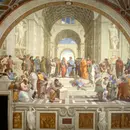


Plato named philosophy. But naming it was only the first move. The harder question was whether an institution could be built to make the progress he was wagering on actually work.
Episode 9 examines the Academy — not as an idea, but as a place, a community, and a method. Drawing on Prof. W.K.C. Guthrie’s account in A History of Greek Philosophy (Vols. IV and VI), Prof. Werner Jaeger’s Paideia: The Ideals of Greek Culture (Vol. II), and Prof. Christopher Moore’s Calling Philosophers Names, this episode traces what the Academy was in physical and intellectual terms, how it taught through Plato’s radical redefinition of paideia as conversion rather than transmission, and what the Academy’s curriculum reveals about the kind of knowledge Plato believed could anchor cumulative philosophical progress. It then turns to the succession problem — who leads the institution when the founder dies — and closes on Aristotle’s twenty years inside the Academy as the founding bet working exactly as designed: producing a genuine thinker capable of departing. This is the second of three episodes tracing the founding of the Academy, from the naming of philosophy in Episode 8, through the institution’s mechanics here in Episode 9, to Aristotle’s departure and the first full test of the founding bet in Episode 10.
Show Notes & Timestamps• 00:00 — The Founding of the Academy
• 07:49 — The Nature of the Academy
• 12:01 — Teaching Methods and Philosophical Inquiry
• 20:04 — The Curriculum and Its Implications
• 24:01 — The Legacy of the Academy
Key Concepts & TermsPaideia (pay-DAY-ah) — Greek for ‘education’ or ‘formation.’ The Sophists used it to mean the transfer of civic skills to citizens. As Prof. Jaeger reads the Republic, Plato takes the word back from the Sophists entirely: true paideia is not skill-transmission but the conversion of the whole soul — a turning around (periagoge) from shadow toward light.
Propaideia (pro-pay-DAY-ah) — Preparatory training. The name for the mathematical programme that precedes philosophical dialectic in the Academy’s curriculum: arithmetic, geometry, stereometry, astronomy, and harmonic theory. Mathematics is not the goal; it is the necessary discipline the mind must undergo before genuine philosophical inquiry becomes possible.
Episteme (ep-IS-teh-may) — Genuine knowledge: understanding that can give a full account of itself and withstand the most sustained questioning without collapsing. Distinct from doxa (opinion), even correct opinion, which cannot guarantee its own stability across time and argument. The Academy’s founding wager is that episteme — unlike rhetoric — can be reliably preserved and extended across generations.
Dialectic (dy-ah-LEK-tik) — The method of sustained philosophical questioning and counter-questioning aimed at genuine knowledge. Not rhetorical debate, not the scoring of points, but the rigorous, progressive examination of a claim until it either stands or collapses under its own weight. Socrates practiced it in the streets of Athens; the Academy institutionalized it as a discipline that, on Plato’s own account, took fifteen years to master.
Fascinating Historical InsightsThe Lecture Nobody Understood
Plato once gave a public lecture on the Good — and most of the audience left baffled. As Prof. Guthrie records it, Plato attempted to present the philosophical core of his thought in a single address, and the audience arrived expecting wisdom but encountered mathematics. Most departed confused. Aristotle, Guthrie notes, was reportedly one of the very few who stayed and followed. The episode is not merely anecdotal. It is evidence that the Academy’s inner circle was deliberately operating at a level of abstraction inaccessible to the wider public — not out of elitism for its own sake, but because, on Plato’s vertical model of progress, genuine philosophical understanding cannot be popularized without being falsified.
Two Schools, Two Theories of Progress
The Academy had a direct rival in fourth-century Athens: the school of Isocrates. Where Plato trained philosophers, Isocrates trained orators and statesmen. As Prof. Guthrie makes clear, these were not merely competing pedagogies but competing theories of what genuine improvement for a city actually consists of. Isocrates argued for civic breadth — education spread wide, producing men capable of effective participation in democratic life. Plato argued for philosophical depth — slow, selective, cumulative formation over decades. The debate between these two schools is the ancient world’s first sustained institutional argument about whether progress is horizontal or vertical.
A Community That Lived Its Philosophy
The Academy was not a school in the modern sense. As Prof. Guthrie describes it, what Plato founded was a community of inquiry — a circle of philosophers who lived, studied, argued, and ate together over decades in the grove sacred to the hero Academus, about a mile northwest of Athens. There were shared meals (syssitia), shared walks, shared rituals, and a common subscription to expenses. Members were not fee-paying students; they were participants in a shared intellectual life. The structure was closer in spirit to a Pythagorean brotherhood or a religious community than to anything recognizable as a university.
The Succession Problem and Its Philosophical Meaning
When Plato died in 347 BCE, the question of who would lead the Academy was not merely administrative — it was philosophical. Prof. Guthrie’s account is careful: Speusippus, Plato’s nephew, was chosen. What is clear is the philosophical distance between the two men. And Aristotle, the other obvious candidate, was legally disqualified as a metic — a resident alien who could not inherit property in Athens without special dispensation. The choice of Speusippus revealed something structural: the institution designed to transmit philosophy across generations had no reliable mechanism to ensure that succession followed its best thinking. That is not a failure of planning. It is a consequence of the theory of knowledge the Academy was built on.
Resources & Further ReadingPrimary Sources
• Plato, Republic, Books VI–VII (514a–541b) — The Allegory of the Cave and the philosopher’s curriculum, including the propaideia and the ascent to dialectic. Stephanus numbers are edition-independent.
• Plato, Seventh Letter — Plato’s own account of his Sicilian visits and the founding conditions of the Academy. Authenticity debated; philosophically central.
Works Discussed
• Prof. W.K.C. Guthrie, A History of Greek Philosophy, Vol. IV (Cambridge University Press, 1975), pp. 17–32 — The Academy as community, the rivalry with Isocrates, the “On the Good” lecture, and Aristotle’s arrival. ✓ CONFIRMED
• Prof. W.K.C. Guthrie, A History of Greek Philosophy, Vol. VI (Cambridge University Press, 1981), pp. 18–45 — Aristotle’s twenty years in the Academy; the succession to Speusippus; the biographical anchor for the E9–E10 arc. ✓ CONFIRMED
• Prof. Werner Jaeger, Paideia: The Ideals of Greek Culture, Vol. II, trans. Gilbert Highet (Oxford University Press, 1944), pp. 291–320 — Jaeger’s reading of the Cave as periagoge; the philosopher’s curriculum reconstructed from the Republic in careful stages. ✓ CONFIRMED
• Prof. Christopher Moore, Calling Philosophers Names: On the Origin of a Discipline (Princeton University Press, 2020), Ch. 9, pp. 166–167 — The Academy’s formalization of Socratic discussion circles; the first time philosophical pursuit could be sustained full-time and systematically across participants. ✓ CONFIRMED
Further Context
• Malcolm Schofield, “Plato and Practical Politics,” in The Cambridge History of Greek and Roman Political Thought — For the relationship between the Academy’s pedagogical model and Plato’s political ambitions.
• Julia Annas, An Introduction to Plato’s Republic (Oxford University Press, 1981) — Standard scholarly guide to the Republic’s epistemology; useful for the episteme/doxa distinction and the philosopher’s curriculum.
Related Episodes• Episode 5 — The Sophists: Fifth Century Enlightenment? — The horizontal model of progress the Academy was built to refute.
• Episode 6 — Plato vs. the Sophists: The Allegory of the Cave — First introduction of the Cave; episteme and doxa enter the series.
• Episode 7 — Plato vs. the Sophists: Rhetoric, Power, and Callicles — The political consequence of Sophistic education and the case for Plato’s alternative.
• Episode 8 — The Word and the Wager — The naming of philosophos and the founding of the Academy; the direct predecessor to Episode 9.
Coming Up NextEpisode 10 — The Founding Bet. Aristotle departs the Academy to found the Lyceum. His departure is not merely biographical — it is the ancient world’s first internal critique of the founding bet. Was the Academy’s vertical model of progress proven, disrupted, or something more interesting than either? Episode 10 pursues that question with Prof. Guthrie’s biographical account and Prof. Moore’s analysis of what the Academy made possible for the first time.
Listen & Subscribe• Spotify
• YouTube
• Website — notionsofprogress.com
• Email: marshal...


