From Liberal to Liberalism: Helena Rosenblatt on the History of a Word
Helena Rosenblatt dates the beginning of liberalism to the appearance of its name, a position she acknowledges can be contested. On her account, John Locke used “liberal” only as an adjective with a different meaning and would not have counted himself part of a tradition that had no name yet. Toleration, constitutions, rights, and representation were old, she says, and came together around 1813, when the word apparently first appeared in a Spanish newspaper, used by counter-revolutionaries for whom it meant selfishness, anarchy, revolution, and atheism. The conversation turns on three questions: whether a tradition begins with its ideas or its name, whether liberalism at its root means freedom, generosity, or both, and how Madame de Staël and Benjamin Constant answered a leader who claimed to speak for the people, a story she says carries some modern echoes.
Overview
In Part One of a three-part conversation, Helena Rosenblatt presents her 2018 book, The Lost History of Liberalism, as a word history of “liberal” and “liberalism.” She follows the Latin liber from Cicero through the Renaissance and the Enlightenment, places the naming of liberalism around 1813 in the circle of Madame de Staël and Benjamin Constant, and carries the story through the July Monarchy of 1830 to Alexis de Tocqueville’s concern about what he called democratic despotism. Part Two turns to the social question, Marx and Engels, Napoleon III, and Abraham Lincoln.
Key Moments from the Conversation
No Liberalism Before the Word
Rosenblatt describes her book as a methodological intervention in the scholarship, and says she goes by the theory that there is no liberalism before the word, a position she realizes can be contested. Toleration, constitutions, rights, representation, and equality are old, she says, and came together at a certain moment and were named liberalism. When colleagues point to John Locke, she replies that he used “liberal” as an adjective meaning something different from today, and that the noun did not yet exist. Her method rests on this distinction between the older components and the named whole.
A Salon, the Terror, and Napoleon
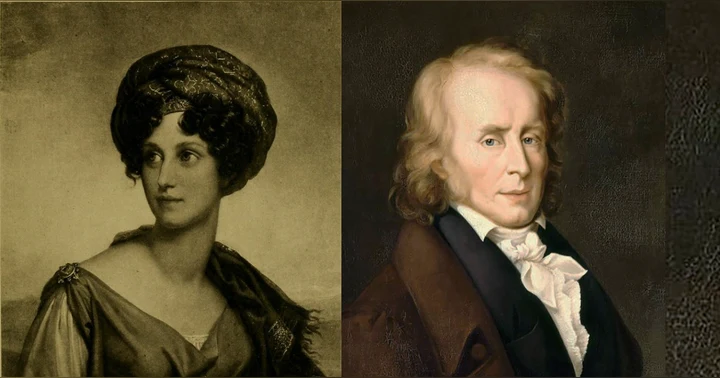
Rosenblatt says Madame de Staël, who learned from her mother to keep a salon, met Benjamin Constant in 1794 and brought him to Paris. After the Terror, she says, they hoped to rescue the best of the Revolution and at first put their faith in Napoleon. When they saw that he wanted to be a dictator, their circle assembled constitutional rule, the rule of law, civil equality, and individual rights, to make a Napoleon impossible in the future. She describes the aim as preventing a demagogic power that claims to represent the people, and says this has some modern echoes.
The Workers and the Liberals of Order
Rosenblatt says the workers of Paris helped the liberals take power in 1830, hoping for legislation on working hours, help in downturns, minimum wages, and the right to strike. In their eyes, she says, the liberals in power turned conservative. She describes a split between the liberals of movement, who wanted to broaden the franchise, and the liberals of order, in a system she calls an oligarchy where very few could vote. The workers were disappointed, she says, and socialism began, some of it as a breakoff from liberalism.
Guest Spotlight
Helena Rosenblatt is Distinguished Professor of history, political science, and French at the Graduate Center of the City University of New York. Her most recent book is The Lost History of Liberalism: From Ancient Rome to the Twenty-First Century (Princeton University Press, 2018), the subject of this conversation. She is also the author of Rousseau and Geneva: From the First Discourse to the Social Contract (Cambridge University Press, 1997) and Liberal Values: Benjamin Constant and the Politics of Religion (Cambridge University Press, 2008). Her present project, for which she was awarded a John Simon Guggenheim Fellowship, is an intellectual biography of Madame de Staël.
For Further Reading
Primary Sources
Helena Rosenblatt, The Lost History of Liberalism: From Ancient Rome to the Twenty-First Century (Princeton University Press, 2018) — the book at the center of this conversation. Rosenblatt describes it as a word history of “liberal” and “liberalism” and as a methodological intervention in the scholarship, and says it began when an editor at Princeton asked her to write a history of liberalism.
Questions to Consider
- Rosenblatt dates liberalism to the appearance of its name, while acknowledging that others look for earlier liberals in figures such as Locke. Does a tradition begin when its ideas appear or when it receives a name?
- Rosenblatt says the Latin liber means both free and generous, and that talk of liberalism today centers on rights and choices more than on obligations and duties. Does a word that keeps only one of its two meanings still name the same thing?
- Rosenblatt says Staël and Constant assembled their safeguards to make a Napoleon impossible, and that liberals of order and of movement later disagreed over who should vote. Can protections against a leader who claims to speak for the people coexist with a narrow franchise?
Connection to Notions of Progress
Rosenblatt’s account treats a political vocabulary as having a history of competing meanings: liberal as free and as generous, liberalism as a name first given by opponents, and liberals who disagreed among themselves over who should vote. She notes that Constant spoke of history as a march, and that Tocqueville believed democracy is where history is headed while fearing what he called democratic despotism. For a series that asks how ideas of progress take shape and what turns them back, Notions of Progress sets out where Rosenblatt places each turn and leaves the reading of them open.
Listen & Subscribe
Website — notionsofprogress.com
Email: marshall@notionsofprogress.com
Liberalism and the Social Question: Helena Rosenblatt on Guizot, Marx, and Napoleon III