Theorizing the Machine: Gavin Mueller on Marxism, Taylorism, and Cybernetics Interview pt 2 of 3


In Episode 17, Gavin Mueller (University of Amsterdam) traced the Luddites back to the guild economy of England's Midlands. In this second installment of a three-part conversation, Mueller follows that struggle into the twentieth century: Karl Marx's own ambivalence toward machinery, and the split between Karl Kautsky's “orthodox” Marxism — which treated capitalist technology as a scientifically inevitable path to socialism — and the workers' movements that resisted that framing directly on the shop floor. Mueller traces Frederick Winslow Taylor's “scientific management” as, above all, a theory of control rather than efficiency; the short-lived but influential Technocracy Movement's vision of automation as an unstoppable social force; and mathematician Norbert Wiener's cybernetics, including his largely unheeded 1949 letter warning UAW president Walter Reuther that automation posed a genuine threat to organized labor. The episode closes on how that warning intersected with civil rights-era debates about automation's disproportionate impact on Black workers. As with the whole series, the through-line is not a settled verdict on technology and progress, but the recurring argument over whether machines serve human ends or reshape them.
About Our GuestGavin Mueller is an Assistant Professor of New Media and Digital Culture at the University of Amsterdam, where he also teaches Marxist Theory for the Critical Studies MA at the Sandberg Instituut. He holds a Ph.D. in Cultural Studies from George Mason University. He is a Contributing Editor at Jacobin and a member of the editorial collective of Viewpoint Magazine. He is the author of Breaking Things at Work: The Luddites Are Right About Why You Hate Your Job (Verso, 2021), the book at the center of this three-part conversation, and Media Piracy in the Cultural Economy (Routledge, 2019).
Show Notes & Timestamps00:00 Welcome Back: Picking Up the Conversation
01:31 Mueller's Project: Connecting Luddites and Marxism
05:38 Marx's Own Ambivalence Toward Machinery
10:41 Bridging Back to the Luddites
16:35 Orthodox and Heterodox Marxism
23:57 Taylorism as a Theory of Control
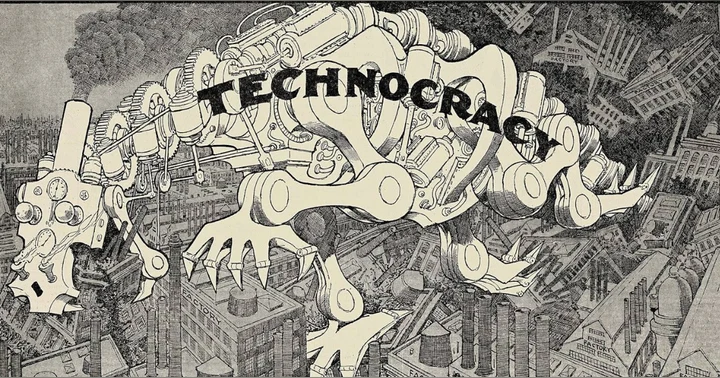
31:43 The Technocracy Movement
36:30 Cybernetics and Norbert Wiener
41:25 Contemporary Echoes: From the '60s to Now
Key Concepts & TermsCybernetics — the science of control and communication in machines and living thingsCoined by mathematician Norbert Wiener, cybernetics derives from the Greek kybernetes (“steersman”) and describes systems that regulate themselves through feedback. Wiener applied the concept first to anti-aircraft targeting, then — as Mueller discusses — to a broader warning about automation's threat to industrial labor.
Scientific Management (Taylorism) — a system for controlling how factory work gets doneDeveloped by Frederick Winslow Taylor and built on time-and-motion study of workers' individual tasks. Mueller argues, following historian Harry Braverman, that its real function was less about efficiency than about transferring control of the production process from workers to management.
Kautsky — the theorist behind “orthodox” MarxismKarl Kautsky, the leading theoretician of the German Social Democratic Party, held that socialism would emerge automatically from the development of capitalist productive forces. Mueller treats Kautsky's determinism as the dominant — and, in his account, mistaken — current within the early twentieth-century workers' movement.
The Technocracy Movement — a 1930s proposal for engineer-led economic ruleA short-lived American movement centered on Howard Scott's Committee on Technocracy at Columbia University, which argued that trained engineers, not elected politicians or capitalists, should administer the economy through “energy accounting.” Mueller treats its rapid rise and fall as an early instance of automation panic detached from any actual working-class movement.
Fascinating Historical InsightsThe Stopwatch That Started a StrikeOn August 11, 1911, molders at the Watertown Arsenal in Massachusetts walked off the job the moment Taylor's stopwatch appeared on the shop floor. The dispute escalated all the way to a congressional hearing in January 1912 — and Congress sided with the workers, discontinuing the Taylor system at Watertown and reinstating the fired molder.
The Warning Walter Reuther Never Acted OnIn August 1949, Norbert Wiener wrote directly to UAW president Walter Reuther, warning that automation could unleash “disastrous” unemployment and offering to help labor secure a share of the resulting profits. Reuther eventually invited Wiener to address a UAW conference in 1952 — but Wiener, in poor health at the time, never gave the talk.
A “Bloodless Revolution” That Lasted Barely a YearAt its 1930s peak, the Technocracy Movement drew crowds eager for its promise that trained engineers, not politicians, could administer the economy through “energy accounting.” Its influence was, by most accounts, a genuine media sensation — one that collapsed almost as quickly as it rose, leaving behind a movement even its own former members increasingly described as cultish.
Automation and the Fight for Civil RightsBy the 1960s, automation's disproportionate toll on Black workers had become a live civil rights issue. Malcolm X argued that the threat of job loss to automation justified a separatist political strategy — a markedly different framing from other prominent civil rights voices of the era.
Resources & Further ReadingPrimary Sources– Taylor, Frederick W. The Principles of Scientific Management. Harper & Brothers, [1911] 1913. Taylor's own account of the system at the center of this episode's shop-floor conflicts.
– Wiener, Norbert. Letter to UAW President Walter Reuther, August 13, 1949. Available at libcom.org. The full text of the warning discussed in the episode.
– Spellman, A.B. “Interview with Malcolm X.” Monthly Review 16:1, May 1964. The interview in which Malcolm X connects automation to his separatist political argument.
Works Discussed– Braverman, Harry. Labor and Monopoly Capital. Monthly Review Press, 1974. Braverman's analysis of Taylorism as a system of control, cited directly in Mueller's account.
– Kautsky, Karl. The Class Struggle. Charles H. Kerr & Co., [1892] 1910. The foundational statement of the “orthodox Marxist” position Mueller traces through the Second International.
– Wiener, Norbert. Cybernetics; or, Control and Communication in the Animal and the Machine. MIT Press, 1965. Wiener's founding text of the discipline discussed in the episode's second half.
– Wiener, Norbert. The Human Use of Human Beings: Cybernetics and Society. Houghton Mifflin, 1950. Wiener's popular-audience extension of cybernetics into social and labor questions.
– Lichtenstein, Nelson. The Most Dangerous Man in Detroit: Walter Reuther and the Fate of American Labor. Basic Books, 1995. The standard biography of Reuther, source for the UAW context around Wiener's letter.
Coming Up NextPart 3 of this conversation with Gavin Mueller closes the arc: Shoshana Zuboff's surveillance capitalism, and what a century of arguments about machinery, control, and labor power has to say about artificial intelligence today.
Listen & SubscribeApple Podcasts https://podcasts.apple.com/us/podcast/notions-of-progress/id1837506445
Spotify https://open.spotify.com/show/5WgTlVMBfFzrIQwqkqhiD9
YouTube https://www.youtube.com/@notionsofprogress
Amazon Music https://music.amazon.com/podcasts/8991b97b-91cb-4cb5-918a-5db9d11a6140/notions-of-progress
Website — notionsofprogress.com
Email: marshall@notionsofprogress.com
About the ShowNotions of Progress is a podcast tracing ideas of progress from antiquity to the age of artificial intelligence. Hosted by Marshall Madow — an independent researcher whose MA in History (Cambridge) examined Georges Sorel's epistemology of myth, and whose MSc (Oxford, Saïd Business School) focused on Complexity Science and Leadership — the show surfaces the debates rather than settling them, tracing how thinkers from Hesiod to Hayek, Plato to Peter Haff, have understood what it means for humanity to move forward, at what cost, and for whom.
Email: marshall@notionsofprogress.com Website: notionsofprogress.com
00:00 - Welcome Back: Picking Up the Conversation
01:31 - Mueller's Project: Connecting Luddites and Marxism
05:38 - Marx's Own Ambivalence Toward Machinery
10:41 - Bridging Back to the Luddites
16:35 - Orthodox and Heterodox Marxism
23:57 - Taylorism as a Theory of Control
31:43 - The Technocracy Movement
36:30 - Cybernetics and Norbert Wiener
41:25 - Contemporary Echoes: From the '60s to Now
0:13 Hi, welcome to Notions of Progress. Just a quick note before we pick back up. For those watching on YouTube, this episode is audio only, same as it was in part one. Unfortunately, the video from our conversation with Gavin Mueller didn't survive a technical glitch during recording, but the audio held up well, and so here's what we have after we left off In part one of this conversation, Gavin Mueller traced the Luddites back to their roots in the guild economy of the English Midlands. These were skilled textile workers who organized under the mythical banner of King Lud to resist the machines that threatened their wages, their working conditions, and the quality of their craft.
0:53 Professor Mueller pointed to the historian Eric Hobsbawm, who reframed the Luddites decades later, not as an irrational outburst against progress, but as a rational labor struggle. From there, the conversation turned. Mueller sets the Luddites aside for a while to trace something even broader: how the politics of technology got theorized in the century that followed, from Karl Marx's own conflicted view of machinery through the splits inside the socialist movement to Taylorism to the T-Technocracy movement and the birth of cybernetics. Thanks for sticking with us. Sit back and enjoy the show I think this is a good time to kind of transition to talk about Marxism in this sense.
1:34 Okay. Because you talk about, if, if that's okay- Sure ⦠now to e- even to go back to the intro of your book, I remember- Mm-hmm ⦠you wrote something in there about p- your personal mission regarding wanting to⦠And if you would just talk a little bit about that, not that you're- Yeah carrying the flag, so to speak- No, no ⦠but kind of like what your objectives were regarding the Luddites and Marxism, and to make that- Yeah ⦠connection. So I think my wager here, I'll, I'll put my cards on the table as a- Yeah ⦠Marxist- Yeah ⦠socialist, is that, you know, I, I I'm interested in more people coming to a kind of critical understanding of capitalism- Mm-hmm and, and engaging in kind of socialist politics and using Marxism to sort of, uh, help understand their world and, and, and what they should do.
2:15 And I think that, um, there are many people in the world, probably more people in the world feel this way than are Marxists, that have some sort of misgivings about technology or reluctance or, you know, something new comes along and, and, and it changes things in ways they don't like, right? There's, there's, there's long been this in, in, in the history of capitalism. It's not always been tied very much at all to, to Marxism and to radical politics, right? And so these are, you know, Luddites, right? You know, people, "I don't like my phone," or, "I don't like AI," or, you know, "I don't like the chemicals in my food," or any, any of these th- these kinds of things, right?
2:56 That have a sort of, uh, you know, kind of implicit sort of misgivings about technology. My idea was, okay, so, so that's a pretty widely held belief. So if you are wanting to get more people to have a critical understanding of capitalism, you say, "Look, a lot of your problems with technology are related to the fact that these are technologies developed according to capitalist imperatives. So your problems with technology are also problems that you potentially have with capitalism." And then from the other direction, see a lot of people⦠So that, you know, brings potentially more people to kind of a critical understanding of, of capitalism, right? The, uh, the⦠It's a basic, kind of a basic principle of saying, "I'm not gonna come in and tell you, 'Here's all the problems in the world.'" I'm gonna say, "What are your problems?" You know, did you know, you know, can you make these⦠You can make these connections, or you can kind of, um, if you understand these things in a wider historical sense, then, then maybe you realize it's not just your phone you have a problem with, but, but it's an entire kind of socioeconomic system.
3:57 And then from the other direction, you know, um, I was interested in, in Marxists having a more critical understanding of technology because I think that technology is, you know, a problem for people who are developing social movements, who are trying to enact radical change, who are engaged in all sorts of kind of activities around changing society. They need to have an understanding of technology, and they need to kind of⦠Not just a, a, an understanding of it, but they need to kind of bring it in and bring it into their kind of critical focus the same way they would other sort of important issues. So, and, and I think that goes back to something earlier I said about starting a conversation. One, one way I think about starting a conversation is, is actually bringing different conversations together.
4:42 So bringing people who have this kind of critical, uh, sense of technology together with people who have a critical understanding of capitalism. In many ways, those are separate conversations, and one of the things I do in my book is show, show how they are separate, but how they come, have come together at various points in time through various different types of figures. And then think about, you know, how that might look in our current moment. Um, so yeah, bringing⦠The way I put it in the, in the intro is, you know, turn, turn Marxists into Luddites and Luddites into Marxists. Right. No, and well⦠And I would say also going through your book, what I felt, and I, and this is me projecting onto it as a reader, this is also I think a very interesting examination of Marxism.
5:22 And I'd like to talk about that too, because I think you, you go through some of the various flavors, and there are different people that you point to as⦠That, that I, it sounds from your, your words that you're more sympathetic to their ideas versus others. And I think I'd like to talk t- a little bit about that. Let, and let's start with the person himself. Let's start with Marx himself. Okay. Because, well, let me say this. I, uh⦠How would you, based on, well, you know, what I've read in the book, how would you categorize Marx's, you know, perspective regarding technology and automation? Yeah. It's, that's unclear. I- Yeah. It's- ⦠to begin with ⦠if you, if you read like a summary, right, of like what are Mar- what did Marx believe and what did he say about these things, and what's historical materialism, right?
6:02 You know, like you get this like, well, there were stages of development, right? And there was feudalism, and, you know, then capitalism started emerging, and then what that did was it dismantled all these feudal relations, right? And then it's gonna keep developing, and then you'll get socialism, right? And Marx was very clear throughout his life that people who wanted to kind of attach to or preserve some sort of older way, that was, that was reactionary. It wasn't gonna, it wasn't gonna work, and it was bad to try, right? But then if you actually read Capital where the parts where he's talking about like the introduction of new machines, the language is just like, you know, so dark. It's like, you know, it's like being in, you know⦠These people are trapped and degraded and crushed and become appendages of the machine.
6:47 So it's interesting to me. I mean, you know, I, I think there are places where he's very clear. Like, okay, there's poten- you know, technology develops, and that does create some interesting potentials, right? He was very⦠He, one thing that he was trying to do, and one thing that I think makes his work really complex is He was trying to graph sort of a, a motion or a trajectory of change that was of social change and saying you have to kind of⦠You can't just start from, like, a, a set thing that you wanna do. You have to understand this trajectory of change and kind of intervene in what's unfolding, right? And that's actually why he thought the proletariat was so important.
7:27 He's like, "Wow, this is like a very new class. They're not wedded to the old ways. They are a product of this new situation, and th- you know, what they do is going to shape history," right? So, so there's absolutely, I would say, uh⦠And so this gets taken to say, "Okay, well, you need to have-- let capitalist technology develop to have a kind of base for socialism," right? Whether that's because you need a certain level of productivity, otherwise you have, you know, socialism but everyone starves, or whether that's because that development creates a large enough sort of proletariat that, you know, you can take political power. There's different ways that people have justified it based on things that Marx or Engels or other people have said, right? But then there's another part of Marx that's, like, definitely seems to recognize that from kind of experiential level, like, these new machines are just awful to work with, right?
8:19 And more than that, there's a politics there. There's a few moments. He doesn't, he doesn't spend a lot of time really investigating this question, um, but he, he does remark at, at a few points. He's like, "You know, the, the reason these technologies emerge the way they do is they are really set up to prevent workers from coming together the way they had been coming together." So you can create these new machines that separate workers or require fewer workers, so that way you have your, your sort of⦠It's a, it's a kind of weapon of class struggle on behalf of, of, of capitalists, right? If you can kind of fragment the workforce or discipline them in such a way that they are not able to have power on the shop floor, they're not able to develop a kind of social power, that's a big advantage.
9:06 And he suggests that a few points, but doesn't really elaborate on that. So from, from my s- perspective, I see a lot of ambivalence in Marx. I think that the kind of cliché Marx and, and indeed the Marx that gets picked up by the most influential- Yeah. Yes ⦠um, parts of, of the, the socialist movement, you know Is this kind of, uh, technologically determinist Marx, right? In fact, if you⦠I think a, a lot of times when you, when people are introduced to Marx in, like, a sociology class, he's e- he's even sa- That's like, "Oh, he was a technological determinist, and that's actually the problem with him." I think when you dig in and see what he's, what he's doing and what he's reading, and you have kind of a, a little bit more detailed perspective, it, it's hard to say that he's purely a technological determinist.
9:50 I would say he's not a technological determinist. I think d- he does have some optimism about technology. He was really into technology, right? He was⦠A lot of new technology was happening during his life, and he was really trying to keep track of that stuff. So he, you know, he would do diagrams of steam engines and things like that, right? You know, he was always talking to Engels, who was working in a factory. He was a, he was a⦠He was managing it. Um, he wasn't operating machines. But they had a lot of⦠He was like, "I need to⦠I wanna know more about what's going on there," right? So he was super curious about this stuff. But I think that when it comes to how, w- the politics of that, you know, he, he, he⦠It was a mixed bag, and I think some things were not super, super developed, right, in, in his thinking around those things. So I think the, the kind of reputation that he has as a sort of technological determinist is oversimplified.
10:35 Now, the people that come along after his influence- Yeah, and I wanna, and I wanna get to that. I actually just wanna take one second to just kind of do, like, a brief⦠Because I think that bridge is very interesting, right? Yeah. In the, in the sense, and, you know, again, based on your book, you know, Hobsbawm makes the case, as, as you so eloquently laid out, that, well, you're putting this label onto the Luddites. They're as anti-technology. Actually⦠And he makes a strong case to say no, they were an- they were anti certain uses of technology, but actually they embraced technology when it helped them in the shop. That was his argument. Yeah. So he's dispelling the myth of the Luddites as being anti-technologists. But let's just take it on its face value that these preconceived notions existed- Sure during that time, and I think Hobsbawm makes that, makes that argument. And then we get to this place where, as you were talking about Marx himself, not Marxism.
11:19 The Marx of Marx- Mm-hmm ⦠is talking, has this ambivalence, is ta- has these dark moments in capital talking about the machines. And then now we're going to the next phase, and now⦠But yet we're looking at the same time, and you, and you raise this as well in your book. You start looking at things like scientific socialism- Mm ⦠and angles. And if, if you're reading this from the outside, had you not had somebody who was not following this debate or followed your book closely, it seems like a weird disconnect. It seems like one person, it⦠One, one set of ideas is actually embracing technology as a, as a specific tool. Like, like one of the arguments that was made there was the idea that certain people thought that technology could be used against the bosses.
12:00 Mm-hmm. Against. So there was a p- Is that a, a fair statement as well, that there was a, a camp of p- folks who said, "Well, no, no, actually this could, this could really help us out"? To sure. I mean, you know, you could, yeah, like the, the, that the, that, that there was a, a sense, particularly the kind of generation of Marxists after, after Marx and Engels that like history had, um, a course and it was going in a way that was working out for them. Uh, and there were reasons, you know, that was also a rational thing to think. In, uh, Germany, the The, the, the working class was growing bigger. Marxists were very influential. They were unionizing. They were creating not just unions, but a, like a whole kind of parallel society, right, of people who were, uh, tightly organized, had a critical understanding of capitalism, had⦠Were invested in sort of a future where workers had power, and they were like, "Yeah, we're almost⦠We're getting gr- bigger and bigger and, and eventually, we'll just have the numbers, and we won't have to do⦠We won't even have to do like a violent revolution.
13:04 We can just use a lot of the political processes that the bourgeoisie use and, and, and it will make it work for us. Maybe we'll have to have a general strike or something like that." So, you know, really, I⦠You know, again, this is, I think, one of those things when you read history, it's like really hard to summon, you know, how people actually kind of felt, right? But there was a real sense that, that, you know, history was on their side. Progress was also the progress of the workers' movement. And so but I think that is a little bit different from, from Marx and, and I think there's other ways to think about it, right? So, um, for me, I think, and, and I think this is also a v- a really valuable perspective from, from our current moment. You know, for Marx, I think what he was interested in was historical developments that pushed people into more kind of antagonistic mass situations, right?
13:55 Situations where people were like, "We are coming together to, to create radical change," right? And at a certain point, I think you can see that, that maybe there are ways that technology develops that prevents that, right? That there's no sort of inevitability about the way technology develops that brings people into this revolutionary mass. In fact, actually, one thing that you see shortly after, so, you know, the, the, the, the SPD in Germany, you know, the⦠Everything's going really well for them, and then, you know, World War I happens and, you know, the international falls apart, and then there's a Russian revolution and the German revolution kind of hesitates and it doesn't work out anyway. But shortly after that, you know, you see the, the capital realizes, you know, one problem we're having is we have these massive factories.
14:42 Uh, they're bringing in lots and lots of workers under one roof, and then those workers kind of re-- you know, it's very apparent just by the architecture that you have a, a, a, a, a class antagonism here of people who are standing over and watching everyone who's doing the work and then, and disciplining them and cutting their pay, et cetera, et cetera. And there's a power difference there. But there's so many more of them, and it becomes so clear, right, that like wow, okay, the⦠all these people come together and have, have real kind of leverage. So what can you do? Well, we gotta stop making these massive factories. Let's, let's separate them, right? That's one thing that happens in the auto industry, right? And carries forth until today, where you build the parts in one place and the other parts in another place, often in another country.
15:28 You finish it in another place. You s- basically take a massive factory and scatter it, so you have smaller workforces. Maybe you have⦠You separate different kind of skill sets, right? So if one group is getting kind of testy, it doesn't affect the other people. And in that way, you sort of use technological restructuring of the production process to prevent mass struggle, right? And to me, that is, that's something that Marx would've been like, "No, this is, this is not a good development of technology," right? This is, this is actually a- an effective way of, of tamping down class struggle. And, and I, and I absolutely wanna go into that 'cause you- Yeah ⦠you have some fascinating sort of Discourse on Taylorism, and I have that as part of it.
16:08 I wanna just, actually, if you just take two minutes, I wanna finish that bridge. Oh, sure. 'Cause this is⦠No, no, no. This, this is where I'm having a hard time trying to understand how we got from Marx and where the factions and⦠Not so much for more of the details about who was who, but I would like to understand where those factions⦠Like, what, what splintered from that original thinking, you know, with the Second International, for example- Yeah that you raise in the book, and kind of where, where were the battle lines drawn- Yeah ⦠if you don't mind. I think, I think, you know, there is a- I mean, is it fair for me to say that, that it seemed like there was a, an internal schism there? 'Cause- I don't know if it was a schism. I mean, I⦠What I would characterize it as is you have a sort of, you know, for lack of a better word, a kind of mainstream version of Marxism that is, like, the, the, the main organs of the workers' movement, right?
16:51 The SPD in Germany. Later on, you know, the, the Bolsheviks in the Soviet Union. You know, if you're a Marxist or you're a socialist, you know, 90% of them are, you're probably gonna look to those kinds of things depending on the time period you're living in, right? Because that's what it means. That's where it seems to be the biggest and most successful, right? And in those places, there was a real sense that Marxism is this kind of science of history that, you know, you're progressing through levels, that you are⦠And that, you know, there's a sort of inevitability to, to socialism. And, you know, that can be very inspiring for people. And history is on our side. We're justified in what we're doing because it's gonna work out. You know, it's hard for us right now, but for maybe for our kids and our grandkids, it's gonna be better.
17:34 Um, you know, that really motivates people to, to, to engage in, in struggles, to sacrifice themselves, right? And I think, I wouldn't call it a schism, but I think there's another⦠There are, there are other currents of Marxism, um, in- And by the way, would it be fair to say that current is about historical materialism? Is that⦠That's a, a different type. Uh, one current, e- an economic current, kind of a cultural current versus the⦠I mean, the two seem at, at points to converge, but also seem se- separate- Yeah. I mean, this is⦠It's like, I would say, a simplified version of, of historical materialism, right? Is⦠And, and definitely the one that gets codified in, in, in Germany and, and in, then in Soviet Union, right? In a v- quite similar ways, right? The, the, the Bolsheviks who have a revolution in Russia, you know, they, they de- end up denouncing Karl Kautsky and a whole bunch of the German Marxists because, you know, they, they have a disagreement about the revolution.
18:20 But up until that point, they, they were absolutely looking at Karl Kautsky and the Germans. Th- those were, like, their theoretical⦠Uh, that's how they understood everything, right? They were, they were totally on board with that form of analysis. And I would say there is a Um, what I would call maybe a heterodox. That's orthodox Marxism. There's a heterodox strands of Marxism. It's not like one kind of narrative. Yeah. Uh, but it's, uh, people who, m- for whatever reason, dissented with, from this kind of simple, simplified version of history, the simplified notion of progress, or thought there's something else more complicated going here. And I think, you know, uh, an early one is William Morris, uh, who is an English designer and, but also is⦠He reads the French translation of Capital in, like, the 1890s, so really early on.
19:12 Like, no one, no one else in England's reading Marx, right? Karl Marx is not, like, that big a deal in that world. But is reading him and, but coming to very different conclusions, in part based on his own kind of perspectives, right? But in part because he's really engaging with the text, and he's not engaging with the kind of ar-already sort of set out program that you're signing on to, right? It's kind of starting from first principles. And there's other people that I think do that kind of thing. So I think there's this heterodox tradition that's more, that, that is more technologically critical, that is also a little more focused on working class autonomy and militancy. And in many cases, I don't think William Morris is the best example of this, although he did do quite a lot of organizing.
19:56 But is often, um, a bit more connected with, uh, grassroots and shop floor struggles than sort of the, the people who are, you know, party chiefs who are kind of organizing at a much more higher level, abstract level with this kind of, you know, bright future in mind, right? The people who are, you know, in the factories and engaging in the struggles and seeing what are people⦠What, what is, what kind of things are, are Concerning the workers and what's pr- provoking them are often much more critical of technology than the people who are kind of working out a larger plan of how do we construct socialism on a mass scale. And to me, that's⦠We need that kind of bottom-up perspective- Right ⦠I think much more now than, than the top-down.
20:40 I mean, the top-down can also be very interesting, but I think the bottom-up is where real insights were developed, but often ignored because they didn't kind of fit into this larger plan. We're in a moment now where the, those larger plans, you know, didn't work out. So I think we kind of have to⦠That's where we have to start, is with, with where people are and what they're fighting against. And if you, you know, get down and dirty with that and, and, and see what, what's bothering people and what's motivating them, what's radicalizing them, you know, technology⦠Come to a very different perspective on, on technology than it's something that's creating the conditions for a better future. And, and I, I, and I, again, I wanna go back 'cause it's such an important part of your book into⦠We're gonna call this post- the post-war phase.
21:24 Mm. Um, but just to put up one final point on, on previous discussion, are those intervening parties that, that you talked about, uh, how that⦠Was that like when you mentioned Bernstein or the Fabian Society? Are these those kinds of m- kind of more larger meta- meta forces that were- Those- ⦠positioned and- Yeah. They⦠I mean, those are⦠There's also competing⦠So this is, you know, there's, there⦠Marxism is really only one kind of version of socialism, right? There's, uh, many other kinds of socialism that, you know, maybe borrow a little bit from Marx or maybe completely disavow it or even predate Marx, right? So, like Fabians were⦠They predate Marx. They're not Marxist. Uh, they're way more influential in the UK. There's still a Fabian society today. A lot of the Labor Party big wigs are k- you know, were in that or, you know, came through that.
22:08 Um, and it's a very different notion of what socialism would be, and it's much more about, oh yeah, you come up with a really nice plan, and you kind of bring it forward and say, "Look at this. Wouldn't this be a better way to do things?" And everyone sort of agrees. You know, I mean, that's a very simplified version, but it's a, it's, it's a, it's- Um, a version of socialism that doesn't have the emphasis on sort of class antagonism, class struggle- Right ⦠that, that Marx has. And so to me, you know, my opinion that, that, that, you know, focusing on class struggle as a kind of motor f- motor force rather than, you know, great ideas is, uh, more relevant. You know, to me, that just holds true. Um, and, and I think that's where I like to start when I wanna think about radical change, is it's great to have plans.
22:54 I know plenty of people, you know, who are doing really interesting research on what would a planned economy look like at this point, or could we use digital technologies to create a post-capitalist society? And I, I'm think that stuff is really interesting and, and, and maybe even useful. But I also think if we don't have sufficient antagonism, if we don't⦠if we're not able to develop, um, a mass base that wants radical change, then our plans aren't gonna be worth very much because the way things work now, um, is quite good for a very small amount of people. Uh, and if we can't do anything to shake out of that, uh, out of this kind of social structure to challenge it, then we won't have, you know, beautiful algorithmic post-capitalism, any of that stuff.
23:44 And I, like, I certainly wanna close with not⦠Uh, if we still have a little bit of time. Mm-hmm. Certainly I, I'd like to now discuss that, that, that middle period where we talked about Taylorism- Sure I'm gonna call it, right? So talk a little bit about⦠And because I, in the book you, you, you discuss Taylorism more as a system of control, I think- Mm-hmm ⦠was the⦠And, and talk about that. And so now it's not on- The, the machine's become a vehicle by which it's not only economic, if that's a, a fair characterization of what you're saying. Yeah. You're saying it's something even beyond that. Yeah. Is that, is that a, a change in kind of like that positioning of technology against the worker, or is that an evolution, or is it just another version of the same? Yeah. I think, you know, Taylor- Is emerges. What he's able to do is he's able to systematize what a lot of capitalists were doing in a much more piecemeal fashion.
24:30 It's, again, this is one of those things, it was only 100 years ago, but it still, like, seems so strange to us. But if you went to a factory in, in 1920, the, the workers were what we would call skilled workers in that they weren't doing a kind of re- repetitive thing. They were, you know, engaged in a, a much more sort of holistic, um, process of production. But the people employing them and the people managing them didn't really know what they were doing. So, you know, they're-- they can look at statistics, and they can look at inputs and outputs, and they can ask you to work harder. They don't actually know how the stuff is made. The workers do. And that becomes a big flashpoint. What Taylor kind of realizes is, look, you know, this is the source of worker power.
25:14 They understand the production process, and management does not. So we can tell them what to do or what we don't want them to do, but we don't, ultimately don't actually know how to put this tractor together. So we just have to let them do it, and if they wanna work at a slower pace, there's not that much we can do to stop them He says, "What we have to do is first we have to figure out what they know," right? We have to observe them So he didn't have necessarily the, uh, he wasn't in league with them. He wasn't, he wasn't sympathetic to it. He was trying to figure out, as it, how to get around this problem? Yeah. What's interesting about Tayl- He, he's got an interesting biography, right? He comes from this elite background. He was kind of groomed, his, his, his father's like an attorney. He was kind of groomed to go to law school, but he, he, he can't do that for some reason.
25:56 He has, he has just like a personality. I, I'm sure if he were living today, we would have a better understanding of his diagnoses and things like that. He's definitely kind of a, a eccentric guy. He can't ha- handle it. So what he does is he goes and works in a factory as a machinist. And while he's there, you might say, "Oh, wow, so he's joining the working class or something." But he doesn't see it that way. He doesn't s- he doesn't identify with those people. In fact, he really detests them because he's around all these people and he's like, "They're not working very hard. They're, they're, you know, they're slacking off all the time. They're not working at maximum capacity." And he's like obsessed with this. He's obsessed with like⦠You can imagine if maybe, maybe, maybe you even had coworkers like this, you know? It's like, "What's your prob- You know, just let us, let us relax, you know?
26:39 Just chill out." He can't chill out. So but, but this gives him a kind of understanding of how the shop floor works and the, and the sen- and the power that kind of courses through it that a lot of people who didn't have that kind of on-the-ground experience lack. So he's able to say, "Okay, look, I think what we should do, we need to make sure that we know the entirety of the production process, and it would be really great if what we could do is take that knowledge away from the workers. If they don't see how everything fits together, then they're not focused on the big picture. They're not⦠They don't understand how they relate to their coworkers. Give them basic repetitive tasks, right?
27:20 Separate knowledge of the production process from execution of the production process, right? And then if you get them to focus on one particular task, it's so much easier to control them, so much easier to speed them up. And eventually, you, if you specialize them, it's gonna be easier to replace them." Now, he gets a lot of credit for- And this is scientific management like- This is scientific management ⦠And so far you haven't mentioned a machine, right? So, so far this is- The, right? I mean, this is a theory of control. I haven't even heard of mechanization yet. And that's because it wasn't really that big a part of Taylor specifically. He actually wasn't so scientific. It was people that came along later that actually tried to make his, um, ideas more scientific, right?
28:04 The Gilbreths, who actually really⦠You know, they are the ones who did the, um, time motion studies and things like that. So like every motion would be timed, and you could reorganize it that way. Uh, Taylor was much more kind of improvisational, I would say. But always in mind was how do you get these people to work harder? And a real sort of distaste for the work. So he's constantly comparing them to animals, saying that they were stupid, you know, all these kinds of things. Uh, so it was really much more a theory of power than a, a sort of a, a system, let alone, you know, a set of technologies to be incorporated. That would come later, you know, things like Henry Ford and the, and the assembly line.
28:45 Now, it's very easy to look at the assembly line and say, "Ah, that's the realization of Taylor's ideas," but Taylor didn't come up with that, right? Taylor was really thinking about social power in a way. And in some ways, I think that's what makes him influential is that his ideas are-- continue to be relevant in a variety of situations and also can be applied, uh, flexibly. You know, it's not wedded to one particular set of technological solutions, right? But there's a kind of mania for Taylorism and, uh, people start, you know, trying to Taylorize everything. So, um, and Taylor's not doing this. He, he, he has-- Maybe we could think of it as a first-mover disadvantage.
29:25 So he starts going into factories. He starts saying, you know, starts putting some of his ideas into practice, making people work harder, and surprise, surprise, there's a lot of pushback, right? In fact, he, he goes into, uh, an arsenal in Massachusetts, and it just so happens that the, the, the union at this factory has, uh, you know, the, some, some politicians on speed dial or, you know, the nineteen twenty equivalent. Right. And so they say, "Look, this guy's coming in and messing up our work, and we are providing, you know, weapons for the military. So this is a national security issue, and the government needs to get involved because, you know, there's gonna be strikes.
30:05 It's gonna be a, kind of an explosive situation." You know, no pun intended. And so they, they bring Taylor in front of Congress, and he has to testify about what he's doing. Congress is like, "You have to stop." And this whole experience is like so deeply traumatizing to him that he basically quits what he's doing and, and, and, and he dies. He's kind of like, you know, shell-shocked, and he dies shortly after. I actually-- Later on, after I, I, I wrote the book, I found out Dug a little bit more into his late life. He was redesigning golf clubs. Oh. 'Cause he got really into golf, as many people do when they retire. And, and he came up with a golf club that had two handles. It was like a putter. Yeah, so he was, he was still thinking about, like, efficiency and, and, and movement and stuff like this, and, like, the last sort of tragedy of his life is, like, the PGA was like, "This putter is not permitted.
30:52 It can't⦠No two-handled putters are allowed." So it's like one last sort of failure. But yeah, so, so, so he, you know, he's kind of defeated, but, but it's people that come along later and that are able to kind of make this stuff more scientific, um, apply it elsewhere, right? People were tailorizing education. There were, there was a⦠I found this really weird book that was like how to use tailorization for the church to, like, you know, make churches more efficient. There's a real mania for, like, optimization, right? It's not so different than some, maybe some things that we're seeing right now, right? Around, you know, how to use AI to optimize processes and things like that. Yeah. And, and, and there, there are many, many manifestations of that.
31:33 And, and the Japanese Kanban system, there's a lot of different⦠And now when you talk about some of those subsequent movements, I'm just gonna pick a few from your book because we, we⦠you don't have 20 hours to do this interview with me. Sure. But also the Technocracy Movement too, and I- Yeah ⦠am kind of like just wanna hear, love to hear your thoughts about them along this continuum. Again, like another intellectual I saw a similarity there between the Taylorists and the technocracy, just in this sense. Yeah. You know, they were building philosophical architecture, so to, so to speak, for the technology movement. Yeah. It's a, it's a very weird movement. This-- Another thing I found out later is that Elon Musk's, I think his grandfather, was a huge part of this movement. And they're, they, you know, some of, you know, w- they weren't really anti-technology, they weren't really pro-technology, but they, they had this kind of idea that, uh, technology was changing the world.
32:22 And there, there was gonna be a kind of, um⦠It was gonna automate people out of jobs, right? And there was gonna be some sort of massive social crisis, and had to do something about it. And they had magazines, they had, um, there's a⦠If you go on YouTube and look, they had, like, really weird, like, uh, little film projects where they'd all dress in identically and, like, drive cars around. I don't⦠really don't understand what they were doing. Very bizarre. But they, they were kind of the first people that sort of, um, looked at trends in automation and came up with this kind of apocalyptic imaginary, and we have to do something, right? And so various people got interested in that idea. Sometimes it would be kind of policymakers and things like that.
33:03 But, uh, but actually, uh, it would⦠Sometimes it was, uh, like organizers, right? So the, um, Industrial Workers of the World, which is like a kind of very Marxist influenced, anarcho-syndicalist workers movement that's, you know, very adamantly, you know, anti-political party. You know, it's all about organizing the worker kinda, kind of perspective. But they're like, "Oh, wow, this is really⦠Okay, we should learn about this stuff." And they kind of come, they s- they start learning about technocracy and investigating this stuff, and they're like, they ultimately come to this conclusion, which is the, the, the, you know, whether this happens or not, there's no theory of social change here. You know, there's no theory about how technology impacts, you know, the actual thing that we're interested in, which is, you know, the, the class struggle and how that develops.
33:48 This is people coming up with weird schemes and, and kind of science fiction scenarios, right? That, uh, that⦠And, and there's not a real politics here. And I think that, to me, I was really interesting to read about that, 'cause that's another thing that I felt was so resonant, um, with, with things that we think about today. You know, people that think about fully automated futures but don't think about, okay, well, or, or, you know, a society beyond work, you know. People were talking about that kind of died down, and now it's coming back with, with, uh, with the successes, so to speak, of generative AI. Um- Um, and, and so there was a kind of flaw there and, and, and it never really, really went anywhere. And, and obviously there were, there was all sorts of weirdos connected to it.
34:29 Um, yeah, I don't know if that was⦠If, if there was a particular point you wanted to make about technocracy, 'cause for me it's- Sure ⦠I find it very perplexing. Yeah, no. Well, one of the points that, one of the points, fantastic points that you made in the book that I thought was really why, why I brought it up and why I connected was you, you, you again kind of just showed that they, they were starting, they were starting point of that this is inevitable. Hmm. Yeah. Like that this mechanization was inevitable, so it sounded⦠It reminded me of Hobbes Warren's, you know, questioning that- Right ⦠the fact that people were saying that it was inevitable, and then also it reminded me of a, of a, a very current, like an Andrew Yang kind of thing, 'cause they were talking about- Mm-hmm, mm-hmm Okay, so they were not trying to figure out how to make the life better for the workers as, as per your book, but more like how to figure out how to compensate so that you didn't have massive starvation or poverty.
35:12 Right, right. It, it was almost like, okay, well, the horse is out of the barn, uh, this is how we have to move forward, which I thought was- Yeah, yeah very interesting. I think actually Andrew Yang is like a great⦠I find him like so⦠I, it just as soon as he opens his mouth, it's⦠But anyway, uh, yeah, he's- No, please ⦠he's definitely echoes kind of this like naive and incoherent kind of understanding of technology that that technocracy movement is a part of. Yeah, but definitely, you know, this is one of the fun things when you start exploring history. There's all sorts of⦠You, you realize everything is much stranger than, than a, than a simple narrative can, can provide, and you have all these odd examples of things that happened and, um, and, and that's, yeah, that's really one of the, the, the kind of exciting- And, and again, to, you know, I've brought this up before, this is like, this is one of the things that was great about your book because these examples that you chose, I picked them out because I'm like the, the juxtaposition of these ideas- Yeah next to them without Sewing them together per se, they sewed themselves together was, was incredible.
36:13 Oh, well, please. And no, th- very, very much, I really enjoyed it. And I was gonna say one, one more thing I wanna talk about, and then I'd actually like to finish when we talk about and go to AI 'cause we've- Okay we⦠You've wanted to get there, and I apologize if I- No, no. It's okay ⦠because I think it's, 'cause I think this, this is a really foundational work- Mm-hmm ⦠that you provided here and, and really helped me understand. Talk about the cybernetic movement, and as we can talk a little bit about Norbert Wiener, like, kind of like what his movement represented and kinda- Yeah where he ended at the end of this. Yeah. And then I think, I think 'cause I think it's an interesting transition to the modern era in that sense. Right. So I mean, you know, cybernetics, a lot of people are really interested in this, right? This kind of foundation of, of computation, right? And, and, and o- the idea of automation is sort of fundamental to it, right?
36:54 The idea in cybernetics is that you can create a kind of a feedback mechanism so that when you have a sort of process going, you know, the problem is, oh, what happens, you know, there, there's some sort of entropy or noise introduced, and then the process kind of deteriorates. But if you have some sort of feedback mechanism that's kind of self-correcting, then the, the process can go on in perpetuity, right? Um, and, and this is actually an approach that was developed in World War II. They were trying to get airplane guns that would be able to shoot without shooting the propeller of the plane. So they had to kind of develop these mechanisms that would kind of time it properly, right? Um, so there's an argument by a famous historian of science who says that this, the idea of cybernetics is you're trying to shoot down something.
37:38 There's an enemy that you're trying to anticipate, right? Um, and so some people have made, um, you know, like society is a cybernetic organism and the, the, the rebellions are the kind of feedback, uh, uh, the noise that the feedback mechanisms are created. That stuff's sometimes kind of interesting, but not Really what, where, where I wanted to go in, in understanding cybernetics. I think one thing that certain⦠What Norbert Wiener realizes is these kinds of technologies or processes, if they can be developed, right? 'Cause cybernetics is a very weird sort of⦠It's not really a scientific discipline. It's not really a set of technologies. It's kind of a overall perspective and, and kind of like Taylorism, it- there's a mania there where people see it everywhere.
38:22 Right. Right. People see it in nature. You know, even now we talk about feedback mechanisms and things like that, right? It's just so deeply influential on, like, how people, um, sort of perceive the world, right? But Wiener is thinking about it in terms of, okay, you can, you know, really automate machines to a much higher degree than, than you were able to before. And he's actually kind of a left-leaning guy personally. A lot of the people he was working with at Rand and, and doing cybernetics research with are not. Mm-hmm. Uh, they're, they're on the other end of the spectrum. So he's like, "Okay, this is a big deal, and potentially, you know, a problem for, for workers," right? And so he, he wants to meet with, um, Walter Reuther, the, the head of the UAW, the largest, most powerful trade union at the time.
39:11 And he's like, "Look, like they're gonna try⦠They're gonna automate these factories, and they're gonna undermine, uh, your whole movement, and you really need to kind of get ready for, for, for this because it's gonna be a problem for you." Um, and I thought that was so interesting that, you know, this foundational figure of cybernetics, you know, the, the, you know, computation, you know, digital automation, all of that kind of stuff, algorithms, all of that, immediately is like, "This is a problem for workers," right? Uh, and reaches out to a trade union. And they try to⦠They, they write some letters back and forth and, and they try to have a meeting, and it doesn't really work out. And Norbert Wiener has got like a, a sort of mental and, and other health problems at that point as well.
39:52 So, so they-- it's kind of a misconnection in history, right? And it's also not so clear that, that Reuther would've said, "Oh, okay, we have to, you know, do something." There's a little bit of movement subsequently where people are talking about a sort of, uh, a triple crisis of where they're, they're sort of thinking about the other things that are happening kind of in 1950s and 1960s in the US are saying, "Okay, well, we have all the, the civil rights movement," right? And, you know, what are we gonna do? How are we gonna-- how's the country gonna change to, to, to accommodate that? And, um, and, and, and also how is that going to look if all of a sudden industrial employment plummets, right?
40:33 Even, you know, Martin Luther King and Malcolm X are also talking about that stuff. They're paying attention to what they're calling cyber nation at the time and trying to say, "Okay, maybe we need to, you know, uh, adapt our political strategies, uh, to thinking about that." And that was so interesting for me to, to, to find out that stuff because I never knew that, you know, these are-- like automation was a political issue for, you know, some of the main developers of these ideas. It was something that major union figures were talking about, that civil rights leaders were talking about. That history was completely opaque to me when I started this project. So it was so interesting to me that, that they were like, "Wow, this is gonna be, you know, a real problem. Um, this is gonna affect the success of the civil rights movement. If there's no jobs to, to, to give to people anymore, then we, we won't solve a lot of these problems," right?
41:22 So but yeah, that, that Norbert Wiener is like, you know⦠It's, it's-- We have these today, right? We have people who are⦠You know, I've talked to them, right? The, the-- One of the things that's very thrilling about the book, that it's not just other academics reading it, but, but it's even people who work in technology that are reading it and being like, "Oh, wow, there's⦠You know, this is resonating with some misgivings I have about, you know, the, the things that are happening in, in, in my neck of the woods that, that they're concerned that, you know, they're working on or their other technologies are being developed that are gonna have really bad social effects. Um, and, and what should you do about that?" Yeah. And I'd like to press on that too. And you raised I mean, you know, very lightly you, you had also raised, 'cause I was gonna say, you know, you took the w- again, the back to this connective tissue that you had put together here for the Luddites without actually forcing us to understand that tissue.
42:09 But you talked about the student movements in the '60s- Mm-hmm, mm-hmm and how people were ⦠And the connection that I made reading that book, reading that part of the book, was that so now people, now we have, they're not workers anymore. Now they're university professors and university students, and they're engineers. Mm-hmm. So they're very much different. Their issues are not about labor, right? Yeah. You know, per the book. But the connective tissue I saw was that, but they're worried about the outcomes of this, right? Yeah. You, you were saying they were concerned with the, the, the war machine. Yeah. So- And I think, don't, I thought that was a very interesting kind of like juxtaposition to, to see those two things together. You know, we, we lived through, you and I, I would say my students, um- Me, you, so yeah ⦠you know, where computers felt, you know, it was plausible that they were a mechanism of individual empowerment, right?
42:50 Because we had personal computers, and they let us do so many cool things. Uh, but in the '60s there were no pers- computers were massive machines, and they were connected to the military, right? Interesting, right. And they were doing, they were doing data processing for, for large institutions, right? And so people, you know, didn't perceive them as a form of empowerment, but a, but a, but a, but a form of being governed and managed, quantified. Uh, and you know, quite literally, they were being used to direct aspects of the Vietnam War. And so, you know, absolutely part of this war machine that people were against. So saw, they saw computers in a very different way. It wasn't until, you know, the '80s and you had Apple and their great advertising and all of that, you know, that, that you viewed computers not as something that was impacting you, but as a, as a tool that you could use.
43:40 Now I think we live in a situation where we're so saturated by comp-- where our computer isn't just a portal to a data server s- you know, a massive data farm somewhere and a massive platform that, um, you know, works in ways that we can't understand. Now I think w- w- the pendulum has kind of swung back and co- computers are not the source of individual empowerment in the same way. They're a kind of situation that we have to deal with that is⦠And some of those older concerns become a lot easier to see, right? This is-- My students are constant-- They, you know, they're, they're here to major in new media studies, to study the internet and digital culture and things like that, and they're all convinced that they are y- they've been deeply harmed by, you know, their phones, by social media, by, uh, big tech.
44:27 You know, they have all sorts of, you know, a lot of times not well articulated, right? They're, they're young and they're still figuring things out. They're here to learn those things, but they already kind of feel that way. For me, I remember like the, my experiences with computers when I was their age or even younger was like, "This is amazing." You know, I'd, um, the internet when I first got it was like, "Oh wow, I can really," you know, I, I, I was, you know, totally believing the hype. It was like, "Oh, expanding my world," right? But, uh, and it does, right? But, but, um, but it makes it more powerful ideologically to see that digi-- okay, digital technology's always this tool that empowers us potentially, rather than these older concerns about, uh, computers having this kind of larger structuring effect on society and working in unjust and opaque ways, right?
45:16 That w- and but also ways that can be potentially resisted