Breaking Things at Work: Gavin Mueller on the Luddites and Labor Resistance part 1
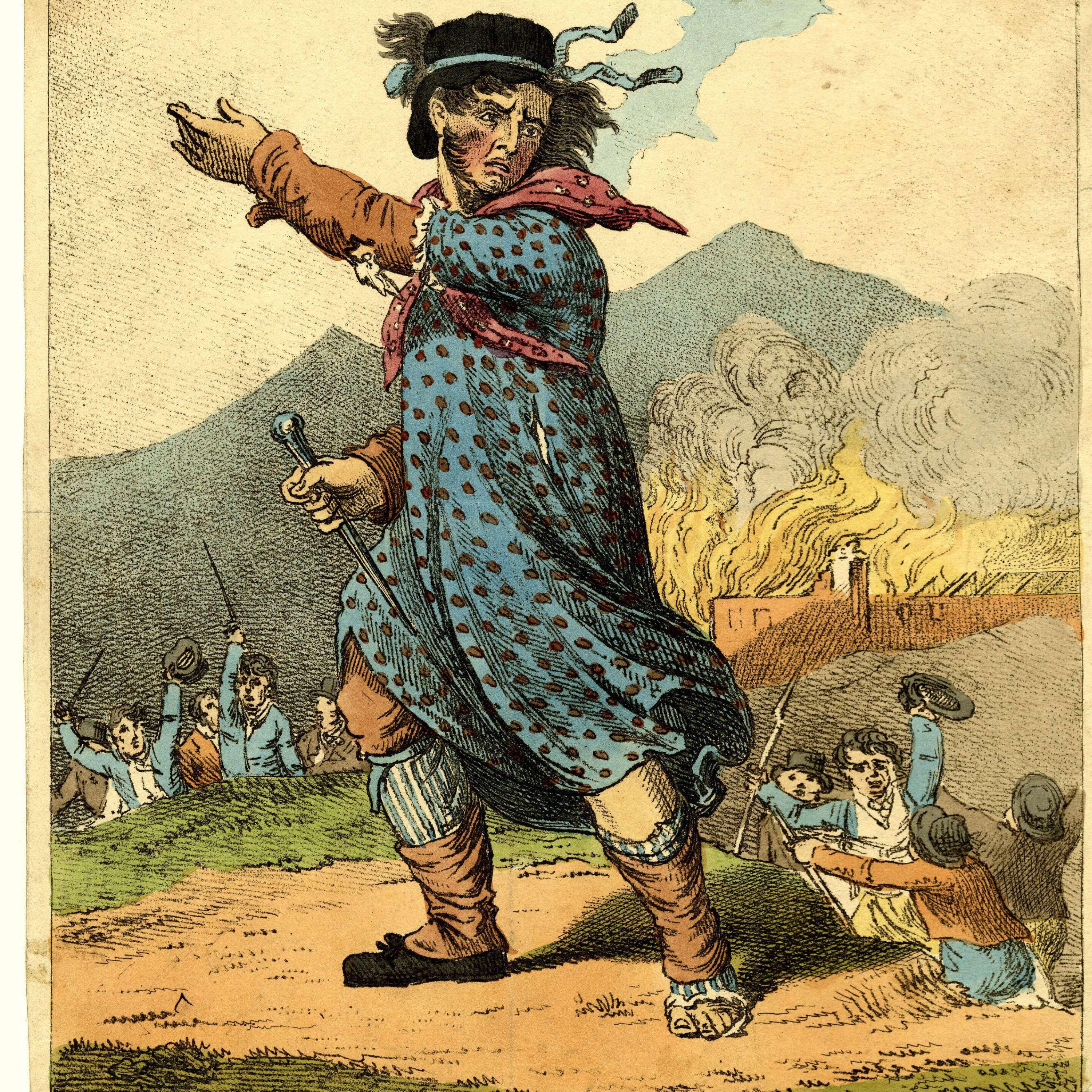


They've been remembered as machine-smashers who tried to stop the future with a hammer — but historian Eric Hobsbawm called what they were doing “collective bargaining by riot.” In this episode, Prof. Gavin Mueller (University of Amsterdam), author of Breaking Things at Work, walks through who the Luddites actually were: skilled textile workers in England's Midlands, organized under the mythical banner of King Ludd, fighting to preserve their wages, their working conditions, and the quality of their craft against machines introduced without negotiation. Mueller makes the case that this was a rational response to an existential threat, not an irrational rejection of progress — a reading that places the Luddites' resistance inside the history of the idea of progress rather than outside it.
This episode is the first of a three-part conversation with Mueller drawn from a single recorded interview. Episode 18 turns to Marx and the theorists who followed him; Episode 19 carries the argument through to Shoshana Zuboff and today's debates about artificial intelligence.
About Our GuestGavin Mueller is an Assistant Professor of New Media and Digital Culture at the University of Amsterdam, where he also teaches Marxist Theory for the Critical Studies MA at the Sandberg Instituut. He holds a Ph.D. in Cultural Studies from George Mason University. He is a Contributing Editor at Jacobin and a member of the editorial collective of Viewpoint Magazine. He is the author of Breaking Things at Work: The Luddites Are Right About Why You Hate Your Job (Verso, 2021), the book at the center of this episode, and Media Piracy in the Cultural Economy (Routledge, 2019).
Show Notes & Timestamps- Introduction — 0:13
- Guest Introduction: Gavin Mueller — 1:13
- About the Book: Breaking Things at Work — 1:50
- Why the Luddites? — 8:44
- The Luddite Movement — 11:36
- Guilds vs. Unions — 21:36
- Hobsbawm & Rehabilitating the Luddites — 25:49
- Outro & What's Next — 32:27
Key Concepts & TermsLudditeEarly-1800s English textile workers who organized to resist machines introduced into their trade without negotiation, named for the mythical figure Ned Ludd. The word is now often used as an insult for anyone who resists technology — a meaning that differs from the historical movement's actual grievances.
GuildA trade association of skilled workers that set standards for wages, training, and the quality of goods produced. Guilds structured England's textile trade before industrialization reorganized it around factory-owned machinery.
Combination ActsLaws passed by the British Parliament in 1799 and 1800 that made it illegal for workers to organize collectively to negotiate wages or conditions, closing off legal routes to the kind of bargaining unions would later provide.
Gig MillA mechanized cloth-finishing machine, along with the stocking frame, at the center of the Luddite disputes. These machines could produce goods faster and with less-skilled labor, undercutting the wages and standards guild-trained workers had maintained.
Fascinating Historical InsightsCollective Bargaining by RiotHistorian Eric Hobsbawm's phrase, discussed in this episode, reframed Luddite machine-breaking as a form of negotiation rather than mindless destruction — a strategy workers turned to precisely because the Combination Acts had closed off legal organizing.
A Mythical LeaderThe Luddites organized under the banner of a fictional figure, “King Ludd” or “Ned Ludd.” Letters and proclamations were issued in his name rather than any real leader's — a structure that let the movement act without a leader who could be arrested and used to dismantle it.
Guilds vs. UnionsGuilds regulated an entire trade's standards and training; unions, illegal until decades later, organized workers within a single employer relationship to bargain collectively. The two represent different structures of worker power, not simply an older and newer version of the same thing.
Not Anti-ProgressThe Luddites' documented demands centered on wages, working conditions, and product quality. Their resistance sits inside a debate about who progress serves, not outside the idea of progress altogether.
Resources & Further ReadingPrimary SourcesGavin Mueller, Breaking Things at Work: The Luddites Are Right About Why You Hate Your Job (Verso, 2021) — the book at the center of this episode.
Works DiscussedE.P. Thompson, The Making of the English Working Class (New York: Vintage, 1966).
Eric J. Hobsbawm, “The Machine Breakers,” Past and Present 1 (February 1952).
Kevin Binfield, Writings of the Luddites (Baltimore: Johns Hopkins University Press, 2015).
Peter Linebaugh, Ned Ludd and Queen Mab: Machine-Breaking, Romanticism, and the Several Commons of 1811–12 (Oakland: PM Press, 2012).
Coming Up NextIn Episode 18, “Theorizing the Machine,” the conversation with Gavin Mueller continues from Marx through the cyberneticists who followed him.
Listen & SubscribeWebsite — notionsofprogress.com
Email: marshall@notionsofprogress.com
About the ShowNotions of Progress traces ideas of progress from antiquity to the age of AI. Each episode examines how thinkers across history have conceived of human advancement — and what those conceptions reveal about the assumptions of their time and ours. Hosted by Marshall, the show operates as a scholarly curation: surfacing the debates and the scholarship rather than prescribing which position is correct.
Marshall holds an MA in History from Cambridge University, where his thesis examined Georges Sorel's epistemology of myth and the role of ideas in animating collective action, and an MSc from Oxford University's Saïd Business School, specializing in Complexity Science and Leadership.
Host: Marshall | Contact: marshall@notionsofprogress.com | Website: notionsofprogress.com
[
Full transcript available at: https://youtu.be/FrsMuLriAWA]
0:14 Hi, welcome to Notions of Progress. Before we get started, just a quick production note. For those watching this video on YouTube, you'll notice this episode is presented in audio only. Um, that's because we ran into a technical glitch recording that we weren't able to recover on the video side, but thankfully the, the audio came through intact. The conversation itself is not affected at all. This is a three-part conversation with Gavin Mueller on the Luddite movement, and it's just as good to listen to as it would've been to watch. Thanks for your patience In this installment, Professor Mueller traces the Luddites themselves, the guild, the economy, the English Midlands, the mechanization that threatened it, and the movement's rehabilitation decades later.
0:58 Part two turns to the political theory that discussed Marx, Taylorism, the technocracy movement, and the birth of cybernetics. Part three brings the conversation into the present from surveillance capitalism to artificial intelligence Hi, welcome to Notions of Progress, the show that traces ideas of progress from antiquity to the age of AI. Today, we are very lucky to have a special guest here today from the University of Amsterdam, Gavin Mueller. Professor Mueller is a lecturer for, on new media and digital studies at the University of Amsterdam. And today we're gonna dive into his book, Breaking Things at Work, uh, which discusses the Luddite amongst many other things, and we're talking about v- uh, workers' rights, capitalism, technology, automation, and resistance, and a whole lot more.
1:44 Gavin, welcome. Thank you. Thank you for, uh, thank you for coming. No, thank you for having me. Let me first start off to say that I thoroughly enjoyed your book. Oh, thank you. I really did, and I'm glad that you're giving me the opportunity to kinda go through this with you and talk about it in depth. Before we dive into the book, just why don't you talk a little bit about- You're working, a little bit about how you kind of arrived here at the university? Okay. Um, yeah, well, I teach in a media studies department, but a media studies department that's also very interested in, uh, the technologies that, that surround media. So, um, our approach to media is you have to understand something of the technologies behind it. So, uh, in that way, I think my work connects to a lot of the things that we do here.
2:29 But I would say there's also a little bit of a, um, independence in that. Um, I, I also-- uh, my dissertation was on media piracy, and I, I've written some other things that are, I think, more sort of traditional media studies and, uh, maybe a little bit less, uh, about sort of technology and politics. Hmm. So I guess, you know, one thing that is nice about where I work is I have a kind of freedom to sort of go where I want with my research. Um, and then my teaching, um, you know, sometimes that overlaps, and sometimes it's, uh, sometimes it's a bit distinct and, and, you know, sort of say, okay, what's going on in, you know, media theory and what-- how do we teach the students? And I think that's a little bit separate from some of these other things, which is, you know, that's⦠I think that's actually healthy.
3:15 You know, most people have a, a separation between, you know, the job they do and the, the other things that they work on. And, and I would say that maybe I have that less so than some people, but it's still there. And is it a large crossover with political theory as well? Because I definitely can sense that strain in your work. Yeah. I mean, um, yeah, I, I think, uh, yeah, that would also mark me as maybe a little bit different, uh, than, than some of my colleagues that, yeah, it's political theory is something that, that I'm interested in and, and in political economy. I f- I do have plenty of-- I would say all-- most, if not all of my colleagues are also interested in the politics of technology and often the, the economics, um, of, of sort of media and the internet platforms. So, but yeah, I would say the political focus is a little bit different.
3:59 I teach, um, at an art institute, which is where I can do a little bit more kind of critical theory- Fantastic ⦠that engages with the political a little bit more. Although it's also an art school, so they're not always interested in politics in the same way that I am. But they're, they're often interested in ideas that are, like, interesting and intriguing and that they want to turn over. Um, so it's a little bit less practical, and so sometimes that's a nice outlet. But, uh, but yeah, often to scratch my political itch, I, you know, it's somewhat Uh, distinct from the work that I do at the university. It's doing other things and talking to other kinds of people as much as it is, uh, with academics, so. Well, going through your book, I would say it'd be very hard if you, if you didn't know what your background was, for me, it would be very hard to categorize your own way.
4:44 No, no, in a good way. In a good way. Because, um, you know, I was gonna say that, again, you, we, you talked about the Luddites, you talked about Mar- there's Marxist theory in here, there's theory on the labor movement Mm-hmm ⦠discussions about automation, technology, the theory of technology. Just so, there's, you touch so many areas, and you know, I was gonna say, one of the things that I liked the most about this book, uh, was that you can point to a million different topics that you raised in the book, almost as if you were reading like a history, and at the same time, you didn't force the reader to tie things together. That's what I came to on my own when I read. Oh, yeah. That's, that's, it's interesting that you say that because I think, you know, that does sort of resonate with kind of an approach that I wanted to take with this book.
5:25 I mean, it's a fairly short book. I'm not trying, I wasn't trying to write a kind of definitive history of the Luddites- Yeah. Yeah ⦠like Brian is doing. I wasn't trying to kind of solve every problem. It was more, I don't think I can, I don't think I can do that. I think it was more I wanted to kind of raise a set of questions and draw a set of connections that, that, that precisely what you're saying, that other people can kind of fill in or make, you know, continue to develop those kind of connections. I would say that You know, there's, I guess there's a bunch of different approaches you can have with a book, and sometimes academics, you know, you wanna have the, the definitive work, the final word on this subject, right? Um, and there's a value to that, you know. That's a, that's a very challenging and, and an often worthwhile project.
6:09 It's not really the work that I could envision myself doing. I'm more of a starting a conversation kind of, kind of projects that those are what's interesting to me, and I think that's one thing that's been very rewarding about this book is that it, it, it seems to⦠I seem to have s- had some success in that, in that, you know, folks like you wanna come through, wanna have a chat, have a lot of different interesting, um, ways that they've connected to it. Also, different academics, you know, sometimes it's historians, sometimes it's, uh, uh, people in sort of media and technology studies. So, uh, sometimes it's more people who are in kind of the, the critical theory space. So- Sure ⦠that's also been, um, a really, uh, interesting part of, of the book is, you know, having-- I think, uh, something I kinda wanted to do was not have a, a sort of one way of receiving the book in mind, like, "This is the thing I want you to get out of it."
7:01 It was more of a, I wonder, you know, what would happen, what's going to happen when this comes out, or who's going to read it? It's kind of, um, like almost like an experiment. So, um, so yeah. So it's really, I think it's totally, you know, on point that that's kind of, uh, what you got out of reading it because I think- Fantastic that was, that was kind of the approach I was taking. Like, let's start something. Let's, you know, suggest some things. But ultimately, I think a lot of this stuff, you know, a lot of political theory, you have to kind of, you know, put it to the test of history. So, so far I, I, I feel like my approach was historically informed. Um, but ultimately, you know, history keeps going and, and, you know, it's hard to say things are gonna happen one way or another, but maybe these are some ideas and some perspectives to keep in mind as, you know, we continue on, uh, through the course of history.
7:51 Fantastic. And, and we're gonna start diving into the book. And, you know, just to give you a one-second background about kind of what I'm doing with the show and, and again, why it kind of resonated with me, is because I'm actually trying to look at the idea of progress, and I'm actually trying to question all the assumptions regarding how people even come to this definition. Sure. And, and, you know, the report, the parts in the book where you talked about the perception of technological progress, almost as if you can't discuss those two words unless they're connected. Mm. So I started this book going back to Greek thinkers- Right ⦠or back to Aristotle, and they're talking about, they're talking about a version of progress where there were no machines. So it's very interesting. Yeah, absolutely. Uh, so for me, I⦠So when going through your book, I had that same feeling that this was, that you weren't, there were no definitions we had to work against.
8:31 We were like, you were talking about it, like you said, historically. So let's start with this, why the Luddites? Of, of a starting place for this book, um, I don't know if this was a particular interest of yours, you know- Yeah ⦠in your studies, or this, or you, did you come about this as, as an example? Or why, why the Luddites? I think I was, what I was interested in was the, the connection between, um, technology and capitalism. The, the question of, of the politics of that, which means that, you know, there should be some, um, was there any kind of resistance, right? Is a kind of question that I've sort of learned to ask, uh, through kind of, you know, facing s- uh, sort of critical issues, right? And so the Luddites are really convenient in many ways. Uh, so one, they're, uh, they, they're a very clear sort of case of resistance to new technologies.
9:20 In fact, they're so⦠It was, you know, s- such a, a strong connection there that, you know, to be a Luddite even now is a term that people recognize, oh, you- Right ⦠you, you don't like smartphones or something like that. Um, so it's still a term we use, right? They still have this kind of legacy. So it's, it's a, it's a, a case of resistance. It's, it's also something that lasts in living memory, so that's, you know, useful. People know what a Luddite is, or it's a term they've heard before. But also it's happening right at the dawn of industrial capitalism. So it's a very great, uh, place to start if you wanna sort of trace this, you know, what happens, what are, what are responses of workers to new technologies through the, the course of industrial capitalism.
10:05 Well, we can start right at the beginning, and there's like one of the most famous examples is just staring at you in the face. So, so it's a⦠It was a really, uh, in some ways a very obvious choice. Um, and I don't know if I had always intended to sort of kind of rescue the term. I'm not the first person, of course, to try to revise the historical legacy of the Luddites. I mentioned a few people, a few his- major historical, uh, treatments in the book by E.P. Thompson and Eric Hobsbawm. Which I would love-- Well, y'all wanna go into that? Okay. Okay. Yeah. No, 100%. Very important. Um, so yeah. So that's⦠I, I was like a, a good place to start. And, and al-also I would say, you know, it's a little bit provocative, right? To take this kind of term, a Luddite, which many people use in a sort of negative way and say, "Well, there's, there's actually quite a bit more going on here, and maybe we can actually learn something from, from these people that, you know, we're, we, we treat as sort of irrational at this point."
11:02 Yeah. And, and I was gonna say, you know, again, the word itself has a negative connotation to it. But at the same time, I think one of the things that I got from the book that I was really⦠is that Well, that's⦠You can almost see how at the time people put this connotation onto that word. But you brought up Hobbs Bourne, and we'll go into him later. He didn't necessarily see it that way. Right. And, um, and I think he was kind of like rescuing the word itself in addition to kind of what the movement was. Mm-hmm. Well, tell me a little bit about, uh, the movement itself. Uh, you know, there's, there's lots of interesting descriptions there. It has a bit of a Robin Hood mythical quality to it, and I just- Yeah tell me a little about the, like the actual movement itself. In, in, in fact, it- it's geographically it's more or less in the same place that Robin Hood, uh, takes place.
11:44 Mm. So, uh, yeah, so th- there were-- was a really large, uh, textile industry in the Midlands of England. Had been going on for a long time. People who would, um, you know, make textiles and then also turn those into garments. Uh, stockings were, were, um, a big point of contention with the Luddites. And so these were skilled craftspeople, right? And they were, they were part of a guild, which meant that the Crown said, "Okay, you guys run this industry. You have a charter. We're permitting you to do this, and you also can, you know, sort of run it the way you want." Right? There are certain rules around being an apprentice and, you know, those kinds of things. Um, and they were quite prosperous.
12:24 Uh, you know, you had a kind of influx of, of cotton from the New World and from the colonies overseas. Uh, they were doing very well for themselves. These were very highly developed industries and skilled craftspeople who took a real pride in their work and had these kind of strong communities full of people who were, um, you know, you know, they, they had their jobs, they did their jobs, they liked their jobs in many cases, but also they had a kind of autonomy over their work that allowed them to do other things, right? So they were, you know, uh, I, I think there's a kind of a almost like an English tradition of being an autodidact, right? Mm. Kind of have all these little pastimes and hobbies and stuff. You know, there's a lot of E.P. Thompson writes about a lot of these, these folks who had, um, who were poets and gardeners and, uh, you know, amateur entomologists and things like that, right?
13:13 So, uh, you know, everything's going very well for the most part until⦠Well, it's not, actually not the first time this has happened, but the, the, the, the most sort of notable time. In the early nineteenth century, um, new machines are developed that are introduced that will, uh, do some of these work processes that the, the weavers are doing. Um- These are the frames? Yeah, the stocking frames- Yeah ⦠and also the ging mill. And what those things will do is they will, they effectively mechanize some of this more laborious work. Um, but there's a few⦠And that on the surface sounds, oh, that's not so bad, right? Mm. But there's some really important kind of social repercussions here.
13:54 One is that you⦠Of course, the first thing that w- probably pops into our mind is, oh, if the machine is doing it, then the labor gets cheaper, and it's absolutely part of it. Uh, but there were other problems that the weavers had with the new machines, right? So they definitely had a problem with pay. They also had a kind of a, an issue, like a regulatory issue. They were like, "This is⦠You're not allowed. It's literally illegal for you to set up textile manufacture without going through the guild." Mm. "You know, you have to talk to us." Mm. "We run this, this trade." And they, in fact, they w- when this started happening, th- one of the first things they did was they petitioned the, the, the, they petitioned Parliament and the king, and they were like, "Hey, uh, these guys are, you know, they're not following the rules."
14:39 But they were ignored. So, um, but the other problems they had with these new machines is, uh, the people that they would hire to work them, um, at these lower rates were often women and children, and, you know, that violated some kind of cultural, uh, mores that they had over who should be doing this type of work. It was also very dangerous work, right? And all of a sudden, you know, you have kids on these machines. Rubbed a lot of people the wrong way. And I think another really underrated part, but I think, uh, I f- I come back to this and think about it as being more and more relevant when I wanna think about what we get out of the, the Luddites in our contemporary moment, the quality of the product was really inferior.
15:19 It was just really poor quality textiles, poor quality stockings. So these weavers are like, "Look, you know, when you see stockings that come out of the Midlands and they fall apart immediately, that makes us look bad. You know, we take pride in what we do. Um, you know, you're gonna wreck the whole trade with this shoddy mass-produced stuff." So they had all sorts of problems with this. Uh, and th- you know, and they tried a lot of things to deal with these problems, right? They said, "Okay, so the king's not listening. Parliament's not really interested. They're fighting a war with Napoleon. They're busy. So well, let's talk to some of the factory owners and say, 'Hey, you know, we, we kind of have a problem here, but you know, if you agree to do things a little bit more like how we like to do them, kind of preserve some of the pay rates, maybe preserve some of the working conditions, you know, we're fine for some of these new machines to, to, to be happening.'" Well, very few factory owners saw it that way and said, "You know, no, we're going to h- increase our profits by having lower skilled labor mass produce these kind of shoddy goods. That's, that's exactly what we're gonna do. So, you know, take off."
16:26 And so that, um, friendly appeal to the factory owners turned into something, um, more threatening and eventually violent. Uh, so they wrote, uh, there's a great, um, compendium of these by, that was, uh, put together by Kevin Binfield. It's The Writings of the Luddites. It's a lot of the letters and manifestos that they wrote, and they would send these to the factory owners saying, you know, "You better watch your back. We're gonna get you if you don't, you know, stop what you're doing." And, uh, and eventually, of course, the most famous thing they did was they c- started conducting these kind of midnight raids where they would go to a factory or a mill, as they called them, and break in in the middle of the night and then smash all the machines and say, "Okay, you, you didn't follow what we were saying, so we're gonna smash all the machines here."
17:12 And, you know, in context, it's It's a kind of sabotage that is part of a labor struggle. Mm-hmm. Right? It's a way to say, "Look, we come to the negotiating table," right? We kind of escalate, escalate. We're not getting any response. We're not getting any⦠Uh, you're not willing to negotiate with us, so we're gonna keep, uh, you know, escalating until you do. And but it's remembered as a kind of irrational outburst, like the idea that you could actually stop the progress of technology with a hammer, right? That seems⦠That's seems ridiculous, right? The indu- industrial revolution is a kind of unstoppable force. How could you stand in its way, right? And the way that they did this, uh, which was also, I think, really worth thinking about at the time, was they, they created this kind of sort of secret society.
18:00 Yeah. Right? And that, that was led by this mythological figure, right? And that was really kind of an effective way to organize. At the time, it was actually illegal to join anything that looked like a trade union. Right. There was a, there was a law in England called the Combination Acts, and you were, you were⦠It was punishable by hanging if you joined a, a combination, which is, like, basically you mean any kind of organization. If you took any kind of oath of solidarity, you could be in maximum trouble. So they did this anyway, and then they⦠But they also created, to keep it secret, this kind of mythological figure of King Ludd, right? So very similar kind of, uh, you know, if you think about the mythology of Robin Hood. Yeah, yeah.
18:40 You know, this kind of, you know, there's a, there's a whole tradition there. And this was, like, super, uh, interesting and effective because what it allowed people to do is you didn't have to have lots of direct contact for different discrete areas to kind of plug in to the movement. You didn't have to have kind of a top-down coordination. Yeah. You could just take up the mantle of the name, you know, sign King Ludd on your letter and, and then kind of engage in these kind of autonomous actions. And that ended up, um, you know, being a sort of a really powerful part of the movement and, and something that kind of stuck in popular memory. I think that's one reason why they're remembered today. There were, there were actually other examples, uh, before the Luddites of textile workers and weavers resisting new technologies and even smashing them, right?
19:28 In, in, in England, also in France. Uh, but the Luddites are remembered because they, uh, because they had a, a much more developed sort of resistance but also, I think, because of this sort of mythology that they attached to it that was a big part of their organizing. Um, and so, you know, we've, we've- So there's no hierarchy whatsoever. It literally was a grassroots, kind of like an even, like, organize as you go kind of, kind of- Yeah. I mean, if you, if you read kind of more detailed histories, and I, I do recommend Brian Merchant's book- Okay ⦠for, for anyone who's really interested in that. He's not a historian, but I've talked to historians, and they're, like, really impressed by this book. He did, he did all the archival work. You know, he identifies people who kind of emerge as sort of leader figures.
20:08 But, um- It's more of a informal kind of charisma thing that, that they're sort of driving things forward rather than some sort of like appointed leader sort of military hierarchy kind of thing, right? It had to do more with, you know, who was willing to do it and who could connect with other people and kind of convince them to go along. But also I think, you know, it's hard for us maybe to understand this in a sort of direct way, but this was, they, the, the Luddites really realized very early on that this was like an existential kind of crisis for them. If they, if their livelihoods went away, um, they would be destroyed, right? Their communities would be destroyed.
20:49 They, there was no unemployment insurance, welfare state. In fact, the economic doctrine was, you know, Thomas Malthus, who was like, "Yes, well, populations boom and collapse. People starve. That's how it goes." And so that was kind of what was waiting for, for them if they had nothing else, uh, going on, if their industry was transformed in this way. So it did embolden people to kind of engage in these sort of risky actions, right? Actions that ultimately, although they, they, they kept it going for longer than a lot of people thought were, was possible. Ultimately a lot of them were, um, arrested, some were executed, some were killed in, in, uh, when factory owners started fighting back against the raids and, uh, many were deported to various other British colonies.
21:36 So as a, though they were, though they were part of the guild, correct me if I'm wrong, but they weren't necessarily unionized, right? No. There's a, there's like, I mean, if you can, uh, you, you mentioned this in the book and if you don't mind- Yeah ⦠talk a little bit about that. What was even legal as far as organization at that time? Yeah. So a guild, it, it functions very differently. Guilds are a much older kind of way of organizing kind of skilled trades, and you would sort of, if you were Um, a particularly clever monarch who wanted to kind of develop your⦠You know, it's really interesting because you, you realize for most of the history of, you know, kingdoms and things like that, people, they didn't really have a good way of even keeping track of what was going on, let alone having, like, economic statistics and things like that that we take for granted now.
22:21 Um, but yeah, you would give a charter to this group of people, or maybe you would even invite people from another country who had a skilled trade, who could do things that, you know, there were no univers- I mean, there were universities, but they didn't treat⦠They didn't teach these kinds of skills. Tradespeople controlled who learned, how they learned, the protocols by which they would acquire skills, and the entire economies attached to that, right? So, um, so that's kind of how a guild operated. And, and it was, you know, you were really part of not just a trade, but a whole community, right? So, like, there were entire towns throughout the Midlands where it was all people connected to the textile industry. And so a union is something a little bit different.
23:02 That's people saying, "Okay, we have a collective interest in opposition to an employer or to another kind of, of power." And so it's, you know, sometimes there are protectionist elements within trade unions- Mm-hmm ⦠of course, and skilled laborers. You know, there's a really interesting history of organized labor in America between skilled unions and unskilled workers, uh, than their unions and, and, um, the politics thereby. But it, it functions differently, and I think what it, what the authorities in England were concerned about, they were concerned about, uh, labor organizing, but they were also concerned about all sorts of things. This is an extremely chaotic time in British history.
23:43 You had the war with Napoleon, you had the kind of, you know, rebellion, rebellious activity in, in, in, in, in Scotland, in, in the, in the fringes. You know, you have a kind of pretender king, right? And so they were concerned about all sorts of conspiracies and anything that smacked of, you know, sort of underground organizing, right? But, but it was definitely a huge motivation as, you know, collective action, people. And people⦠It was one of the things they, they expressive forbid was oaths. If you took an oath, meaning you kind of swore allegiance to a group, right? And that could mean, you know, um, like a verbal agreement, handshake.
24:23 "Yes, we're, we're all in this underground movement together." It could be signing a petition, it could be anything like that, right? And so that was expressive forbidden, and they were, they were- But you can see based on, on your earlier description how they might look at this guild and this King Lud society, if you will, and see some of those very actions that they were claiming From their perspective, if, if there was, you know, in terms of not wanting them to unionize, they see some of those behaviors within this, within the, within the movement itself, no? Within, within the, the- The Luddites. Like in other words, they, they saw this as even though they didn't call themselves a union- It, it was- ⦠they saw these kinds of some of these behaviors. Yeah. It was absolutely the thing that they didn't want to happen, right? Right. A guild operates at the pleasure of the monarch, right?
25:06 You can be- you can revoke their charter, you can try to renegotiate with it, you know. It's not you don't have absolute authority, you never do, but it, it's a very different kind of relationship. A combination is a more autonomous power, right? And it says, "Look, we- we're powerful because we're, there are many of us." And I⦠And in, in some ways that is very contrary to this, uh, a sort of hereditary notion of power and, uh, so and a, and a more elitist notion of power. So it's, it, it I think at its core is, is, uh, you know, more threatening in that way, a way that a guild is not. The guild is sort of operating by those older protocols And in one of the articles that you, that you had referenced in the book, we talked about Hobsbawm before.
25:49 He, in a, in a sense, did he come back? Did he essentially try to rescue the reputation of the Luddites, or what was his perspective and what, what did he see their mission as? Yeah. Well, Hobsbawm was, you know, a lot of his early career was in looking at, um, forms of resistance and rebellion that were not-- were, were relatively ignored, particularly by sort of labor historians and, and so he looked at, um, you know, bandits and outlaws, um, in a lot of his early work, which is also really fascinating. You, you can, you can never go wrong with picking up a Hobsbawm book, I'm gonna say. He's a great writer, a great historian, really always really fascinating and, and often quite pleas- a pleasure to read.
26:32 But he was really-- This is an early article of his. He was interested in doing something similar, right? Saying, "Look, look, okay, you know, if you're a labor historian, you're saying, 'Oh, this is just a kind of, you know, just an outburst,' right? 'It's irrational.'" And he was saying, "Look, you know, it might look that way from our perspective, but from the perspective there, this was actually quite a rational struggle." Right. Right? Th-this was an existential struggle. They also, they didn't have the ability to, you know, engage in sort of, you know, negotiations the way, like, a modern trade union would. None of that was on the table, right? They were bar- He has a great term, uh, co-collective bargaining by riot.
27:12 By riot. Yeah. Yes, I read that out of your book. So, um, and so that was a really kind of interesting innovation, right? And, and for me, you know, in, in my kind of training and, and on what I think is, you know, important, sort of look for things that don't seem to be legible as political resistance. And then if you understand the context better, you, you see that actually it totally is the case. I think the action of the Luddites is quite easy to see as, as a labor struggle in that sense. But it's interesting that when he's writing the article, very few people were thinking in those terms. So he's saying, "Look, there's a, there's a way you can view it this way. Uh, and, and in this way, we can, we can see them not as irrational, but as actually eminently rational."
27:57 Ob-obviously, their struggle, you know, they, they, they didn't win. The gig mills and the stocking frames took over. The industry was mechanized and all these things. But, you know, they totally made sense for them to, to resist it, right? And I, and I think this is also something that, you know, in talking about this, sometimes I get asked, you know, "Well, but-" But the Luddites lost, you know? And they say, so, so what are we doing by, you know, uh, looking at them with a more favorable eye? You know, one thing I say is, you know, you can't always judge, uh, the, the value of something by the ultimate outcome, right? Maybe it was right-- they were right to resist, and maybe we can learn something from that.
28:38 It didn't ultimately work out, but that's not to say that there were no, uh, sort of positive effects, or even more modestly, that, you know, that we should sort of⦠Maybe they should have just, uh, you know, you know, bowed their heads and accepted their fate. I mean, I think, you know, if, if we were in a similar situation, you know, we're in a desperate situation, we might also find ourselves willing to engage in, in risky or even doomed actions. You know, it's better to do something to give it a shot, uh, than to just quietly accept your fate, right? So I think that's a main thing he was kind of interested in, in his, in his early part of his career particularly, was saying, "Look, we can look at these o-other moments of resistance that seem-- that we don't seem to have the frameworks to understand," and say, "Look, if we understand, you know, what, what capitalist development was at at that point, um, and then, you know, actually we can start to piece together and theorize what was actually going on in these places."
29:37 Yeah. And, and to your previous point, I will say that, uh, 'cause I was gonna bring this up later, but since you mentioned it, uh, I listened to an interview you did. It was a couple years ago, two years ago, on the King Lud Hour, and I think it was the name of the podcast. But the interviewer had made that point to you, said that they lost. And having read the book at that point, I said to myself, "Well- I don't know. He kind of makes, being you, makes, makes kind of, like, a very convincing argument without hitting us over the head that this is more than a bunch of people and th- this is an idea. Right? It was r-right, I mean, even the fact that they had a mythical character- Yeah as their figurehead, if you will. Yeah. They were, they were pursuing an idea. And so I'm just saying, when I read that, I was like, "I think you did a very effective job." No, no, it was really, it was really great.
30:18 You, you said, like, well, it depends on what you're looking at. I think Hobsbawm was making a similar argument. I, I pulled out that quote that you had just mentioned as well, is also, um, and I'd like you to talk to this as well. He was also saying, uh, in his article, Breaking the Machines, I think it was like 1952 or something like this- Mm-hmm ⦠uh, was saying that, well, he was also battling his own set of, of preconceived notions regarding the fact that mechanization is inevitable. Yeah. Resistance is futile. So I thought that was interesting, too, and you made a, a really- Absolutely. I mean, yeah, in many ways, he's very kind of orthodox Marxist, right? And, you know, the, the productive forces will develop and, you know, we have to deal with that. Uh, so it's int- you know, when he's kind of can bracket that a bit and put on the like, let's be a historian and try to understand things within their context, it comes up with a, a very different kind of account.
31:07 Yeah, I think, you know, it's important and I think, you know, Hobsbawm's a, is a, is a, is a, is a, a Marxist and, and anyone who's, you know, takes the idea that, that political struggle is an important part of history. S- you know, it's not a discrete event, that these are longer trajectories. And I do, I do think that is something I tried to sort of show, um, in the book, right? That part of what capitalism does is it's constantly sort of revolutionizing new technologies, but it's doing so for particular reasons. And that means that there is a kind of thread of, um, you know, innovation if, if you might call it, uh, if you read Wired magazine or something like that.
31:47 But there's also a thread of resistance, right? And if we're in our moment are saying, you know, we're, we're refusing, we're resisting, we're opposing, et cetera, then we are sort of, we're doing that in our moment, but we're also part of this longer trajectory that stretches, you know, to the Luddites. And so in some ways, I think it didn't⦠Did, did they lose? Maybe it's too early to say. Yeah. And again, I, you had, you had put a great quote in your book that I, that I also wrote down from Limbaugh, and you said that, uh, "To simply categorize them would be a mistake," you said, "because this is a germ of shared endeavor and these aligned struggles against a common foe."
32:28 That's where we'll leave things for part one now. In part two, Gavin Mueller turns from the Luddites themselves to the political theory that followed in their wake. Marx's own conflicted view of machinery, the split between orthodox and heterodox Marxism, Friedrich Taylor's theory of workplace control, the technocracy movement, and finally, the beginnings of cybernetics. Looking forward to seeing you soon. Thanks for listening. If you enjoyed this episode, you can find "Notions of Progress" on YouTube, Apple Podcasts, and Spotify. And all the sources, reading recommendations, and further context for every episode are in the show notes. If you are enjoying this series, liking the episode on YouTube and signing up for the newsletter at notionsofprogress.com really helps more people find these ideas.
33:14 For those who wanna go even deeper, the Curator's Frame blog and Substack newsletter accompany each episode with the questions the scholarship leaves open. I'm Marshall, tracing ideas of progress from antiquity to the age of AI and leaving the debates open for you to consider. Until next time


