Liberalism and the Social Question: Helena Rosenblatt on Guizot, Marx, and Napoleon III
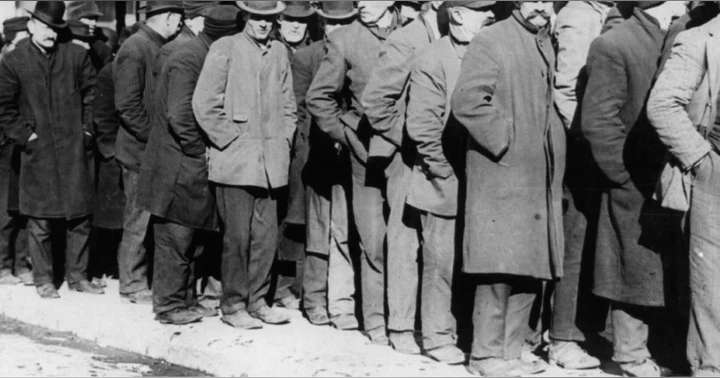
Prof. Helena Rosenblatt says the first liberals assumed that freedom of trade would do more than enrich a few. Removing feudal obstructions such as lords’ booths on bridges, tariffs, and guilds, they expected, would spread the wealth created over a wider public. A generation or two later, she says, urbanization and industrialization produced paupers, people stuck in poverty in the cities who were not rising into the middle class, and freedom from government intervention was not helping them. The conversation turns on three questions: whether the liberals of the 1830s and 1840s fell short in principle or in the means to act, what the social question asked of them, and what “liberal democracy” came to mean once Napoleon III and universal male suffrage forced the issue.
Overview
In Part Two of a three-part conversation, Prof. Helena Rosenblatt continues her account of The Lost History of Liberalism (2018) from the July Monarchy, which Part One left governing for a narrow electorate. She presents François Guizot’s view of democracy as a type of society, the social question, and laissez-faire, and says Marx, watching France and, through Engels, Manchester, imagined another revolution that would bring the workers to power. She then turns to Napoleon III and the coinage of “liberal democracy,” and to why European liberals admired Abraham Lincoln and Gladstone. Part Three takes liberalism into the twentieth century.
Key Moments from the Conversation
Democracy as a Type of Society
Prof. Rosenblatt says that for Guizot democracy meant a type of society rather than a form of government: civil equality, the rule of law, no more privileges, no more nobility. He was definitely not for universal suffrage, she says. Reason, in his thinking, belonged to the educated and independent, and so to the propertied, while women and poorer people were seen as dependent or without time to educate themselves. She says she does not agree with this, and that the same thinking carried a noblesse oblige duty of the wealthy and educated to rule on behalf of the poor.
Freedom of Trade and the Pauper
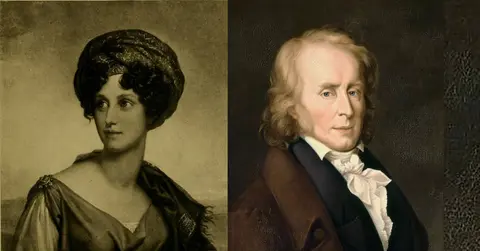
Prof. Rosenblatt says early liberals such as Constant and Madame de Staël were for removing feudal obstructions to the economy, and assumed the wealth created would reach a wider public. Later, she says, pauperism showed that freedom of trade was not helping people stuck in urban poverty, and the conclusion drawn was that government needed to step in. Asked whether the liberals failed in principle or in delivery, she answers that it was probably a little of both. They lacked the institutions for a welfare state or public education, she says, and faced a very powerful church.
Liberal Democracy
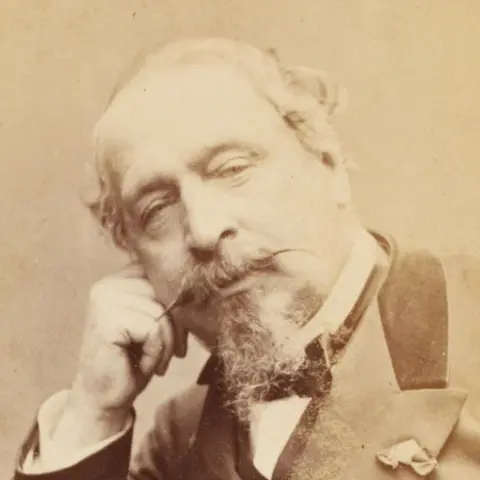
Prof. Rosenblatt says Napoleon III, like his uncle, appealed to the people through plebiscites while dismantling representative institutions. Near the end of his reign he began working with the Liberal Party, and “liberal democracy” was coined. Liberals agreed to democracy and universal male suffrage, she says, but as something forced on them, and they insisted that the population be educated to become citizens. In her account the term came to mean protecting people from democracy, with individual rights, balance of power, and limited government to tame it. She notes that today some speak well of illiberal democracy, as Orbán has.
Guest Spotlight
Helena Rosenblatt is Distinguished Professor of history, political science, and French at the Graduate Center of the City University of New York. Her most recent book is The Lost History of Liberalism: From Ancient Rome to the Twenty-First Century (Princeton University Press, 2018), the subject of this conversation. She is also the author of Rousseau and Geneva: From the First Discourse to the Social Contract (Cambridge University Press, 1997) and Liberal Values: Benjamin Constant and the Politics of Religion (Cambridge University Press, 2008). Her present project, for which she was awarded a John Simon Guggenheim Fellowship, is an intellectual biography of Madame de Staël.
For Further Reading
Primary Sources
Helena Rosenblatt, The Lost History of Liberalism: From Ancient Rome to the Twenty-First Century (Princeton University Press, 2018) — the book at the center of this conversation. In this part Prof. Rosenblatt draws on it for Guizot, the social question, Napoleon III and the coinage of “liberal democracy,” and Lincoln and Gladstone.
Questions to Consider
-
Can a society be called democratic when it is equal in law but not in the vote?
-
Prof. Rosenblatt stated that the early liberals assumed freeing the economy would spread wealth widely, and that pauperism showed otherwise. Do ideals that a society lacks the means to carry out count as failed ideals?
-
Prof. Rosenblatt says “liberal democracy” came to mean individual rights, balance of power, and limited government to tame democracy. Were these guardrails constraints on liberal democracy or necessary for their expression?
Connection to Notions of Progress
This part follows a political vocabulary as it meets a social problem. Prof. Rosenblatt describes liberals who expected freedom of trade to spread wealth, a generation that met pauperism instead, and a coinage, “liberal democracy,” that she says came to mean protecting people from democracy. She adds that Lincoln and Gladstone became, for European liberals, proof that liberal democracy can work. For a series that asks how ideas of progress take shape and what turns them back, Notions of Progress sets out where Prof. Rosenblatt places each turn and leaves the reading of them open.
Listen & Subscribe
Website — notionsofprogress.com
Email: marshall@notionsofprogress.com
From Liberal to Liberalism: Helena Rosenblatt on the History of a Word