Is Capitalism Past Its Use-By Date? Michael Roberts on Three Futures About This Episode
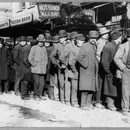


In this third and final part of the conversation, Marxist economist Michael Roberts brings the argument of his 2016 book The Long Depression into the present. He begins with the view that the system works as long as decisions are good, which he finds unconvincing: a system that produces for profit, he argues, delivers both vitality and grotesque inequality, and cannot continue as it is. He describes a generation now worse off than its parents and presents the postwar golden age as the exception, a period when profitability was high enough for capitalism to make concessions. Turning to the current cycle, Roberts considers whether the long depression that followed 2008 may be ending, whether AI could lift profitability for a time, and why he expects the law of profitability to reassert itself, possibly in the 2030s or later. He answers economist Robert J. Gordon on stagnation and Thomas Piketty on taxing billionaires, and closes on three futures: a renewed expansion, a longer stagnation, or, if working people do not change the system, fascist and military regimes and what he calls barbarism, drawing on the fall of Rome.
About Our Guest
Michael Roberts worked in the City of London as an economist for more than thirty years before retiring. He is the author of The Great Recession: A Marxist View (2009) and The Long Depression (2016), the book at the center of this conversation; joint editor of The World in Crisis (2018); author of Marx 200: His Economics (2018) and Engels 200: His Economics (2020); and, with Guglielmo Carchedi, Capitalism in the 21st Century (2023). His next book, Time Is Running Out: The World Economy in the 2020s, is expected in December 2026. He writes regularly at thenextrecession.wordpress.com.
Show Notes & Timestamps
00:00 Capitalism Fails People
01:17 Welcome and Recap
01:37 Financialization and Crisis Myths
03:02 How Capitalism Works
04:06 A Generation Worse Off
06:12 Golden Age Was Exception
08:19 Inflation and Profitability Shift
10:19 Another Expansion or New Slump
12:49 Who Benefits From Profits
13:49 Working Class Alternative
16:04 Reaction and Fascism Risk
17:01 Three Future Scenarios
21:06 Rome and Barbarism Warning
23:34 Closing Thanks and Wrap
Key Concepts & Terms
Law of Profitability — Roberts’s name for the pattern, set out in the earlier parts, by which the rate of profit falls over time. In Part Three he applies it to the present: the pandemic slump and technologies such as AI may create the conditions for a new level of profitability in some sectors, particularly in the United States, but on his account profitability would start to fall again if too much is invested in machines and AI relative to labor, which could bring a serious slump in the 2030s or a little later.
The Golden Age — Roberts’s label for the postwar decades, when, as he remembers it, young people did better than their parents and housing, health, and education were expanding. He calls this the exception. On his account capitalism could make concessions then, such as the universal healthcare Britain has had since 1948, because profitability was high, and today’s struggle to raise living standards is the norm.
Counter-Reforms — Roberts’s term for the period from the 1980s and 1990s onward in which, on his account, gains workers had won were rolled back: wages, trade union rights, state ownership through privatization, and welfare. He says calls to cut welfare continue because capitalists do not want to fund it when profitability is low, and remarks that arms spending is rarely named as an alternative.
The Stagnation Thesis — The view Roberts attributes to the American economist Robert J. Gordon: that capitalism is doing badly, with productivity growth slowing right down and a stagnant economy as the result. Roberts treats stagnation as a possibility for a while longer, expects the economy to move either down or up, and says that in his view the stagnation is starting to come to an end.
Fascinating Historical Insights
A Reversal Since 2008 — Roberts observes that after the Second World War young people did better than their parents, and that since 2008 the pattern has run the other way. He says twenty years of depression amounts to a generation, and he points to Generation X and the millennials, who on his account will not match the living standards or the housing of his own generation, with problems across housing, roads, health, and education.
Marx and the Materialist Conception of History — Roberts says that Marx described capitalism as the dominant system of the present, and that in Roberts’s view the next system will work only if it is socialist. He adds that Marx’s phrase, the materialist conception of history, did not mean an automatic passage from capitalism to socialism, and he warns of forces of reaction that seek to reverse workers’ gains and could bring fascist and military regimes.
Who Is Utopian? — Roberts notes that Marxists are usually accused of being utopian for envisioning a socialist society, and turns the charge on Thomas Piketty. In Roberts’s account, Piketty holds that Marx was wrong and that inequality, not profitability, is now the central issue, and so proposes taxing the wealthy. Roberts has no objection to taxing billionaires heavily, but asks whether that can happen while billionaires control the means of production and the governments that support them. A program limited to taxation, he argues, leaves the big banks, energy companies, and tech firms untouched.
Barbarism and the Fall of Rome — Roberts explains his use of the word barbarism through the Roman Empire. Writers after that period described a civilization of aqueducts and production that collapsed over a long time; from about 400 AD, on his account, roads and buildings deteriorated, small farming communities were left unable to maintain the system, and people were reduced to subsistence. He warns of a similar descent if working people cannot change the system in a further crisis.
Resources & Further Reading
Primary Sources
- Michael Roberts, The Long Depression (2016) — the book at the center of this conversation, in which Roberts says he shows the fall in profitability across the major economies in a graph.
- Michael Roberts, Time Is Running Out: The World Economy in the 2020s (forthcoming, December 2026) — the book in which Roberts says he raises the possibility of a renewed period of expansion.
Works Discussed
- Thomas Piketty, Capital in the 21st Century — the book Roberts says made Piketty well known in the 2010s, and whose argument for taxing the wealthy he answers.
Roberts names Piketty’s book by title only, and no edition or year is cited in this episode. He describes Robert J. Gordon’s argument and Marx’s materialist conception of history in his own words, without naming specific works, and refers to writers on the Roman Empire without naming them; none of these are listed here.
Coming Up Next
Next, “From Liberal to Liberalism: Helena Rosenblatt on the History of a Word” opens a three-part conversation with the historian Helena Rosenblatt, distinguished professor at the Graduate Center of the City University of New York, on her book The Lost History of Liberalism: From Ancient Rome to the 21st Century. Rosenblatt follows the word liberal from Cicero’s Rome, where she says the Latin liber meant both free and generous, through the Enlightenment and the circle around Madame de Staël and Benjamin Constant after the Terror, where she places the origins of liberalism around 1813. Part One lands in two weeks.
Listen & Subscribe
Website — notionsofprogress.com
Email: marshall@notionsofprogress.com
About the Show
Notions of Progress is a podcast tracing ideas of progress from antiquity to the age of artificial intelligence. Hosted by Marshall Madow — an independent researcher whose MA in History (Cambridge) examined Georges Sorel’s epistemology of myth, and whose MSc (Oxford, Saïd Business School) focused on Complexity Science and Leadership — the show surfaces the debates rather than settling them, tracing how thinkers from Hesiod to Hayek, Plato to Peter Haff, have understood what it means for humanity to move forward, at what cost, and for whom.
[EMBEDDED YOUTUBE VIDEO] — paste manually in Podpage after publishing.
For full transcript, visit: notionsofprogress.com
00:00 - Cold Open
01:18 - Welcome & Financialization
03:28 - Capitalism's 250-Year Contradiction
06:12 - The Golden Age Was the Anomaly
08:20 - Inflation, Deflation & a Possible Upswing
12:50 - Profitability Without Progress
17:01 - Competing Theories: Gordon, Piketty & Marx
20:26 - Three Futures for Capitalism
21:06 - The Risk of Barbarism
23:34 - Closing & Outro
0:00 Not only is it unfair, which is one thing, uh, or grotesquely unfair, but also it doesn't work. But that golden age is the exception. Capitalism we have now is the norm. This is the norm, that, uh, capitalism struggles to take things forward. It doesn't raise the living standards of working people. Working people could take control of the means of production globally Bring about democratic-- a world government democratically organized so that we use the resources of the world to save nature, to save the planet, to end wars, no more spending on arms, to res- put into our resources into things that people really need: health, education, better jobs, a whole new environment.
0:49 There is always the danger we will end up with fascist regimes, military regimes which crush working people and possibly push the, the world into a Armageddon. We need to end billionaires. We need to tax the billionaires out of sight. Welcome back to Notions of Progress. This is the third and final part of our conversation with Michael Roberts. In part two, Roberts walked through the depressions of the 1870s and the 1930s and the case for why a falling rate of profit, not bad policy or financial excess alone, drives capitalism into these prolonged slumps.
1:37 In this closing part, we bring that argument into the present, what it means for a generation now worse off than the last, what role AI might play going forward, and the range of futures Roberts lays out, from renewed profitability to what he calls borrowing from the fall of Rome, the risk of barbarism and again, going through your book, everything you just discussed here is a factor of financialization. You know, if you take profit out of it, at what part is this part of the actual economy? What, what is it then? It's a, it's undefinable because there's nothing el- ⦠Right? If they're not making anything, they're making money in this financialized, uh, scheme, if you will, then what is it then if there's no profit?
2:19 And I just wanted to raise one other thing that was really striking when I read the book, Michael, that was⦠And again, you didn't hammer it home, you let it kind of, like, come in while you're reading it, and that⦠No, it's brilliant. I really enjoyed it. You, you gave a series of quotes of people who, in the aftermath of the Depression, talked about what they thought had happened, and then later in the book, you, you brought up people like Alan Greenspan and Hank Paulson, and you pulled out quotes like, "It's 100, it's a 100-year event." Yes. "It's a black sw- " You know? Yeah. So again, that makes, that just reinforces the point that you just made now. Yeah. That the, you know, the same, similar circumstances- Mm ⦠same kinds of, same kinds of explanations. It's disconnected, not part of the, uh, not a failure of capitalism. It's so- it's something else.
2:59 Mm. And I'm just saying, that really came through in the book. It was, it was very helpful, actually. Well, that's the, a key point for, for viewers and readers to take into account, that- Yes, there are events, people make decisions which are bad. But that, the implication that the system works as long as there are no bad decisions, I don't think is a very convincing argument for all the things that have happened to humanity under the system of capitalism, which has existed really for about 250 years now as a dominant system. We had old other systems: slavery, feudalism, uh, absolutism in China. But since the past 250 years, we have a system of capitalism. We said things are produced for a profit. Capitalists compete against each other to get the biggest share of that profit.
3:42 That's the way the system works. It f- it has a certain vitality about it. Mm. It's taking things forward, but it also has huge, grotesque inequalities, and also it has, in my view, a fundamental contradiction, which means it cannot conti- we cannot continue with this system. Not only is it unfair, which is one thing, uh, or grotesquely unfair, but also it doesn't work. We have crises and slumps, and as I pointed out in the book, three long depression. 20 years for a depression is really⦠That's a generation. A generation of people have not been able to get the same living standards that the previous generation has. I mean, I think we see that in the, in gen- Gen X or the millennium, uh, age group now who say, when we look at it, they're not gonna have the same level of living standards, the same level of housing, uh, that their, the previous gen- my generation had.
4:35 Uh, they're, they're in the position where things are worse than they were for their parents. Now- Right ⦠this is amazing that we're that around that way. What used to be the case after the Second World War, that the young people did better than their parents- Mm-hmm ⦠in the 1930s in the Second World War. Now, since, uh, 2008, it's the other way around. Young people- Hmm ⦠are worse off than their parents. And Michael, would you say that, um⦠And, and I'm gonna lead us towards the, uh, what you call the past that's used by date, uh, characterization- ⦠of, of capitalism, which is where, where we're going. But I just wanna go back to that one point. Would you say that, uh, that given the, the, the recession, recessionary periods that you've outlined basically since, since Marx and up until today, uh, not just in, in the US, but in the UK and around the world, would you say that, um, this, this post-golden age, uh, wealth for this particular sector of the, of the middle class was anomalous?
5:32 Is it, is, is it, is it, in other words, is it, is it just a, is it a one-r- Because in other words, and then let me just talk about what the, to me, the inversion is here, right? The, the, the people that you talked about, uh, the critics or the people who ge- who had the w- the throwaway explanations for the depression, they claimed that the economic events were the one-offs. The 100, once in a 100 year event. I mean, you, you, you⦠It's a stunning list of folks, of quotes- ⦠that now, where they talk about the⦠No, it, it comes across in the book, it really does. But now you t- you, you talk about this perception that, that life is n- is gonna be more difficult for these subsequent, uh, generations. Is that the⦠In, in other words, is that previous generation, is that the anomalous event? Well, I would say that- And not the, not the, not the depression ⦠I would say as my, as a young adult, when we talked at the beginning of this discussion, when I was 18 and going to university in the mid-'60s, that this was a golden age for young people and for- Mm for generally for people.
6:25 But that golden age is the exception. Capitalism we have now is the norm. This is the norm, that, uh, capitalism struggles to take things forward. It doesn't raise the living standards of working people. Uh, we have problems across the board in the United States, everywhere, with housing, with roads, with the health system, with education. Back in the '60s and '70s, these things were all expanding. Uh- Mm ⦠I don't know about, I know you don't have a n- of a universal healthcare in the US, but we had universal healthcare from the 1948 to six- Mm ⦠uh, um, onwards. And even now, that's remained as one of the biggest gains for working people, one of the last ones, that we get when we go to the doctor, when we go to the hospital, we pay nothing.
7:08 Uh, it's part of the process of tax, tax money raised in order to do that. And those were gains made in the '60s and '70s. That, that was an exceptional period when capitalism was forced to make concessions, or was able to make concessions because profitability was so high. But because profitability has fallen so much, and in the book I show with starkly c- clear the graph falling down for the profitability of the major economies over this period, now they can't afford reforms. Quite the opposite. We had a period from the 1980s, 1990s onwards, where we had counter-reforms. They wanted to take away the gains- Right ⦠that workers had made before on, on wages, on trade union rights, on, uh, ownership of state assets, privatizing them all, cutting back on welfare.
7:55 Every day now we still get the same thing. What's wrong is, uh, uh, government is spending too much money, we must cut welfare. Of course, nobody mentions, "Well, maybe you should just cut the arms spending," uh- Mm ⦠if that's what you⦠But no, cut welfare because that damn it, they, the capitalists don't want to spend this money 'cause they don't want to spend it on welfare and things because it's not af- affordable for them when profitability is low Well, you know, again, now that we're, you know, moving towards this quote unquote "end state," this, this, uh, sell- you know, past its sell-by date, uh, you know, I, I wanna understand the, the evidence or the confusion about trying to understand the evidence regarding⦠You know, so you talk about the ⦠We, we talked about this a little bit earlier, the, the idea of the f- the rate of profit falling.
8:40 But yet, um, I th- I th- well, let me put this out there. Would you object- would you objectively agree that, um, that things seem to be in an inflationary cycle or a deflationary, right? Because in the book you would argue that a deflationary cycle is part of this falling rate of profit. I'm not sure if the average consumer, especially in the US, and I, I spent time in the UK too, would make that argument that they feel that things are, prices are falling. So where does that, where does that count, kinda counter trend fit in there? Very good question, Marshall, because I th- I'm, I'm coming to the view that by the end of the, uh, 2010s, 2019 and the pandemic slump, in a way, we may well have become to the end of this de- depressionary period.
9:20 Yeah. And the, the big slump of the pandemic slump, and perhaps the introduction of new technologies like AI, we'll see, may create the conditions for a new level of profitability, which we haven't seen for at least some of the sectors of the economy, particularly in the US. So that we are entering a different period. Maybe we're going to see a rise in profitability, just as ⦠Remember, it's waves up and down. I don't have ⦠It's not a straight line. And also, we're clearly seeing a period, we're no longer in a deflationary period. We're in an inflationary period. It's not as big as it was in the 1970s when it was huge, but it's still growing. Uh, now the inflation a- on an average basis, uh, in the US is around 4%.
10:05 It's similar in the UK and other countries. Uh, that's, uh, and that's just the average. For w- poorer people it's much higher because they base, they depend on basic necessities and so on. But, uh, we're beginning to see an inflationary period now. Yeah. Possibly an upswing in profitability But coming back to your point about the use-by date, does that mean that capitalism is not entering, it's not past its use-by date? Does it mean that capitalism is gonna be fine? My reply to that would be, well, it's possible they could have a period of expansion again, possibly, uh, maybe for 15, 20 years. Um, uh, this is a, it's a long view about capitalism. Capitalism has been going for 250 years.
10:47 It's been up, it's been down, it's been up, it's been down, but on the whole, it still maintains its, uh, grip upon, uh, humanity, the planet, and nature. It could have another burst of expansion. I don't know how f- effective it will be remains to be seen. It could have a new level of profitability. But that doesn't do away with the law of profitability that we've been talking about. Mm. Eventually, that profitability will start to go down again, particularly if they've invested too much in machines and artificial intelligence relative to labor. Then we could see the profitability fall away, and say maybe in the 2030s or even perhaps a little later, we could enter a new slump.
11:29 A serious one, because the world's in a mess. We have climate change, we have global warming, we have wars increasing, we still have huge poverty. If capitalism has a little burst of, uh, life, at least in the Northern Hemisphere, uh, that won't last, and we can enter that period where it will be, uh, serious problems for the major economies and therefore humanity in, being s- we in the US, the UK, and Europe, but particularly for, of course, for all the people in the so-called Global South, as we like to call it now, countries where people are already at very low levels of poverty. And increasing conflict between big capitalist powers, between, uh, the US and Europe, uh, between the US and those countries which resist the US, like Russia or Iran, and perhaps most, biggest of all, uh, the rivalry which could develop between the US and China.
12:24 These are dangerous developments ahead- Mm ⦠so that even if we do have this expansion, which is a possibility, I wrote it, um, in my latest book, for December '26, I actually raised this question of, of an expansion period that, uh, should not be ruled out because I don't have a, a completely, you know, just downward view. You have to look at the waves. Mm. And that, so that's a possibility over the next couple of decades. But even, even, you know, the, you used the word downward, Michael. You, on one hand, you know, and I can see why there's not a conflict in the sense that on the one hand you're saying there might be a rise in profitability, but at the same time, and I don't see this⦠Well, I'm gonna put it back to you, but I don't see it as a conflict.
13:06 You say, but the- The benefits are not equal- Okay ⦠to those who are deriving that profit. So in a sense, where somebody might quote the rise in profitability as a positive sign for capitalism- Yeah ⦠it, it seems that you're implying that you're saying, "Okay, well, profits might go up, but n- it's not⦠It's being ineq- in, uh, unequally distributed." Yeah. So the two are happening at the same time. So it's not necessarily a sign of progress, it's⦠Maybe it's a sign that capitalism is exist- is continuing to exist, but towards whose benefit? Which is really the essence of what I'm trying to get to in this, this show. The, the, the ability for y- you know, for human progress. In that scenario, it doesn't seem to paint that picture.
13:48 No, it paints the picture, I think. But just add that if you get higher profitability, if that means more investment by the capitalists and perhaps more workers put, maybe not as much as we'd hope, but more workers get jobs, perhaps they get better wages in certain sectors and so on, this could strengthen the working class. One of the points I make in the book is that the biggest, apart from the falling profitability, the other big, if you like, Achilles heel for capitalism is working people. Working people have so far been unable to change the situation over decades and, and long periods of time. They've had moments when they have changed things and defeated capitalism, but on the whole they've not been able to do that.
14:30 And w- we still have, but we⦠Working people are still the dominant⦠Capitalism, capitalists are a small proportion of the population. They are few and we are many. Uh, the, the size of the global working class has never been bigger. It's three, half, four million adults working in factories, in offices, in agriculture, in mining, all across the world. These are working people. They sometimes, they organize to fight for their rights, sometimes they cannot manage it. But that remains a real obstacle to capitalism's abilities to last, uh, forever. So the other side of the use by date is that we have an alternative. Working people could take control of the means of production globally Bring about democratic-- a world government democratically organized so that we use the resources of the world to save nature, to save the planet, to end wars, no more spending on arms, to res- put into our resources into things that people really need: health, education, better jobs, a whole new environment.
15:39 Frees them up. Reduction in hours so that we are free from toil, and we can move to a society where we have freedom from toil. Doesn't mean to say we stop working, but we have freedom from toil. We're doing things that we can do creatively that will help, with perhaps the help of artificial intelligence, we shall see. Mm. But that, uh, that should be our⦠How can I put it? That would be our, our, our objective. Uh- Mm ⦠I just finish on this point, though, Marshall. It's not guaranteed. Qui- on the contrary, we know there are forces of reaction around the world that seek to block this, to seek to reverse any gains that workers might make, seek to destroy any possibility of unity and organize and solidarity around the world.
16:23 There is always the danger we will end up with fascist regimes, military regimes which crush working people and possibly push the, the world into a Armageddon. Uh, I hope that we don't go down that, that's not gonna happen, but it-- nothing is certain. Um, uh, when Marx said we, we believe in the materialist conception of history, he didn't mean to say that it was t- automatically gonna go from capitalism to socialism. Quite, quite the opposite. He said capitalism is a system we have now that's dominant. I think the next system will only work if it's a socialist one that will take humanity, but it's no guarantee that we will get it And I j- and, and as we're kind of maybe coming to a little bit of a close here, Michael, I wanna just go through these scenarios, just two or three scenarios that you've That, A, you, when you first started here, you were talking about very, the, let's call that, in your eyes, the optimistic scenario.
17:15 Yeah. That these, these measures will take place. There'll be interventions by people. Some, the, these, uh, curative, uh, uh, you know, impulses towards saving the economy. Excuse me, the, the, the environment, uh, i- inequality, et cetera, et cetera. And in the book, at the end of the book, you also talk about just one or two other, uh, kind of ⦠And, like, just to understand what the, some of the possibilities are. Mm-hmm. Because let's, let's hold that out as possibility one. And in that, in that vein, could you talk a little bit about the, the, the m- you talk about the Marxist theory of crisis, and then you t- versus this notion of a breakdown theory. Oh, yeah. And you t- you, you quote people like Thomas Piketty and R- uh, Robert Gordon and David Graeber.
17:57 So could you just talk a little bit about the difference between those two scenarios? Again, w- you don't have to assign a likelihood to it, just so we can understand what those- Yeah ⦠possibilities look like. Well, those two American e- uh, the American economist, Robert J. Gordon, argues that, uh, capitalism is really doing badly. Productivity growth has slowed right down. Uh, it's not, it's looked like a stagnant economy. We've got a stagnant com- economy. That's a possibility. I don't think that's the case, will happen. Uh, we'll either go right down or, or up. I don't believe in a, in, uh, this stagnant thing lasting forever. Thomas Piketty is a French economist who became quite famous in the 2010s for writing a book called, um- Uh, Capital in the Twenty-First Century.
18:42 Do you notice the, he's used the word capital? Uh, he refers in effect to Marx, but he says the 21st century. In this book, which is even longer than Marx's books, basically he says that, um, uh, Marx was a great guy, but he was wrong. Uh, the most important thing now is not profitability, it's, uh, inequality, and we've got s- s- severe inequality, so we need to tax the wealthy rich. We need to end billionaires. We need to tax the billionaires out of sight. This is his current policy, and, uh, my reply to that is, well, I've no particular objection to taxing the billionaires out of sight. But are we really gonna be able to do that while the billionaires control the means of reduction and control the governments that support them?
19:26 This is utopian. I mean, Marxists are usually c- accused of being utopian because they want they see a socialist society, but it's Piketty that is utopian. Uh, so- Mm ⦠this possibility of getting rid of inequality, of ending poverty, um, by taxation, which is really his only thing that he proposes, without touching the big banks and bringing them into public ownership, without touching the big oil and energy companies so that we can end global warming, without touching the big industries and the tech companies which dominate, uh, our lives and so on, and across the world. Well, not g- ⦠They can carry on, it's just that if they make too much money, we're gonna tax them.
20:07 That's, that's not an answer i- it seems to me. It's not a solution. Uh, and therefore, um, neither of those- possibilities, I think, are relevant. Uh, you say, what are the possibilities? Well, the first one was that capitalism has another lease of life. The- Soldiers on, as you⦠It was a term you used- Yeah ⦠in your book. Yeah. There is no permanent crisis, Marx said. There's no permanent crisis. It's not gonna stagnate forever. It's either something's gonna change, or capitalism will recover because we haven't got rid of it, and it will, it will have a period of recovery. That's one good possibility. The other possibility is that that stagnation goes on for a bit longer, but I think it's starting to come to an end in my view.
20:48 And the third one, which is the horrible one, which is that workers don't ha- gain control of the economy, and, and the planet, and everything, and we have the rise of fascist and military dictatorships that could wipe us all out. That's the horrible one. And if we can just end kind of on that note, n- not necessarily, but try to end on a definitive note, Mi- no, Michael, 'cause you actually go back a lot further than that, right? You, you talk about this idea that the, the⦠well, it can't stay the same. Mm. So it soldiers on, but it, you know, it continues on. You talked about this breakdown theory, which we- Yeah ⦠just went through a little bit. But then you talk about another possibility. Uh, you⦠and you specifically, uh, referenced the Roman Empire.
21:31 Oh, yes. And you talk about what happened at the end there, and, you know, the, I, I, I'm⦠to, to use your exact phrase, the possibility of, that it, it could collapse into barbarism. Yeah. So again, I'm, I'm not assigning a likelihood to any of these things, but I think it's important that people understand what some of the, some of the nuances and, and the choices here that we're facing, uh, if things continue as they are. Well, so Marshall, what do we mean by barbarism? I think, um, what the Romans meant was, or writers after that period, they said that the Roman Empire had all this civilized development, aqueducts, production, et cetera, and it all collapsed over a period of ti- took a long time, but eventually it collapsed away.
22:11 And what came afterwards, say from about 400 AD, was that all the things that used to work, the roads and all, they all deteriorated. The buildings all deteriorated because what was left was small groups of communities in, in the farmings area that couldn't maintain this system. The system had collapsed, and that therefore we had, uh, a period of what they call barbarism, which means we went back technologically, we went back economically. Uh, people's living standards fell. People were reduced to subsistence rather than progressing humanity in the way that we would hope to, to, to relieve them of the burdens. They went back to heavy burdens of just surviving. Uh, that was the situation after the collapse of the Roman Empire in large parts of Europe, and that is what I'm saying here Unless working people can change this system, particularly if it gets into a further crisis, then we have the risk that we end up going in towards barbarism.
23:09 The collapse of technology. Uh, I mean, the worst thing of course is nuclear annihilation, but let's leave that for a moment. That we just have⦠That everything goes down. That nothing functions properly anymore. Uh, and that therefore people are reduced to low levels of income and subsistence and, and living conditions. And that- that's, that's what I mean by barbarism. Well, Michael, maybe we'll end on that note. Uh, and just to say that this has been a⦠We, we can go on for a few more hours, uh- ⦠I'm sure. Uh, because really there's just so much in this book and so many different periods that you discuss. Um, I wanna thank you tremendously for, for your, uh, insights here, as well as for a very, very informative book and for your, your, uh, you know, your openness here in this interview.
23:58 This has been v- very good for me. And, um, I'm gonna continue to read your blog, and I will say that, uh, I can't thank you enough for coming on and for, for chatting, for taking the time to, to chat with me today. Thank you, Marshall, for inviting me. I mean, you've really, I think, opened up the discussion so well. Your understanding of what I'm trying to say, you know so well, so you can bring it out so well. Um, one of the best interviewers I've ever had. Well, that's, uh, that's quite a statement from you, Michael. Michael, thank you again, my friend. Thank you. And looking forward to chatting with you again soon. Okay. Okay. Cheers. That's part three and the close of our conversation with Michael Roberts on the Long Depression.
24:42 From the mechanics of the falling rate of profit to the open question of where capitalism goes from a century and a half of these recurring slumps


